Printing Machine Vacuum Pump Vanes
CARBOLVE manufactures replacement and custom vanes for selected rotary vane pumps used in printing and paper-handling equipment. Supply options cover dry-running vacuum pumps, combined vacuum/pressure pumps and specified oil-lubricated pump requirements.
Identify the installed pump and its suction or blowing duty before selecting the vane.
- Pump-specific material and dimensional review
- Vanes for vacuum and combined vacuum/pressure duties
- Drawing- and sample-based custom machining
- Component inspection and protective packing
Choose the Vane by Pump Duty
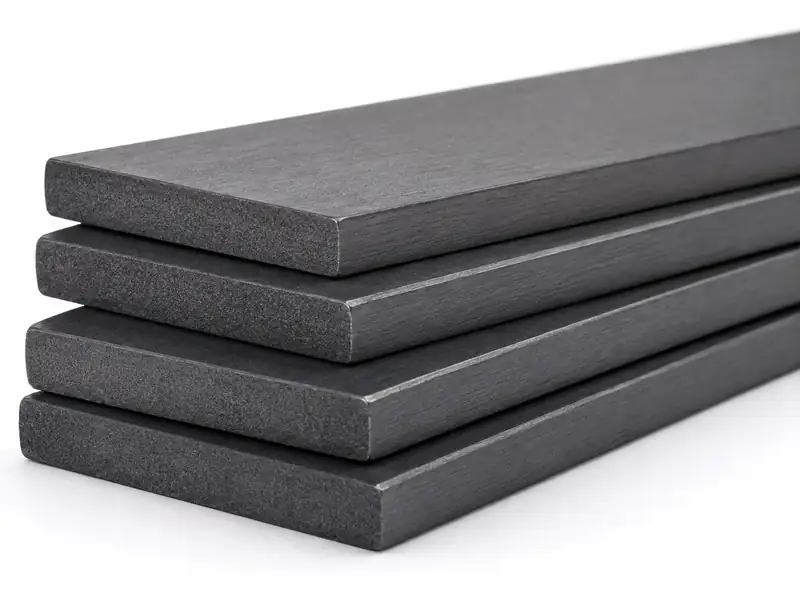
Printing equipment may use a dedicated vacuum pump, a combined vacuum/pressure unit or another vacuum technology. The replacement must match the installed rotary vane pump—not simply the name of the press, folder or feeder.
Dry-Running Vacuum Pump Vanes
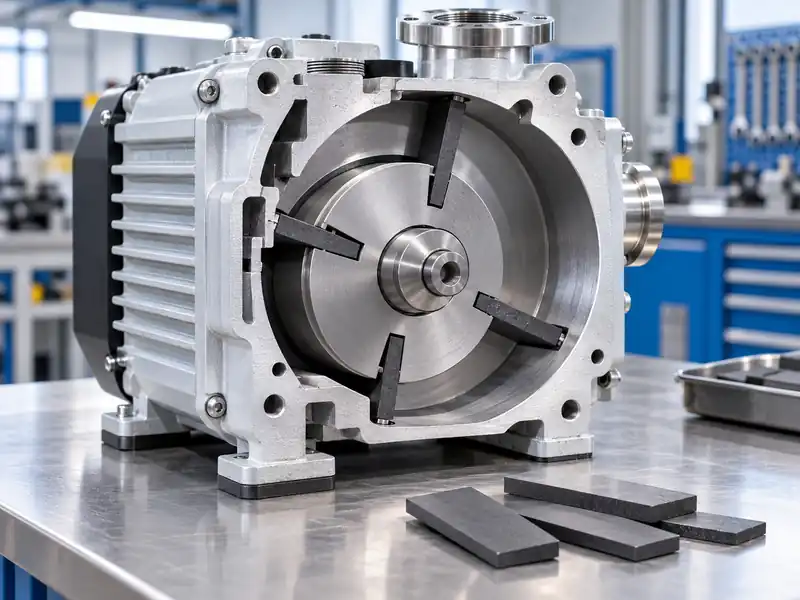
Carbon-based vanes for selected dry-running rotary vane pumps providing suction for sheet pickup, transport or holding. Material selection considers the original carbon grade, finished geometry, temperature, humidity and operating duty.
- • Complete dry-running pump model and vane reference
- • Working dimensions, edge geometry and service conditions

Combined Vacuum/Pressure Pump Vanes
Replacement and custom vanes for selected rotary vane units supplying both suction and blast air. These pumps require identification of the complete combination-pump model and its operating conditions; a vacuum-only replacement should not be assumed to fit.
- • Combination-pump model and vacuum/pressure duty
- • Original material, full geometry and vanes per rotor
Oil-Lubricated Vacuum Pump Vanes
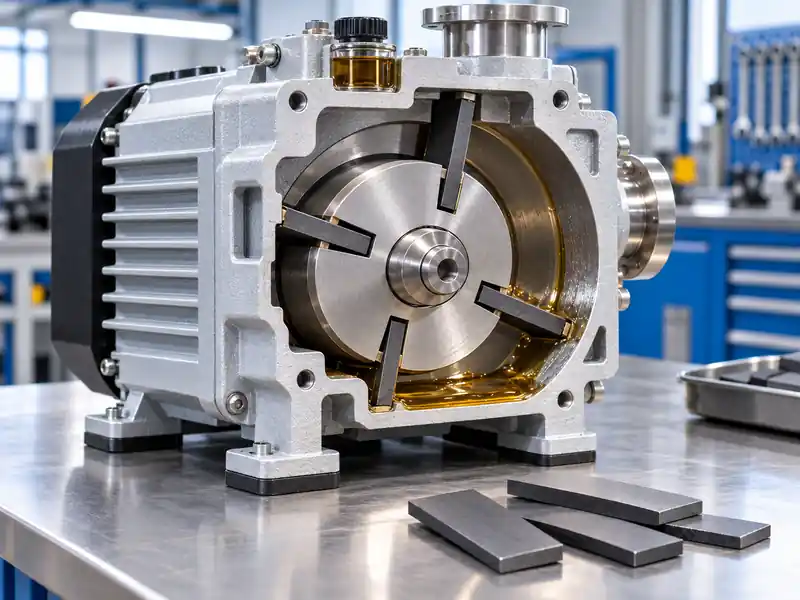
Vanes for printing-related equipment confirmed to use an oil-lubricated rotary vane pump. Carbon-fiber composite, glass-fiber or resin-impregnated carbon constructions are evaluated according to the original design rather than treated as interchangeable options.
- • Original vane construction and lubricant requirements
- • Pump version, dimensions, temperature and pumped medium
Suction and Blast Air Perform Different Jobs
Vacuum helps pick up and hold sheets. Blast air can help separate sheets and support paper movement. Some installations use separate machines for these duties; others use a combined vacuum/pressure pump.
A vane order should identify which arrangement is installed and which pump is being serviced.
Model, Operating Mode and Vane Specification
| Printing task | Air function | What it means for vane selection |
|---|---|---|
| Sheet pickup and feeder transport | Suction holds or transfers the sheet | Identify the actual vacuum pump, its material specification and working geometry |
| Sheet separation at the feeder | Blast air helps separate sheets | Determine whether the air comes from a combination pump or a separate pressure source |
| Feeders on presses and finishing equipment | Suction and blast air may be required together | Match the combination-pump configuration rather than treating it as a vacuum-only unit |
| Vacuum holding on printing or paper-processing equipment | Suction secures the workpiece | Confirm that the source is a rotary vane pump before selecting replacement vanes |
Note: Claw pumps, screw pumps and regenerative blowers do not use the same sliding replacement vanes. A machine's need for vacuum does not, by itself, identify the spare part.
Match the Material to the Sliding System
The best vane material is the one suited to the pump design and service conditions. A stronger or finer-grained material is not automatically a better replacement if its friction, wear or dimensional behavior does not suit the system.
| Material construction | Selection context | Important distinction |
|---|---|---|
| Carbon graphite | Selected dry-running vacuum and combination pumps | The carbon grade works with the rotor, cylinder, clearance and surrounding humidity |
| Carbon-fiber composite | Specified pump designs requiring a reinforced construction | Matrix, reinforcement direction and working-edge condition differ from conventional carbon graphite |
| Glass fiber | Specified reinforced or laminated vane designs | Layer construction and lubrication requirements must match the original component |
| Resin-impregnated carbon | Pump requirements calling for treated carbon | The resin system and operating medium must be considered together with temperature and lubrication |
CARBOLVE Carbon Grade References
CVV-CG20 and CVV-CG30 provide starting references for general dry-running carbon graphite discussions. CVV-FG30 is a fine-grain reference where geometry and edge integrity need particular attention. CVV-RG20 and CVV-RG30 support discussion of specified resin-treated carbon requirements.
These are preliminary selection references, not validated compatibility statements or guaranteed pump operating limits. The exact grade and treatment must be confirmed for the application. Carbon-fiber and glass-fiber constructions require separate identification.
Identify the Pump Before Measuring the Replacement
A press model, pump family name or single vane measurement can leave important differences unresolved. Use the pump nameplate, available part reference and complete component geometry together.
| Identification item | Why it matters |
|---|---|
| Pump manufacturer, model and version | The same printing machine family may use different pump arrangements |
| Part or service reference | Helps distinguish revisions and original component requirements |
| Length, height and thickness | Defines the vane envelope and its relationship with the rotor and chamber |
| Working edge, bevel, radius and slots | Preserves functional details that a simple rectangular measurement misses |
| Material and reinforcement direction | Identifies construction differences that appearance alone cannot resolve |
| Vanes per rotor and required quantity | Separates an individual spare, a complete vane set and a broader service kit |

A Worn Sample Is Not an Original Drawing
Wear can reduce the working height or change the contact edge. CARBOLVE reviews samples alongside available drawings, pump references and service information so wear is not mistaken for the intended geometry.
The Same Outline Can Hide a Different Material
Carbon graphite and reinforced vanes may have similar external dimensions while requiring different operating conditions. Material identification is part of the replacement review, not a decision made after machining.
A Feeding Problem May Extend Beyond the Pump
Missed pickups or inconsistent sheet handling can also involve suction cups, air leaks, filters, feeder settings or the paper itself. Confirm the condition of the air system before assuming that a vane replacement will resolve the problem.
Custom Manufacturing for Replacement Requirements
Geometry Defined for the Component
CARBOLVE can manufacture custom thickness, width, length, chamfers, slots and edge geometry from drawings or evaluated samples. Critical features are clarified before production rather than inferred from a generic pump description.
Material and Dimensions Reviewed Together
Carbon graphite, carbon-fiber composite, glass-fiber and resin-impregnated carbon constructions provide different manufacturing routes. The original component and service conditions determine which route should be evaluated.
Support for Incomplete and Obsolete References
When an old part number is incomplete or no longer available, drawings, physical samples and equipment information can support a custom replacement review. The result remains subject to material and dimensional confirmation.
Machining, Inspection and Packing
CARBOLVE manufactures industrial carbon and graphite components for equipment manufacturers, distributors and maintenance companies. Production support includes material review, machining, in-process checks, surface inspection and final verification.
Component requirements, identification and protective packing are coordinated for shipment. Pump-level commissioning and operating acceptance remain part of the equipment service process.


Printing Pump Vane Buying and Maintenance Guide
Quick Navigation
Can I order vanes using only the printing machine model?
For a CARBOLVE replacement review, add the original vane material, complete geometry and required quantity. Identify whether the pump provides vacuum only or combined vacuum and pressure. Do not assume that every pump fitted to the same press brand uses the same vane.
What symptoms may indicate worn vanes?
These symptoms are not specific to vane wear. Air leaks, restricted filters, suction-cup condition and feeder adjustments can produce similar effects. Visible chipping or reduced vane dimensions should be assessed against the pump manufacturer's criteria.
How often should printing pump vanes be replaced?
Operating hours, paper-dust exposure, temperature and duty cycle can change the inspection needs. Keep service records so wear is evaluated over time. The decision to replace individual parts or a complete set should follow the applicable service procedure.
How should dry-running pump systems be maintained?
Do not add oil to a dry-running pumping chamber as an improvised remedy for noise or wear. Dry-running and oil-lubricated systems have different service requirements; cleaning agents and lubrication instructions must be checked for the particular pump.
What matters when installing replacement vanes?
The service procedure must address the correct material, vane orientation, free movement, pump condition and reassembly requirements. Do not force or reshape a replacement to make it fit without an approved specification. A combination pump requires the applicable vacuum and pressure checks before return to service.
How should I compare suppliers and replacement costs?
Check whether the price is for one vane, a complete rotor set or a service kit containing other parts. Include packing and freight in the purchasing comparison, while considering installation and downtime separately.
CARBOLVE supplies independently manufactured replacement and custom components. They are not represented as original pump-manufacturer parts. Review compatibility documentation and relevant equipment warranty or service conditions before purchasing.
Related Vane Products and Pump References
Discuss Your Printing Pump Vane Requirement
Send the pump nameplate details, available part reference, vane dimensions and original material information. Include whether the unit supplies vacuum only or combined vacuum and pressure, together with the quantity and operating conditions.
CARBOLVE will use these details to discuss the material route, manufacturing requirements and quotation scope.