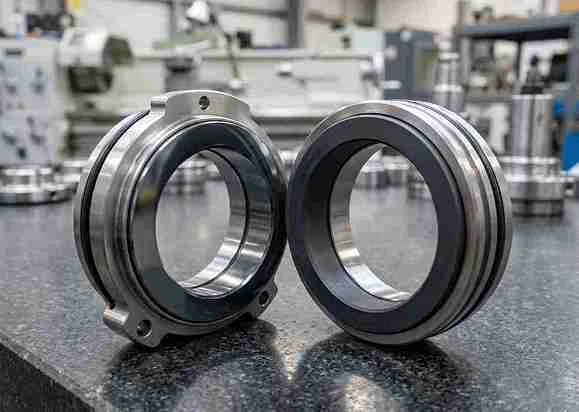
Power Tool Carbon Brushes Manufacturer
CARBOLVE manufactures power tool carbon brushes for applicable brushed angle grinders, drills, rotary hammers, saws, sanders, and routers. We evaluate tool models, OEM references, drawings, and physical samples to produce custom dimensions, springs, leads, terminals, and auto-stop constructions for OEM and aftermarket production.
Important: Carbon brushes apply only to brushed power tool motors. Brushless tools do not use conventional replacement carbon brushes.
Send the tool manufacturer, model, brush number, dimensions, brush photographs, motor information, and required quantity for evaluation.
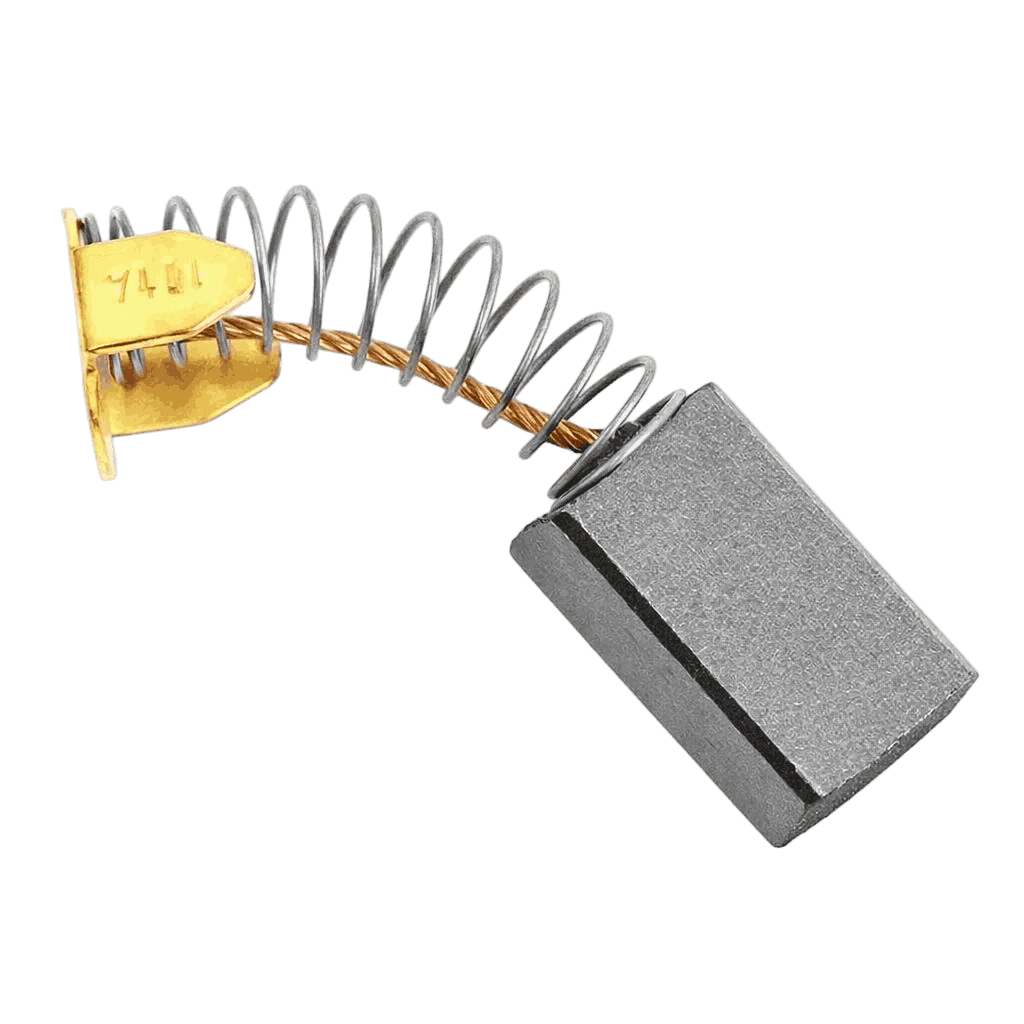
Carbon & Graphite Manufacturer
Power Tool Brush Production
Drawing & Sample Evaluation
Custom Brush Construction
Dimensional Inspection
Power Tool Carbon Brushes by Tool Application
Correct brush selection depends on the tool manufacturer, model, motor type, dimensions, contact face, spring, and commutator condition. CARBOLVE evaluates these parameters to manufacture compatible replacements.

Angle Grinder Carbon Brushes
Grinders require brushes capable of handling high motor speeds, frequent start-stop operation, and heavy grinding dust. Compact brush constructions and auto-stop designs are commonly evaluated where applicable.
Ask About Grinder Brushes
Drill Carbon Brushes
Corded and brushed cordless drills often utilize speed variation and reversing operation. We manufacture compact brush assemblies matched to specific OEM part numbers and motor requirements.
Ask About Drill Brushes
Rotary & Demolition Hammer
Subjected to high vibration and heavy impact loads. The brush spring and holder condition are critical. We evaluate equipment-specific designs to ensure stable electrical contact.
Discuss Hammer Brushes
Circular & Miter Saw Brushes
Saw motors face high starting loads, cutting dust, and sometimes electric braking. Model-specific brush constructions are required to handle these dynamic electrical demands.
Ask About Saw BrushesWhat Are Power Tool Carbon Brushes?
A power tool carbon brush is a replaceable sliding electrical contact used in an applicable brushed electric motor. The brush is held against the segmented commutator so electrical current can pass between the stationary tool circuit and rotating armature.
How Do They Work?
- 1 Electrical current enters the motor circuit.
- 2 The spring maintains brush contact with the segmented commutator.
- 3 Current passes through the terminal, lead, and carbon brush where applicable.
- 4 The commutator transfers and switches current through the armature as the rotor turns.
- 5 Continuous sliding contact gradually wears the carbon brush, requiring eventual replacement.
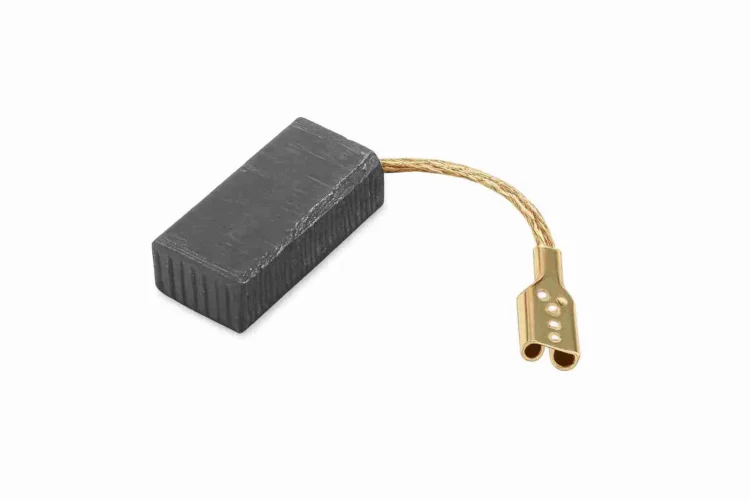
Brushed vs Brushless Power Tools
Before requesting replacement brushes, CARBOLVE must confirm the tool motor type. Not all modern power tools use carbon brushes.
Brushed Power Tool
A brushed power tool uses carbon brushes that contact a segmented commutator. Depending on the design, it may use a universal motor or a brushed DC motor.
- Uses Conventional Carbon Brushes
- Contains a Segmented Commutator
- Brushes Require Periodic Replacement
These tools are within the scope of CARBOLVE's manufacturing capability.
Brushless Power Tool
A brushless motor electronically controls current in the motor without conventional carbon brushes contacting a commutator.
- No Conventional Carbon Brushes
- Electronic Motor Control
- No Brush Wear Maintenance
Brushless power tools do not use conventional replacement carbon brushes.
Power Tool Carbon Brush Supply Options
Carbon Brush Pair
Two brushes supplied together for a motor that requires a matched pair.
Brush With Spring
Supplied with an approved spring according to the tool design.
Brush With Lead
Contains a flexible electrical lead between the carbon body and terminal.
Auto-Stop Brush
Contains a verified wear cut-off design to interrupt operation at a wear limit.
Terms such as brush pair, brush set, and brush assembly are not interchangeable. Every quotation should state exactly what is included.
Materials for Power Tool Carbon Brushes
There is no single carbon brush material suitable for every power tool. Selection requires motor evaluation.
Carbon Graphite
Selected grades provide application-specific electrical resistance, mechanical strength, and commutation characteristics for universal motors.
Electrographite
May be considered where the motor requires a specific balance of conductivity, speed capability, and temperature behavior.
Custom Specifications & Identification
Physical size alone does not determine interchangeability. Correct material, dimensions, lead, terminal, spring, and motor application must be confirmed.
Brush Body Dimensions
- Thickness: Confirm from drawing or holder
- Width: Confirm from drawing or holder
- Length: Original or unworn length
- Contact Face: Flat, radiused, or beveled
- Limit Mark: Include where verified
Lead & Terminal Parameters
- Lead Position: Center, offset, top, side
- Lead Length: Confirm reference points
- Terminal Type: Plate, spade, fork, ring
- Orientation: Important for installation
- Attachment: According to verified method
Required Identification Info
- Tool Model: Full number and version
- OEM Number: Original brush reference
- Motor Data: Voltage, corded/cordless
- Existing Brush: Photograph markings
- Holder/Commutator: Photos required
Auto-Stop and Wear Cut-Off Brushes
Some professional power tools use carbon brush constructions designed to interrupt motor operation when the brush reaches a specified wear condition. This prevents the spring or lead from damaging the commutator.
Warning: A standard carbon brush should not automatically replace an auto-stop brush solely because the external dimensions are identical. The cut-off mechanism, spring design, and tool model must match.
CARBOLVE evaluates OEM designs to manufacture replacement auto-stop brushes where production capability is verified.
Brush Holder and Commutator Inspection
A new carbon brush may perform poorly if the commutator or holder is damaged. Inspect the contact system before requesting replacements.
- Holder Fit: The brush must move freely. A sticking brush causes unstable contact.
- Commutator Surface: Check for grooving, burning, pitting, or copper drag.
- Contamination: Heavy carbon dust or abrasive debris affects commutation.
Common Power Tool Brush Problems
| Symptom | Possible Contributing Factors | Information to Check |
|---|---|---|
| Excessive Sparking | Worn brush, incorrect material, damaged commutator, brush sticking, weak spring. | Brush face and commutator condition. |
| Intermittent Operation | Short brush, sticking in holder, broken lead, damaged terminal, weak spring. | Brush movement and electrical connections. |
| Rapid Brush Wear | Incorrect grade, high current/speed, rough commutator, excessive spring pressure, dust. | Wear pattern and tool operating conditions. |
| Tool Stops Suddenly | Auto-stop feature may be operating at the wear limit. | Confirm tool and brush design. |
Note: Power tool symptoms may also originate from the switch, armature, field winding, bearings, or mechanical load. Replacing brushes alone may not correct the root cause.

OEM and Aftermarket Manufacturing
CARBOLVE evaluates new OEM motor projects, aftermarket replacement lines, and discontinued parts. We support drawing-based and physical sample reproduction.
Quality Control Process
-
Dimensional Inspection Verification of thickness, width, length, contact face, and custom profiles.
-
Assembly Verification Checking lead position, terminal orientation, and spring condition where applicable.
-
Packaging Control Ensuring pair completeness, correct product marking, and protective packaging.
Frequently Asked Questions
Do all power tools have carbon brushes?
Can two brushes with the same dimensions be different?
Should both brushes be replaced together?
Does replacing carbon brushes always solve motor problems?
How long do power tool carbon brushes last?
Request a Custom Power Tool Carbon Brush Quote
Complete tool, dimensional, construction, and application information helps CARBOLVE evaluate compatibility, manufacturing feasibility, and quotation details.