
Carbon Graphite Material Grades For Industrial Applications
Choose by component type, material family and operating condition—not by grade number alone. CARBOLVE organizes preliminary material selection across carbon brush, carbon seal, carbon vane and industrial graphite grade systems.
- Four application-specific grade systems
- Material-family and grade-code logic
- Selection based on real operating conditions
- Development and released data kept distinct
Explore CARBOLVE Carbon Graphite Material Grade Systems
Start with the component and application. Each CARBOLVE system uses its own material families, comparison fields and operating inputs, so grades from different systems should not be evaluated as one interchangeable list.

Carbon Brush Material Grades
CVB series for motors, generators, slip rings and electrical current collection. Material families include electrographite, copper graphite, silver graphite, carbon graphite, natural graphite and resin-bonded carbon or graphite.
Compare resistivity, current density, peripheral speed, voltage-drop behavior, friction, brush pressure and the commutator or slip-ring system.

Carbon Seal Material Grades
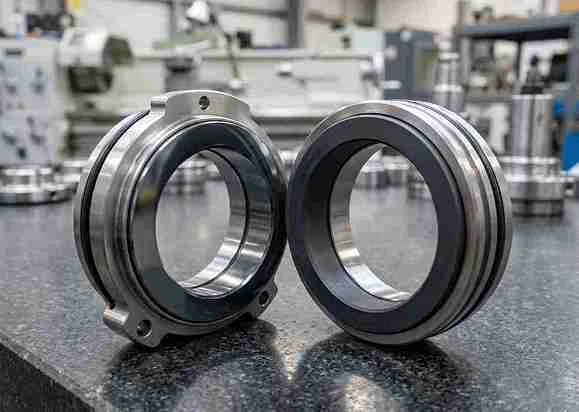
CVM series for mechanical seals, bearings and sliding components. Selection routes include resin-impregnated, antimony-impregnated, copper-impregnated, Babbitt or bronze, nickel-alloy, electrographite and fine-grain materials.
Compare operating medium, temperature, pressure and PV conditions, running mode, mating face, leakage requirement and chemical compatibility.

Carbon Vane Material Grades
CVV series for vacuum pumps, compressors and dry-running rotary vane systems. Material routes include carbon graphite, electrographite, fine-grain carbon, resin-treated grades and environment-specific treatments.
Compare pump type, vane dimensions, peripheral speed, temperature, humidity, gas composition, slot clearance and expected wear conditions.

Industrial Graphite Material Grades
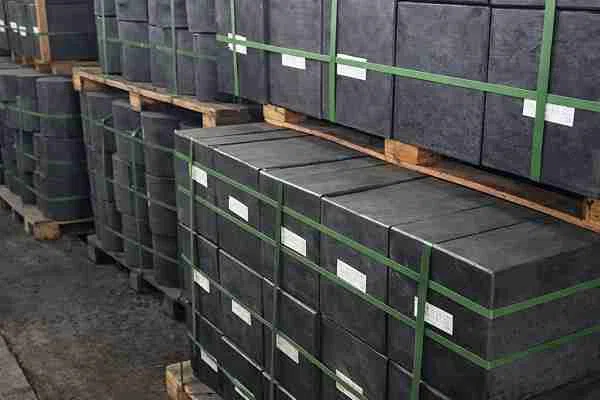
CVG series for graphite plates, rods, blocks, molds, crucibles, heaters, EDM electrodes and custom machined graphite parts. Families are organized by forming route, grain structure and purity direction.
Compare forming route, grain size, anisotropy, strength, conductivity, purity, surface finish and available part dimensions.
Note: CARBOLVE grade numbers identify a position within a material family. They do not indicate metal content, density, speed, pressure rating, purity or equivalence to another manufacturer’s grade. Development values are preliminary selection references rather than guaranteed specification limits.
Start with the Component, Then Compare the Right Properties
The same property can have a different decision value in an electrical contact, seal face, dry-running vane or machined graphite component. Select the relevant grade system before comparing individual materials.
| Component or product | Grade system | Main selection fields | Conditions that still require validation |
|---|---|---|---|
| Motors, generators and slip rings | CVB Carbon Brush Materials | Resistivity, current density, peripheral speed, voltage drop, friction, hardness and brush pressure | Brush geometry, spring pressure, contact material, cooling, duty cycle and atmosphere |
| Mechanical seals, bearings and sliding rings | CVM Carbon Seal Materials | Base carbon, impregnation, porosity, strength, thermal behavior, medium and running condition | Ring geometry, mating face, fit, pressure, PV condition, leakage requirement and corrosion compatibility |
| Vacuum pumps and rotary vane systems | CVV Carbon Vane Materials | Material family, strength, porosity, thermal behavior, speed, humidity and dry-running direction | Vane thickness, slot clearance, rotor or stator material, gas composition, temperature and duty cycle |
| Plates, rods, molds, EDM electrodes and custom graphite parts | CVG Industrial Graphite Materials | Forming route, grain size, density, strength, resistivity, thermal conductivity, purity and anisotropy | Part dimensions, test direction, machining tolerance, atmosphere, thermal cycle, surface finish and contamination limit |
A material property table is a starting point, not a complete operating rating. Final selection must connect the grade to the geometry, counterface, environment and validation method of the actual component.
Avoid the Shortcuts That Cause Grade Mismatches

A Familiar Grade Number Does Not Mean Equivalence
Grade codes are manufacturer-specific. A similar number may refer to a different base material, treatment, forming route or performance direction. Compare the material family and verified property data before considering a substitution.

Density Alone Cannot Define Suitability
Density is useful for identifying material structure and consistency, but it does not replace resistivity, strength, porosity, grain size, thermal behavior, purity, friction or application testing. The relevant combination depends on the component.

Operating Limits Belong to the Complete System
Current density, peripheral speed, seal pressure, temperature, friction and wear are affected by geometry, mating material, cooling, atmosphere, humidity and duty cycle. They should not be treated as universal limits of the material alone.

Development Targets Are Not Released Specifications
A development target supports preliminary comparison. A released specification requires controlled material preparation, stable batches, defined test methods and approved acceptance limits appropriate to the application.
CARBOLVE Grade Family Index
The prefixes separate four different selection systems. The codes below identify preliminary family positions and provide a consistent starting point for technical discussion.
CVB Carbon Brush Materials
- Electrographite: CVB-EG20, CVB-EG30, CVB-EG35, CVB-EG40, CVB-EG45, CVB-EG50
- Copper Graphite: CVB-CU20, CVB-CU30, CVB-CU40, CVB-CU50
- Silver Graphite: CVB-AG20, CVB-AG30, CVB-AG40
- Carbon Graphite: CVB-CG20, CVB-CG30
- Natural Graphite: CVB-NG20, CVB-NG30
- Resin-Bonded Carbon or Graphite: CVB-RB20, CVB-RB30, CVB-RB35, CVB-RB40
CVM Carbon Seal Materials
- Resin-Impregnated Carbon Graphite: CVM-CG-R20, CVM-CG-R30, CVM-CG-HR40
- Antimony-Impregnated Carbon Graphite: CVM-CG-A20, CVM-CG-A30, CVM-CG-A40
- Copper-Impregnated Carbon Graphite: CVM-CG-C30, CVM-CG-C40
- Babbitt or Bronze-Impregnated Carbon: CVM-CG-B20, CVM-CG-B30, CVM-CG-BR30
- Nickel-Alloy-Impregnated Carbon: CVM-CG-NC40
- Electrographite, Fine-Grain and Resin-Bonded Routes: CVM-EG-U20, CVM-EG-R20, CVM-FG-R30, CVM-FG-A40, CVM-RB-20
CVV Carbon Vane Materials
- Carbon Graphite: CVV-CG20, CVV-CG30, CVV-CG35, CVV-CG40
- Electrographite: CVV-EG20, CVV-EG30, CVV-EG35, CVV-EG40
- Fine-Grain Carbon Graphite: CVV-FG30, CVV-FG35, CVV-FG40
- Resin-Treated Carbon Graphite: CVV-RG20, CVV-RG30
- Special Environment Directions: CVV-SP40-D, CVV-SP40-H
CVG Industrial Graphite Materials
- Isostatic Graphite: CVG-ISO20, CVG-ISO30, CVG-ISO35, CVG-ISO40
- Extruded Graphite: CVG-EX20, CVG-EX30, CVG-EX40
- Molded Graphite: CVG-MD20, CVG-MD30, CVG-MD35
- Fine-Grain Graphite: CVG-FG30, CVG-FG40
- High-Purity Graphite: CVG-HP30, CVG-HP40, CVG-HP50
These codes are intended to structure preliminary material selection. Confirm current release status, controlled property data and application qualification before placing a grade into a drawing or procurement specification.
How the Main Material Families Differ
| Material direction | What distinguishes it | Where it enters the CARBOLVE systems | What to compare next |
|---|---|---|---|
| Carbon Graphite | Combines carbon’s mechanical contribution with graphite’s lubricating and conductive behavior | Brush, seal and vane systems | Strength, porosity, resistivity, friction, medium, speed and running condition |
| Electrographite | Higher-temperature graphitization changes electrical, thermal and friction behavior | Brush, seal and vane systems | Resistivity and current collection for brushes; thermal, atmospheric and dry-running conditions for seals or vanes |
| Metal Graphite or Metal-Impregnated Carbon | Copper or silver supports electrical-conductivity directions; antimony, copper and other alloys create different seal-material routes | Brush and seal systems | Metal content or treatment, conductivity, temperature, load and chemical compatibility |
| Resin-Bonded or Resin-Treated Carbon | Resin is used either as a bonding system or as a treatment, depending on the product family | Brush, seal and vane systems | Temperature, medium compatibility, resistivity, strength, porosity and running mode |
| Fine-Grain or Isostatic Graphite | Finer structure and more uniform forming routes support precision, edge stability and detailed machining directions | Seal, vane and industrial graphite systems | Grain size, strength, part size, finish, porosity and actual machining or running requirements |
| Extruded, Molded and High-Purity Graphite | Forming route, directional behavior, available format and impurity control become primary selection variables | Industrial graphite system | Anisotropy, dimensions, mechanical and thermal properties, atmosphere, purity and test documentation |
No family is universally better. The correct direction is the one whose verified properties, dimensions and validation conditions match the component and operating environment.


Build the Selection Around the Actual Application
Identify the component system
Decide whether the requirement is an electrical contact, a seal or sliding component, a rotary vane, or an industrial graphite part. This determines which properties and grade codes are relevant.
Define the operating environment
Record the electrical load, mechanical load, speed, pressure, temperature, medium, atmosphere, humidity, duty cycle and mating material that apply to the component.
Compare within the correct family
Use the relevant material family and property combination rather than selecting by one number. Compare alternative directions only under compatible test conditions.
Confirm release and validation requirements
Before adding a grade to a drawing or order specification, confirm its current release status, controlled property limits, test method, component dimensions and application qualification needs.
Application Paths
- Motors, generators and slip rings → Carbon Brush Material Grades
- Mechanical seals, bearings and sliding rings → Carbon Seal Material Grades
- Vacuum pumps and dry-running rotary systems → Carbon Vane Material Grades
- Graphite plates, rods, molds, electrodes and custom machined parts → Industrial Graphite Material Grades
Carbon Graphite Material Grade Selection Questions
Navigate through common technical clarifications regarding material equivalence, selection criteria and specification limits.
Are carbon material grades interchangeable between manufacturers?
Can a carbon or graphite grade be selected by density alone?
What is the practical difference between carbon graphite and electrographite?
How do impregnation and resin treatment affect grade selection?
What information is needed for a final grade review?
| Product system | Useful application inputs |
|---|---|
| Carbon brush | Motor or generator type, voltage, current density, peripheral speed, brush dimensions, contact material, spring pressure, duty cycle, cooling and atmosphere |
| Carbon seal | Seal type, ring dimensions, mating face, operating pressure, shaft speed, fluid or gas, temperature, lubrication condition, corrosion and leakage requirements |
| Carbon vane | Pump model, vane dimensions, rotor or stator material, vacuum or pressure level, speed, gas composition, temperature, humidity, duty cycle and allowable wear |
| Industrial graphite | Product type, drawing, dimensions, forming-route preference, grain size, machining tolerance, load, thermal cycle, electrical requirement, atmosphere, purity and surface finish |
When can development target values become published material properties?
Technical Documentation That Keeps Selection Conditions Visible
CARBOLVE material guides separate grade-family codes, preliminary selection data, application inputs and validation notes. They also identify where geometry, contact conditions, PV, humidity, atmosphere or test method can change the result. Use the relevant guide to prepare a more complete material discussion before a specification is released.

Carbon Brush Material Selection Guide
Material families and preliminary selection routes for motors, generators, slip rings and electrical contacts.
Download PDF
Carbon Seal Material Selection Guide
Material and treatment directions for mechanical seals, bearings and sliding components.
Download PDF
Carbon Vane Material Selection Guide
Material-family guidance for vacuum pumps, compressors and dry-running rotary vane systems.
Download PDF
Graphite Material Selection Guide
Forming-route, grain-size and purity directions for industrial graphite materials and machined parts.
Download PDFContinue with the Relevant Product Path
Request a Carbon Graphite Material Grade Review
Select the relevant component and share the operating information already available. CARBOLVE can use these details to identify the appropriate material family, clarify which data still requires validation and prepare the next technical discussion.
For the most useful review, include a drawing or dimensions when available, together with the application, mating material, load, speed, temperature, medium, atmosphere and any electrical, leakage, purity or wear requirement that applies.