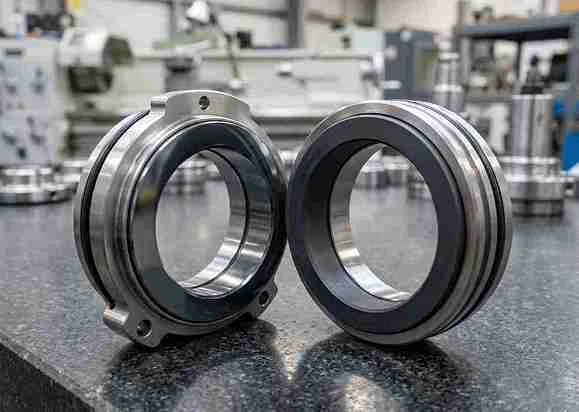
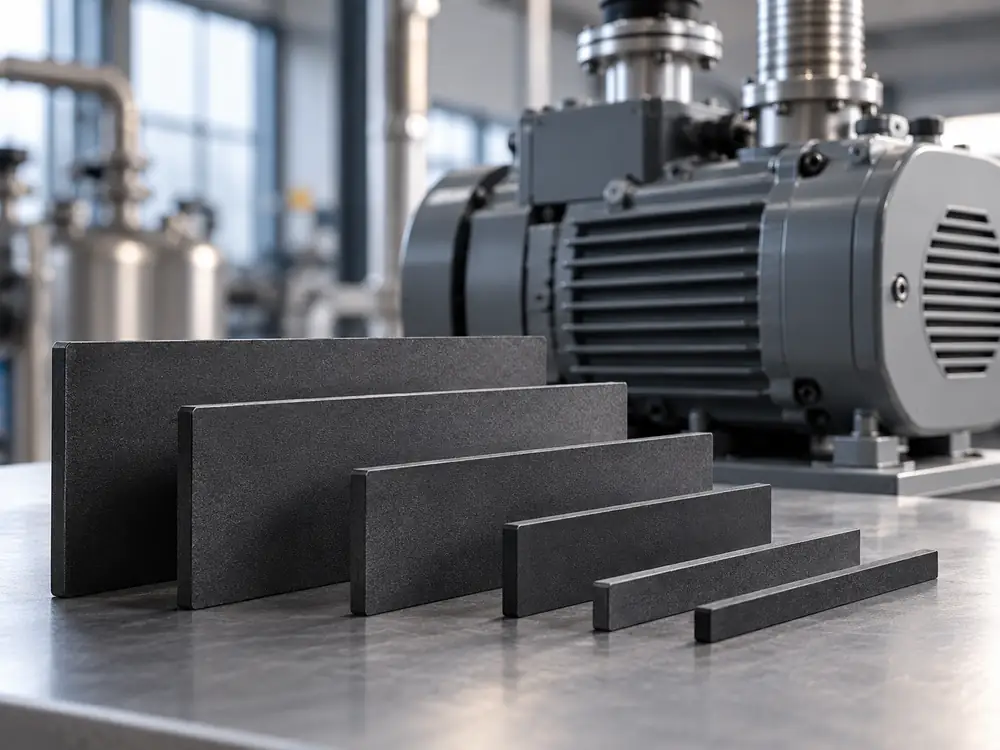
DVP Vacuum Pump Vanes
CARBOLVE manufactures model-matched carbon graphite vanes and selected resin or composite vane constructions for DVP oil-free vacuum pumps, rotary vane compressors, legacy equipment and selected lubricated pump models. Each request is reviewed against the complete pump model, vane geometry, original material and operating conditions before quotation.
Compatible Vanes for Selected DVP Pump Series
A rotary vane must move correctly inside the rotor slot while maintaining the intended contact with the pump cylinder. Its dimensions, edge geometry, material and operating environment all influence fit and wear.
A DVP series name is a useful starting point, but it does not confirm the exact vane by itself. CARBOLVE evaluates replacement projects from the complete pump model, original part number when available, drawing, physical sample, vane-set quantity and operating data.
This review supports current equipment, discontinued models, maintenance replacements and repeat-order programs without assuming that visually similar vanes are interchangeable.
Trademark note: DVP is a trademark of its respective owner. CARBOLVE is an independent manufacturer and is not affiliated with or endorsed by DVP. Model names and part numbers are used only for compatibility identification.
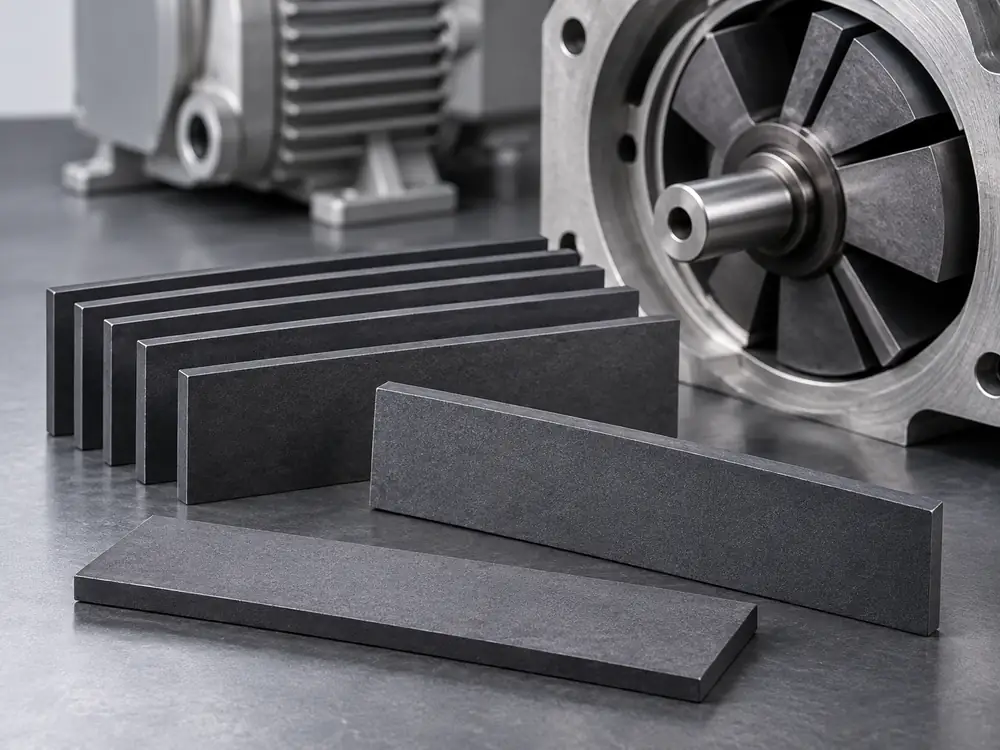
DVP Replacement Vane Range
Start with the pump function and series, then confirm the complete model, vane construction and dimensions. Series references help identify the project but do not establish interchangeability.

DVP SB / SC Oil-Free Vacuum Pump Carbon Vanes
SB 10 · SB 10TV · SB 12 · SC 5 · SC 8 · SC 16 · SC 25 · SC 40 · SC 60 · SC 80 · SC 100 · SC 140
Model-matched carbon graphite vanes for selected SB and SC oil-free rotary vane vacuum pumps. Some versions may also operate under pressure conditions, so the actual vacuum or compressor duty must be confirmed rather than inferred from the series name alone.
Confirm the full model, number of vanes per set, thickness, width, length, edge geometry, vacuum level, speed, temperature, humidity and duty cycle.

DVP CB / CC Oil-Free Compressor Carbon Vanes
CB 10 · CB 12 · CC 60 · CC 80 · CC 100 · CC 140
Carbon graphite vanes evaluated for selected CB and CC oil-free rotary vane compressors. Positive-pressure operation creates different thermal and mechanical conditions from vacuum duty, so a similar-looking vacuum vane should not be assumed to be suitable.
Confirm the complete model, maximum working pressure, speed, operating temperature, gas or medium, vane dimensions and continuous or intermittent duty.
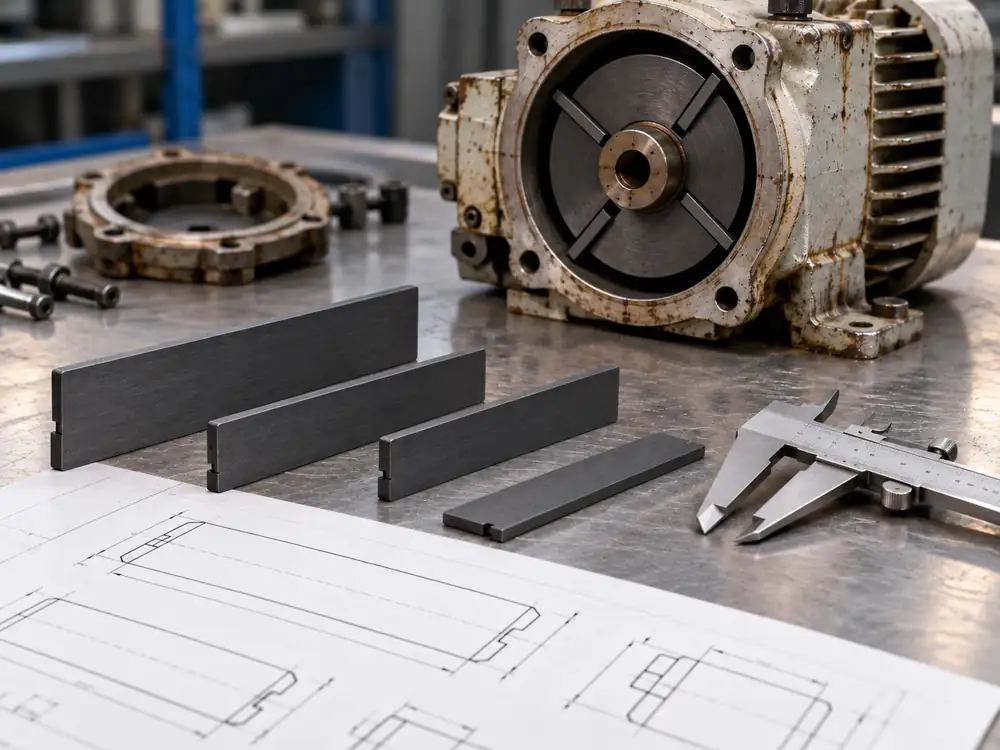
Legacy DVP SA / CA and Discontinued-Series Carbon Vanes
SA · CA · Earlier SB / SC / CB / CC Revisions
Drawing- or sample-based carbon vane replacements for selected legacy DVP pumps and compressors. This route is intended for models whose original parts are discontinued, difficult to identify or different from the current product revision.
Provide the complete legacy model, old part number when available, physical sample, photographs, vane-set quantity and measurements taken at multiple points.
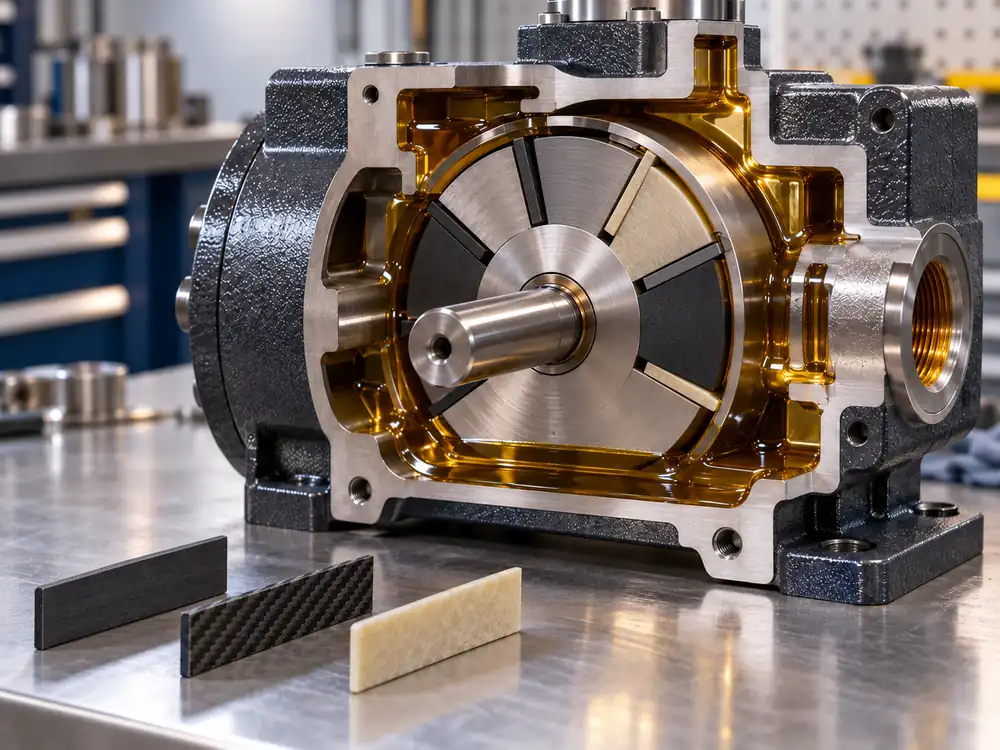
Resin & Composite Vanes for Selected DVP Lubricated Pumps
Selected LC · MD · RC · LX · XC Models
Resin-impregnated carbon, carbon-fiber composite or glass-fiber composite vanes can be evaluated for selected DVP lubricated rotary vane pump projects when the original component and operating conditions require these constructions.
Confirm the exact pump model, original vane material, lubrication method, oil or medium, operating temperature, complete geometry and drawing or sample. Model coverage is subject to material and dimensional verification.
A confirmed category does not mean that every model within the referenced series uses the same vane. Final suitability depends on the exact pump revision, original construction and operating conditions.
Why DVP Vane Identification Requires More Than a Brand Name

One family can contain different pump sizes and revisions
A shortened reference such as “SC vane” or “DVP carbon vane” may omit the pump size, revision and vane-set configuration. This can result in the wrong dimensions, quantity or edge geometry.
CARBOLVE reviews the complete nameplate model, original part number when available, drawing or sample before establishing a manufacturing specification.
Vacuum and pressure duty are not interchangeable assumptions
Some oil-free rotary vane designs may be used for vacuum or pressure, while CB and CC families are associated with compressor duty. Operating pressure and temperature affect the material review.
The inquiry should identify how the pump is actually operated, including the working vacuum or pressure, speed and duty cycle.
A worn sample may no longer show the original dimensions
A used vane can become shorter, thinner or unevenly worn. Reproducing one worn measurement may reproduce the wear instead of the intended geometry.
Where possible, combine the sample with the pump model, original part number, multiple measurements and clear photographs of every edge feature.
Similar dimensions do not prove material compatibility
Carbon graphite, resin-impregnated carbon, carbon-fiber composite and glass-fiber composite have different constructions and application boundaries.
CARBOLVE reviews the original material, lubrication, temperature, medium and mating conditions instead of selecting a vane from appearance alone.
Choose by Pump Function and Series
Scroll horizontally to view full table
| Product direction | Series examples | Primary operating role | Main points to confirm |
|---|---|---|---|
| SB / SC carbon vanes | SB 10, SB 10TV, SB 12; SC 5 through selected SC 140 models | Oil-free vacuum, with the actual vacuum or pressure duty confirmed per model | Full model, dimensions, vane-set quantity, vacuum or pressure, speed, temperature, humidity and duty cycle |
| CB / CC carbon vanes | CB 10, CB 12; CC 60, CC 80, CC 100, CC 140 | Oil-free compressor duty | Working pressure, temperature, speed, gas or medium, vane dimensions and set quantity |
| Legacy carbon vanes | SA, CA and earlier SB, SC, CB or CC revisions | Obsolete or difficult-to-identify vacuum and compressor equipment | Old part number, drawing, sample condition, original dimensions and operating role |
| Selected lubricated-pump vanes | Selected LC, MD, RC, LX and XC models | Oil-lubricated rotary vane vacuum pumps | Original material, lubricant, pump revision, temperature, medium, geometry and sample or drawing |
Note: Series identification is only the first step. The complete model, vane material and geometry must be reviewed before production.
Common Vane Material Directions
The correct vane material depends on the pump design, lubrication method, rotor and cylinder surfaces, temperature, medium and duty cycle. Materials should not be substituted solely because the dimensions appear similar.
Carbon Graphite
Selected oil-free and dry-running vacuum pumps or compressors.
Application-matched carbon graphite can provide low friction, self-lubricating behavior, controlled wear and dimensional stability in dry-running systems.
Pump function, speed, temperature, humidity, gas or medium, mating surfaces, duty cycle and material grade direction.

Resin-Impregnated Carbon
Selected applications whose original construction specifies an impregnated carbon material.
Resin impregnation is commonly used to reduce open porosity and modify mechanical properties. The resin system also introduces temperature and chemical-compatibility limits.
Original material, impregnation direction, operating temperature, lubricant or medium, dimensions and pump design.
Carbon-Fiber Composite
Selected lubricated pump applications that specify a reinforced composite vane.
A carbon-fiber composite construction provides a different balance of mass, reinforcement and dimensional behavior from conventional carbon graphite.
Original construction, fiber and resin system, lubricant, temperature, rotor and cylinder compatibility and edge geometry.
Glass-Fiber Composite
Selected lubricated pumps designed for a glass-fiber-reinforced vane.
Glass-fiber composite vanes are application-specific components that must be matched to the original reinforcement, resin, lubricant and wear environment.
Full pump model, original vane construction, oil or medium, temperature, dimensions, contact surfaces and duty cycle.
Closing note: Do not replace an original graphite, resin, composite or metal vane with another material without verifying the pump design and operating conditions.
How to Identify a DVP Replacement Vane
A complete identification package helps distinguish vanes that share a similar overall shape but differ in thickness, edge features, material or set configuration.
- Record the full pump model and all nameplate suffixes.
- Include the original part number or vane-set reference when available.
- Identify whether the equipment is used for vacuum, pressure or another specified duty.
- Measure thickness, width and length at several points.
- Photograph and measure chamfers, bevels, slots, radii and unusual contact edges.
- Show the orientation of asymmetrical features relative to pump rotation when applicable.
- Confirm the number of vanes required for one pump or one complete set.
- Record speed, temperature, humidity, vacuum or pressure, gas or medium and duty cycle.
- State the required quantity, destination country and identification or packing requirements.
Caution: A worn vane may be below its original dimensions. Use the original drawing or specification when available. Otherwise, review the sample together with the complete pump model and wear pattern.

A Structured Route from Model Identification to Finished Vanes
Four Confirmed Material Routes
CARBOLVE manufactures carbon graphite, resin-impregnated carbon, carbon-fiber composite and glass-fiber composite vane products. The selected route is based on the original construction and operating environment rather than a generic brand cross-reference.

Custom Vane Geometry
Available customization includes thickness, width, length, chamfers, slots, contact features and material grade direction. Manufacturing can be evaluated from drawings, physical samples, photographs and equipment information.
Support for Current and Obsolete Equipment
Model-matched replacement requests can cover selected current pumps as well as discontinued components that require drawing- or sample-based review.
Agreed Inspection Points
The production workflow can include incoming material review, in-process checks, surface inspection and final verification of agreed dimensions, appearance, quantity, identification and packing.

Replacement Programs Supported by the Product Range
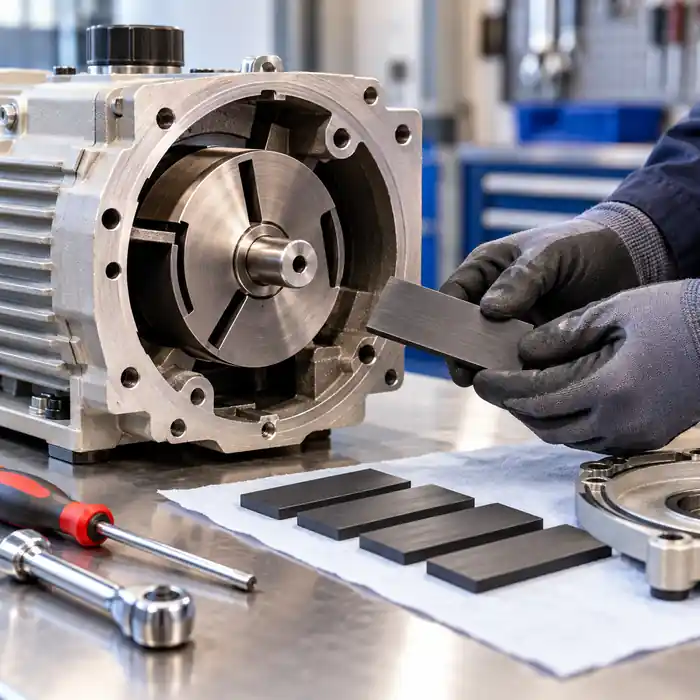
Planned Pump Maintenance
Model-matched vanes can be evaluated for planned replacement and equipment maintenance. Inspection and replacement timing should follow the applicable pump manual, operating conditions and model-specific wear limits.
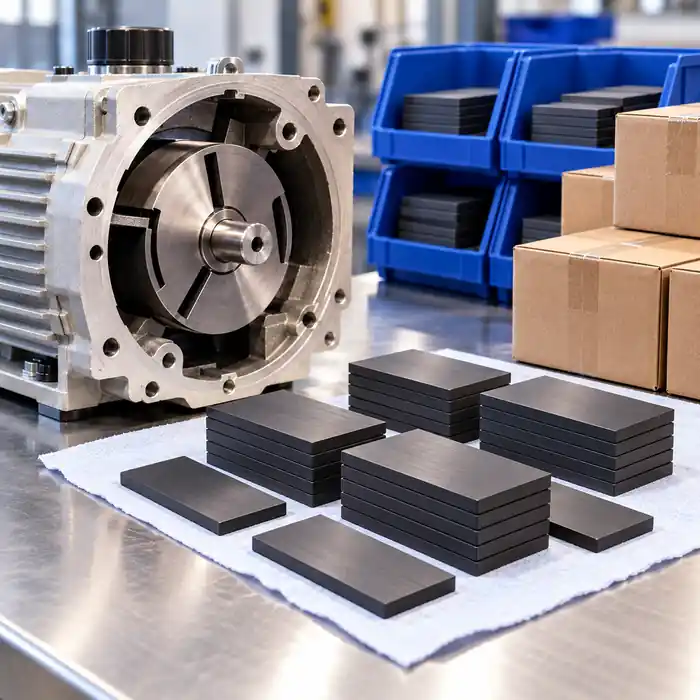
Distributor and Repeat Orders
Repeat-order programs benefit from one controlled specification for each pump model, vane material, dimensions, set quantity and identification requirement. Visually similar vanes should not be combined under one item without confirming interchangeability.
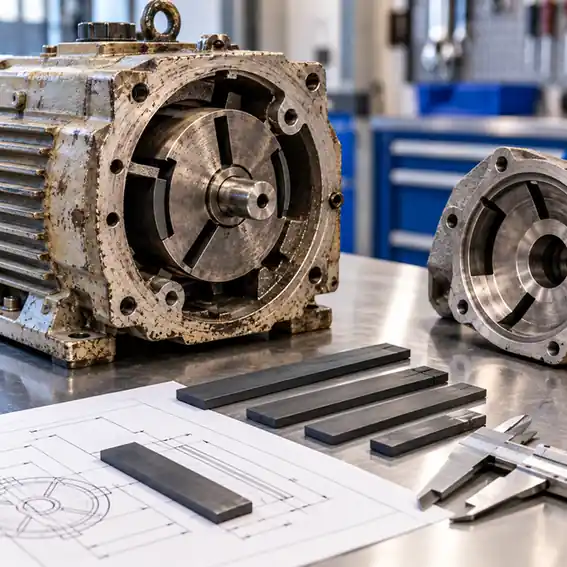
Obsolete-Component Replacement
When an original vane is unavailable, a drawing or physical sample can provide a starting point for technical review. A worn sample is treated as a reference rather than automatically as the original dimensional standard.
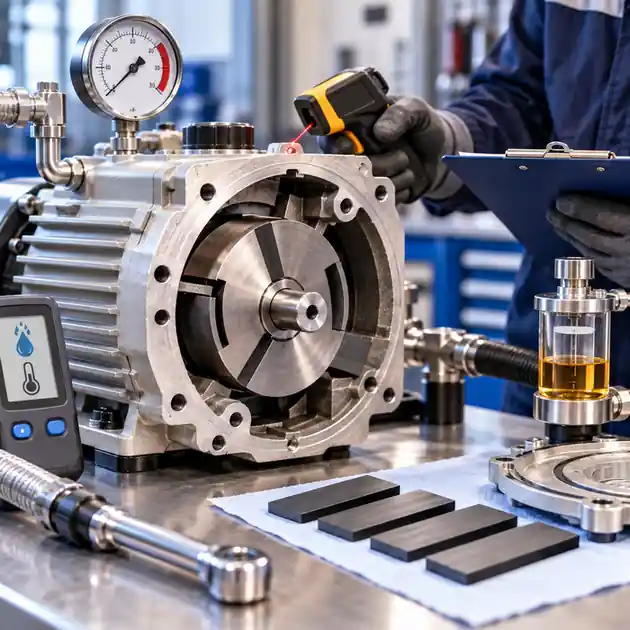
Operating-Condition Review
Vane selection may change with vacuum or pressure duty, temperature, humidity, gas exposure, lubrication and continuous or intermittent operation. These conditions should be recorded alongside the pump model.
Manufacturing and Inspection for Custom Vane Projects
CARBOLVE manufactures industrial carbon and graphite components for equipment manufacturers, distributors and maintenance companies. Production is evaluated from drawings, physical samples, equipment models, dimensions, material requirements and operating conditions.
Relevant capabilities include grinding, drilling, slotting, surface finishing and drawing-based machining of custom geometries. Incoming material review, in-process checks, surface inspection and final verification are followed by protective packing and international delivery coordination.
- Technical review before material and dimension confirmation
- Drawing, sample and equipment-model evaluation
- Sample or prototype stage when required by the project
- Inspection of agreed dimensions, surface and edge condition
- Identification, protective packing and export communication


DVP Replacement Vane Buyer Guide
Are CARBOLVE vanes genuine DVP parts?
How can I confirm compatibility with a DVP pump?
Start with the complete nameplate model and suffix rather than only the SB, SC, CB, CC or LC family. Include the original part number when available, the number of vanes per set, complete dimensions and clear photographs of every edge feature.
Compatibility must cover geometry, material and operating conditions. A vane with matching length and width may still be unsuitable if its thickness, chamfer, slot, construction, lubrication requirement or operating duty differs.
What materials are commonly used for vacuum pump vanes?
Dry-running rotary vane pumps commonly use application-matched carbon graphite because it can operate with low friction without oil inside the compression chamber. Selected pump designs may instead specify resin-impregnated carbon, carbon-fiber composite, glass-fiber composite or another original construction.
The existing material should be identified before considering a substitute. Pump series, lubrication, temperature, gas or medium and contact surfaces all influence the decision.
How often should pump vanes be inspected?
There is no universal inspection interval for every DVP model. Follow the applicable operating and maintenance manual, then adjust planned inspection around the actual operating hours, duty cycle, inlet cleanliness, temperature and observed pump condition.
Record vane dimensions and wear patterns during service so that later inspections can be compared under the same model and operating conditions.
What are common signs of worn vanes?
Possible signs include reduced vacuum or pressure, longer evacuation time, unusual noise, increased operating temperature, unstable output or excessive carbon dust. These symptoms can also result from filters, leakage, bearings, seals or other pump conditions.
Use the symptoms as a reason to inspect the complete pump rather than as proof that the vanes alone have failed. Apply the correct model-specific wear limit from the pump documentation.
How should carbon vanes be inspected?
Isolate the equipment from power, vacuum and pressure before opening the pump. Check each vane for remaining height, uneven wear, cracks, chipping, scoring, burned areas and damaged chamfers or slots.
Also examine rotor-slot movement, cylinder condition, filters and contamination sources that could damage a replacement set. Inspection and service should be performed by qualified personnel following the applicable pump manual.
What determines the cost of a DVP-compatible vane set?
Quotation depends on the material, dimensions, geometry, number of vanes per set, order quantity, inspection requirements, identification and packing. A family name alone may not provide enough information for an accurate comparison.
When comparing suppliers, confirm whether each quotation covers the same material, complete set quantity, dimensional basis and inspection scope. A lower unit price is not directly comparable if the supplied construction or set definition differs.
How should I compare replacement-vane suppliers?
Check whether the supplier clearly distinguishes genuine parts from independently manufactured replacements. Ask how the proposed material, dimensions, edge geometry and set quantity were identified.
A useful supplier comparison should cover:
- Exact pump model and revision
- Proposed material construction
- Drawing, sample or part-number basis
- Complete-set definition
- Agreed dimensional and appearance checks
- Identification and packing requirements
- Technical contact for resolving specification differences
CARBOLVE supports model-, drawing- and sample-based review before material and dimensions are confirmed for production.
Related Carbon and Graphite Components
Request a DVP Vane Match Review
Submit the complete pump model, vane dimensions and operating conditions for an initial manufacturing review. A drawing or clear sample photographs can help identify edge details that are not visible from the model name alone.
Preparation checklist:
- Full DVP pump model and suffix
- Original part number, if available
- Vane thickness, width, length and quantity per set
- Drawing or clear photographs of all vane surfaces and edges
- Original material or construction, if known
- Vacuum or pressure conditions, speed, temperature and duty cycle
- Required order quantity and destination country