Graphite Crucible Manufacturer for Metal Melting
CARBOLVE manufactures custom solid machined graphite crucibles for industrial induction furnaces, resistance heating, and vacuum applications. Crucible compatibility depends on the graphite material, furnace heating method, molten material, and operating environment. We machine from approved drawings, evaluate worn samples, and verify graphite grades for specific B2B metal-melting projects.
What Graphite Crucible Do You Need?
Which Graphite Crucibles Does CARBOLVE Manufacture?
A graphite crucible is a high-temperature container designed to hold, melt, heat, or transfer process materials. The commercial term covers several technically different constructions. CARBOLVE should only present a crucible construction as a supplied product when its material and manufacturing capability have been verified.
CARBOLVE Verified Product Scope
- • Machined Solid Graphite Crucibles
- • High-Purity Graphite Crucibles
- • Custom Graphite Crucibles From Drawings
- • Graphite Crucibles With Lids & Spouts
- • Induction-Heating Graphite Crucibles
- • Vacuum / Inert Atmosphere Graphite Crucibles
Require Separate Verification
These are different engineered product families and should not automatically be treated as technically interchangeable with solid machined graphite.
- • Clay-Graphite Crucibles
- • Silicon-Carbide / Graphite Composite Crucibles
- • Ceramic / Alumina / Quartz Crucibles
- • Complete Furnace Systems
Crucible Material & Construction Comparisons
Machined Graphite Crucible vs Clay-Graphite Crucible
A machined solid graphite crucible is manufactured by CNC machining a solid graphite material blank. Its properties depend strictly on the selected graphite grade (density, grain, purity).
A clay-graphite crucible is a refractory composite containing graphite and ceramic/refractory bonding constituents. Its manufacturing route, mechanical behavior, and thermal cycling behavior differ fundamentally from solid graphite.
Machined graphite crucibles and clay-graphite crucibles contain graphite but are different engineered product families. Do not copy clay-graphite performance claims onto a solid graphite crucible.
SiC-Coated Graphite vs SiC/Graphite Composite
A SiC-coated graphite crucible consists of a machined graphite substrate protected by a thin silicon-carbide surface coating. This is intended to alter surface oxidation or chemical interaction.
A SiC/graphite composite crucible contains silicon carbide and graphite integrated throughout the bulk bonded structure.
A SiC-coated graphite crucible and a silicon-carbide/graphite composite crucible should not be treated as synonyms. The correct construction depends on furnace technology and melt chemistry.
Graphite Crucible vs Melting Furnace
A graphite crucible is the vessel that contains the melt; the furnace provides the heating environment. "Graphite crucible" does not define furnace compatibility by itself. Crucible material and furnace type must be evaluated together.
Induction Heating
Selection requires review of induction frequency, coil dimensions, crucible OD, graphite electrical resistivity, and melt mass. Not every graphite crucible fits every induction coil.
Submit Induction Details →Vacuum & Inert Atmosphere
Priority is placed on graphite purity, outgassing requirements, vacuum levels, and precise machining for laboratory or specialized evaporation environments.
Submit Vacuum Requirements →Direct-Fire / Fuel-Fired
Do not use a machined solid graphite crucible in direct flame service unless that exact material is approved. Direct flame creates severe oxidation conditions.
Check Direct-Fire Compatibility →Furnace compatibility depends on crucible construction, material grade, heat-transfer method, flame exposure, atmosphere, and manufacturer recommendations.
Melt Compatibility & Crucible Capacity
Metal & Alloy Applications
Graphite crucible compatibility should be verified against the actual metal, alloy, and process chemistry. Graphite is a carbon-containing material; contamination-sensitive melting requires application review.
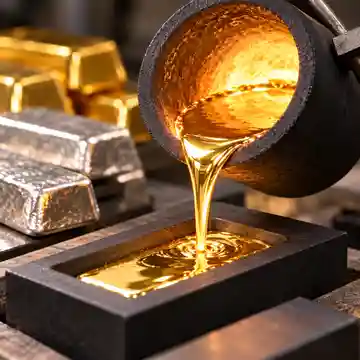
Gold, Silver & Precious Metals
High-value metal melting requires control of both crucible material purity and process contamination. Specify flux and holding duration.
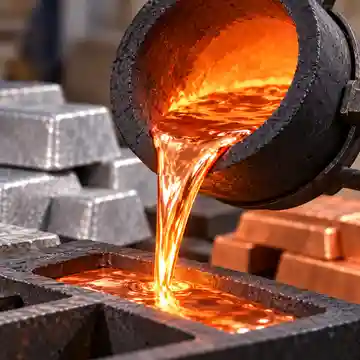
Aluminum & Copper Alloys
Requires review of alloy grade, melt mass, flux/degassing additives, and thermal cycle frequency.
Ferrous / High-Reactivity Melts
Do not automatically recommend solid graphite for iron, steel, or reactive alloys due to carbon interaction. Requires strict technical verification.
Why Capacity Depends on the Metal
A crucible's weight capacity must identify the reference metal. Volume and metal mass are not interchangeable.
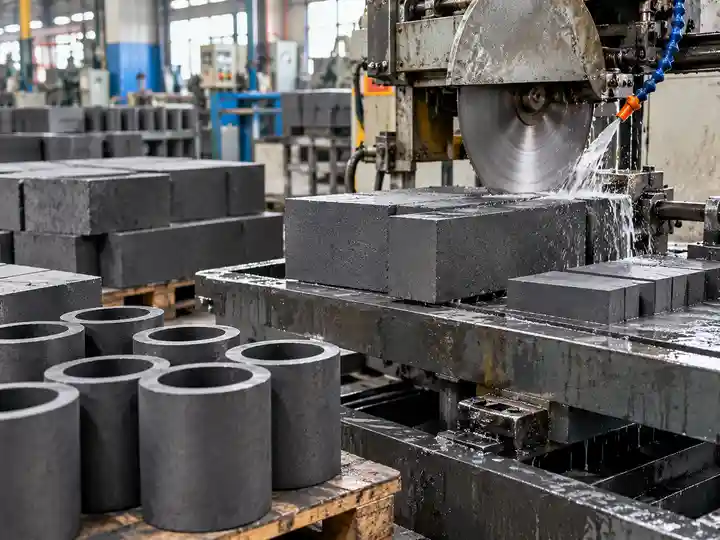
A crucible can have one fixed internal volume (e.g., cm³) but entirely different mass capacities for aluminum, copper, or gold because material densities differ.
- • Required melt mass
- • Metal density
- • Safe operating fill allowance
- • = Required crucible volume
Graphite Crucible Shapes & Custom Machining
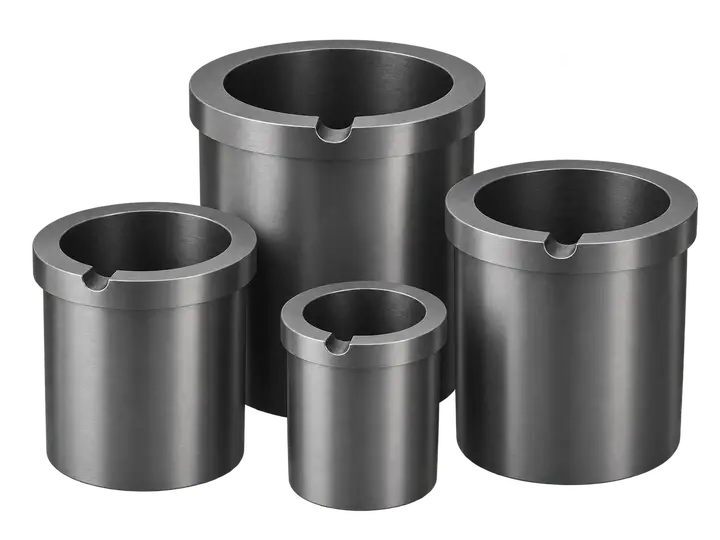
CARBOLVE machines finished graphite crucibles from verified graphite blanks. Customization feasibility depends on graphite grade, blank size, wall geometry, and handling requirements.
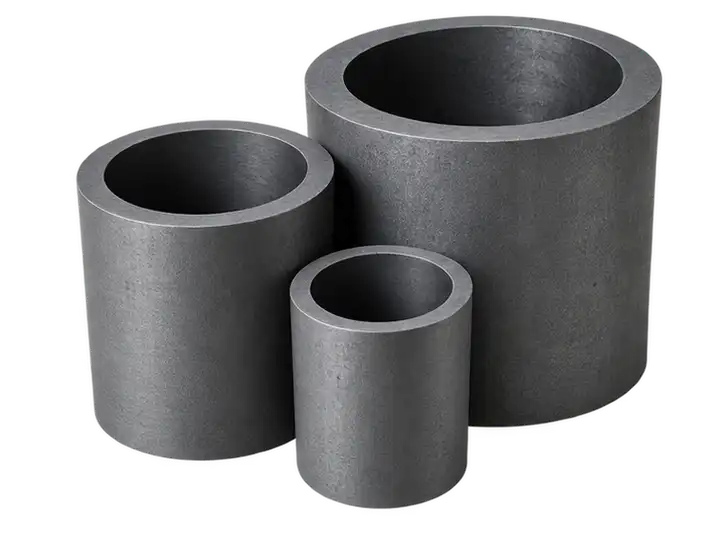
Straight-Wall Cylindrical
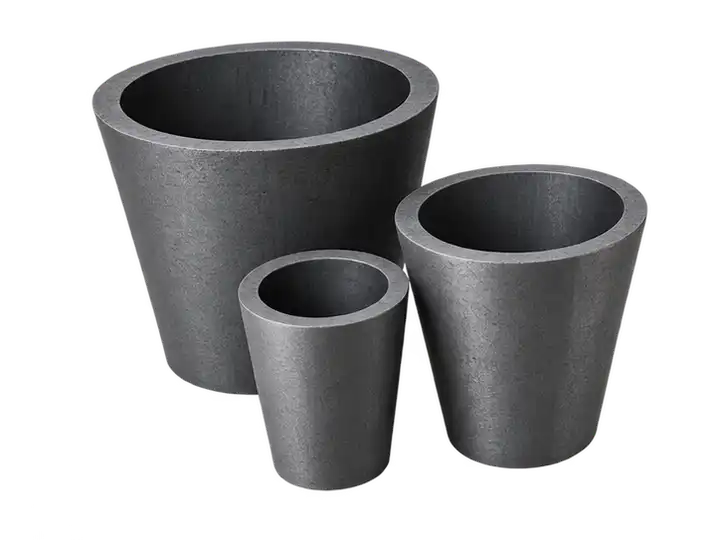
Tapered / Conical
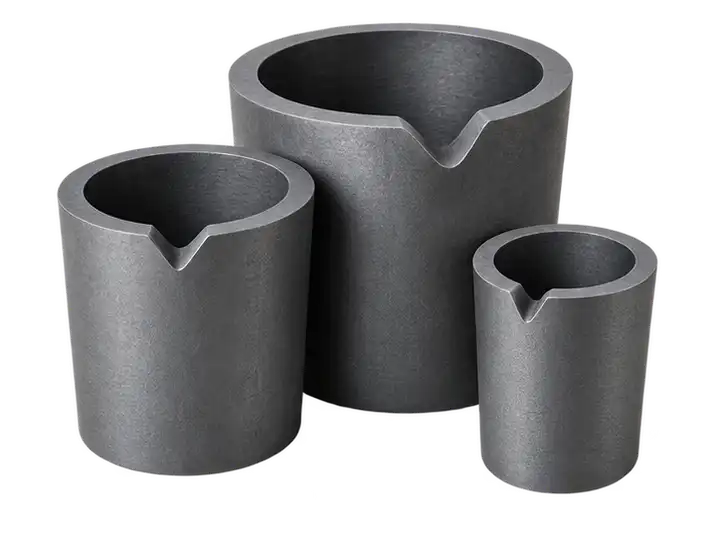
With Pouring Spout
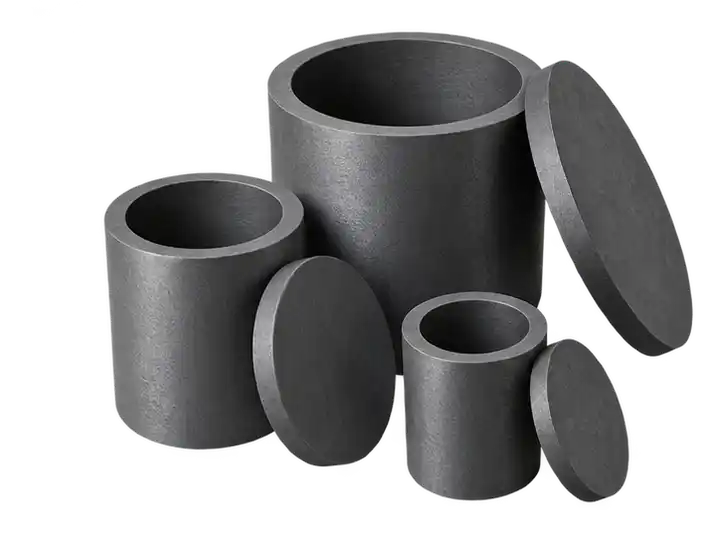
Lidded Crucible
Custom Crucibles From Your Drawing
We manufacture to exact specifications. Wall and bottom thickness influence thermal response, mechanical strength, and remaining wear allowance. Thicker walls do not always mean better performance; geometry should be selected as part of the complete thermal design.
- • Top Outside Diameter (OD)
- • Bottom OD
- • Inside Diameter (ID)
- • Overall Height
- • Internal Depth
- • Wall Thickness
- • Bottom Thickness
- • Flange / Rim Dimensions
Graphite Material Properties That Matter
The generic term "graphite" does not define the complete crucible material. Density and porosity should be evaluated as part of the complete graphite grade. High-purity graphite crucibles should be specified using verified analytical data rather than appearance.
Forming Method
Isostatic, extruded, or molded impacts structural uniformity.
Grain Size
Influences machining detail, surface condition, and edge integrity.
Density & Porosity
Affects permeability, strength, and chemical resistance.
Purity / Ash
Critical for contamination limits in precise melting.
| Parameter | Format | Why It Matters | CARBOLVE Data |
|---|---|---|---|
| Crucible Construction | — | Furnace / process compatibility | [Verified] |
| Graphite Grade | — | Material identity | [Verified] |
| Purity / Ash | % / ppm | Melt contamination limits | [Verified] |
| Electrical Resistivity | verified unit | Induction heating efficiency | [Verified] |
| Top OD / Bottom OD / ID | mm / inch | Furnace fit & capacity | [Verified] |
| Metal Capacity | metal-specific | Actual melt capacity | [Verified] |
Graphite Crucible Wear & Troubleshooting
In many melting applications, graphite crucibles are wear components. There is no universal service life. Life depends on material grade, furnace, atmosphere, thermal cycling, flux, and handling.
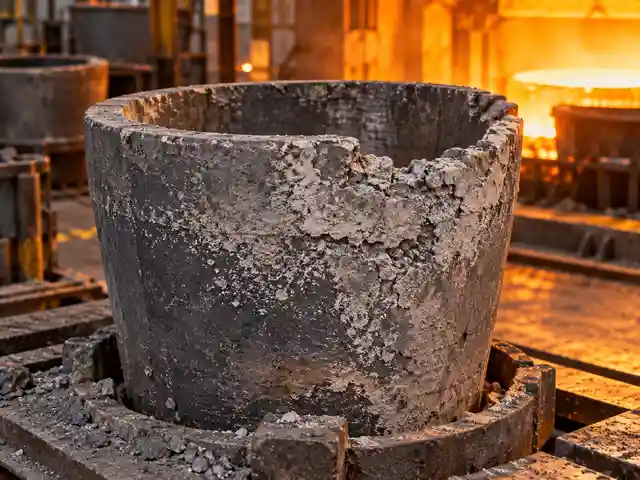
Crucible Oxidizes Rapidly
Rapid external material loss. Review air exposure, direct flame, furnace leak, holding time, and crucible grade. Atmosphere must be evaluated.
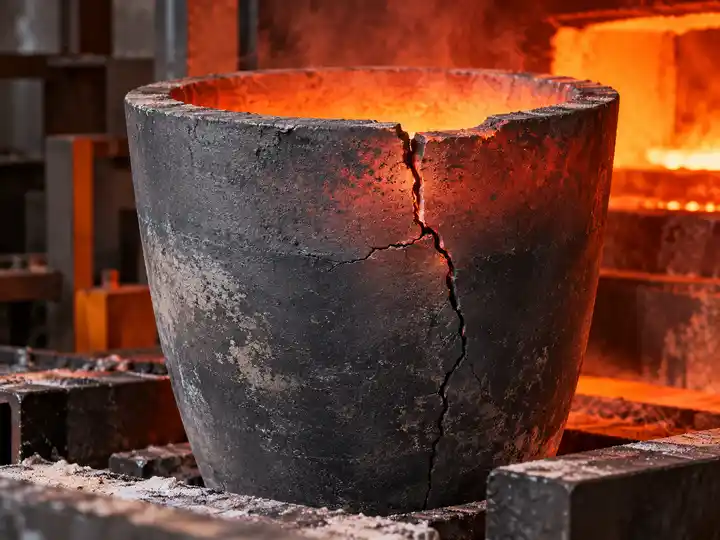
Cracks During Heating
Review heating cycle, moisture, existing damage, thermal gradient, uneven loading, and charge expansion. Thermal-shock performance is process dependent.
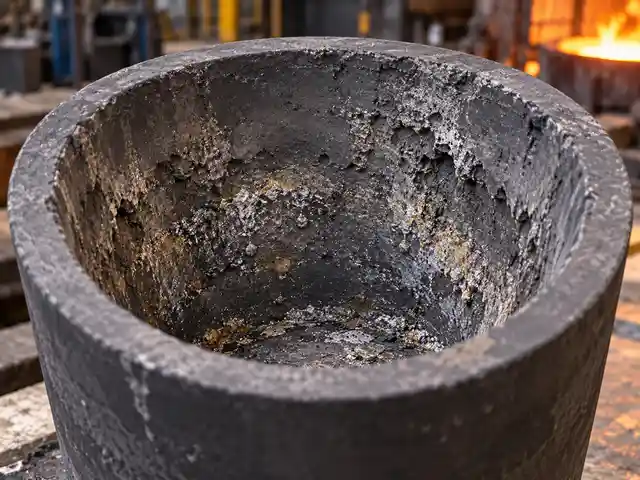
Internal Erosion
Evaluate against the melt process rather than mechanical wear alone. Review melt chemistry, flux, slag, additives, and material compatibility.
Can CARBOLVE evaluate a broken crucible? Pieces help recover geometry and identify visible patterns, but may not establish root cause alone.
Manufacturing Evidence & Quality Control
Finished Graphite Crucible Machining
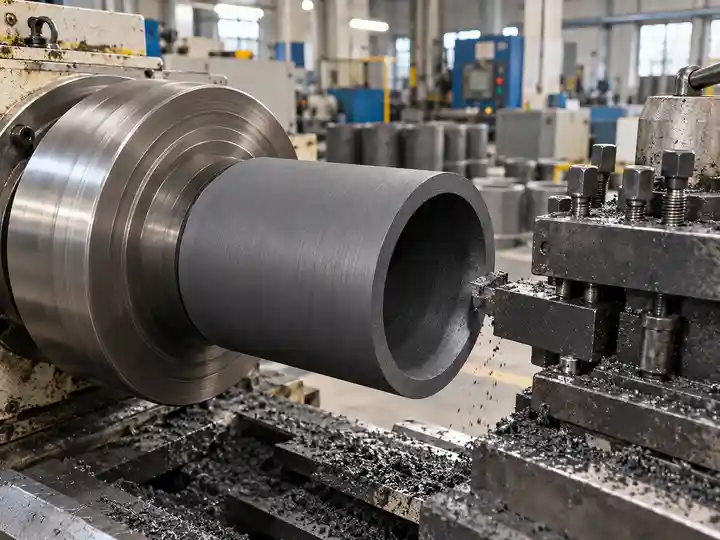
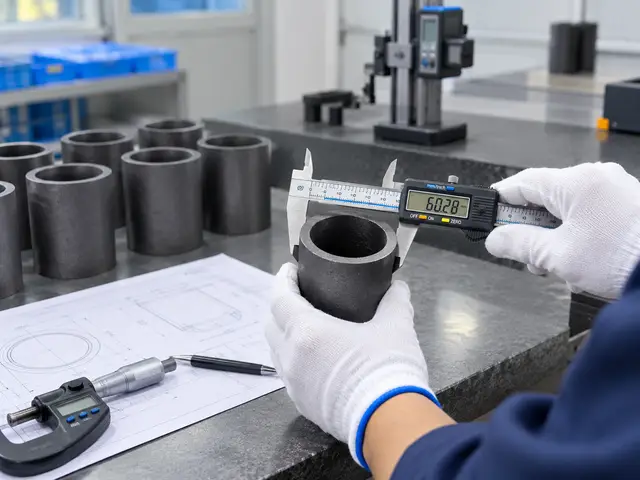
CARBOLVE performs finished graphite component machining from verified blanks. Raw graphite material manufacturing (extrusion, baking, graphitization) and finished crucible machining are different capabilities. We focus on precision CNC turning, internal boring, flange machining, and custom features like spouts and lids.
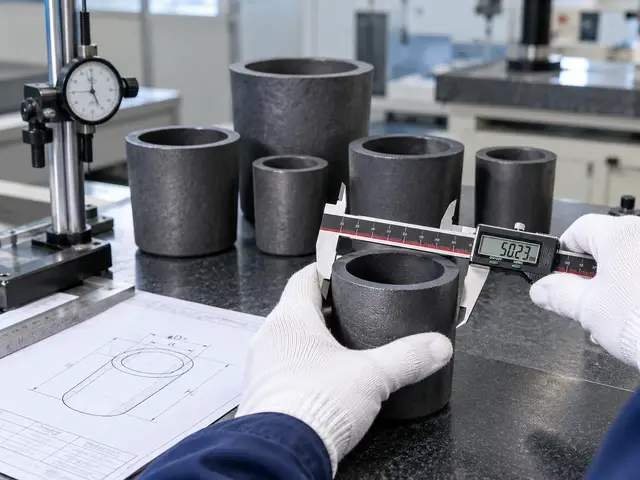
Dimensional Inspection
Critical crucible dimensions should be identified on the approved drawing. Tolerance depends on graphite grain size, crucible diameter, depth, and wall thickness.
- Material Grade Verification
- External OD / Height / Flange Inspection
- Internal ID / Depth Inspection
- Visual Defect & Edge Damage Check
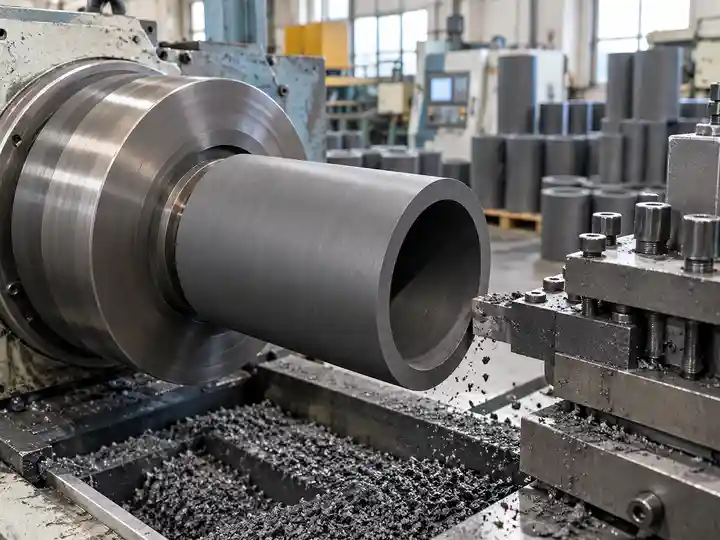
Graphite Crucibles From a Physical Sample
A worn crucible is useful for identification but should not automatically be treated as the complete original manufacturing specification. Wear may have changed the original ID, wall thickness, bottom thickness, and internal volume.
Physical similarity does not establish graphite-grade equivalence. We review the sample alongside furnace and operating data to propose a drawing for repeat production.
Replacement & Obsolete Crucibles
Support identification using furnace manufacturer/model, existing part numbers, dimensions, and melt capacity. An obsolete crucible can only be reproduced when sufficient material, geometry, and application information is available.
Graphite grade codes are manufacturer-specific. Alternative grades should be evaluated using verified technical properties and actual process conditions.
Graphite Crucible Technical FAQ
What is a graphite crucible?
What is the difference between graphite and clay-graphite crucibles?
Can graphite crucibles be exposed to direct flame?
What does a 1 kg graphite crucible mean?
How long does a graphite crucible last?
Request a Graphite Crucible Quote
Complete furnace, melt, material and dimensional information helps CARBOLVE review graphite grade, crucible geometry, machining feasibility and inspection requirements before quotation.