AC Motor Brushes Manufacturer
CARBOLVE manufactures AC motor brushes for applicable universal motors, AC commutator motors, wound-rotor induction motors, and slip-ring systems. We evaluate OEM production and replacement requirements based on drawings, physical samples, or motor nameplates. Most standard squirrel-cage induction motors do not require conventional carbon brushes. Final material selection depends on specific contact-surface and operating conditions.
- Custom AC Motor Brush Manufacturing
- Universal and Slip-Ring Motor Applications
- Drawing and Sample-Based Production
- Application-Based Material Review
- OEM and Replacement Support
Send the motor type, manufacturer, model, nameplate, brush markings, dimensions, contact-surface details, operating conditions, and required quantity for evaluation.

Carbon Brushes for Different AC Motor Systems
AC power alone does not determine the correct carbon brush. Motor construction, commutator or slip-ring design, voltage, current, speed, duty cycle, holder fit, environment, brush material, and assembly must be evaluated together.

Universal Motor Brushes
Designed for AC or DC operation depending on motor design, operating against a segmented commutator. Commonly evaluated for compact, high-speed motors with equipment-specific spring, cap, and terminal configurations.
Ask About Universal Motor Brushes →
AC Commutator Motor Brushes
Manufactured for commutator-type AC motors requiring application-specific materials. We evaluate brush and commutator conditions to support OEM and replacement requirements.
Discuss an AC Commutator Motor →
Wound-Rotor Motor Brushes
Produced for wound-rotor induction motors operating against continuous slip rings. We evaluate external rotor circuits for industrial starting and speed-control systems, reviewing electrographite or metal-graphite material directions.
Ask About Wound-Rotor Motor Brushes →
Slip-Ring Motor Brushes
Designed for industrial slip-ring motors transferring current through continuous rings. We manufacture large or custom brush dimensions with single or multiple shunts and industrial terminals.
View Slip-Ring Carbon Brushes →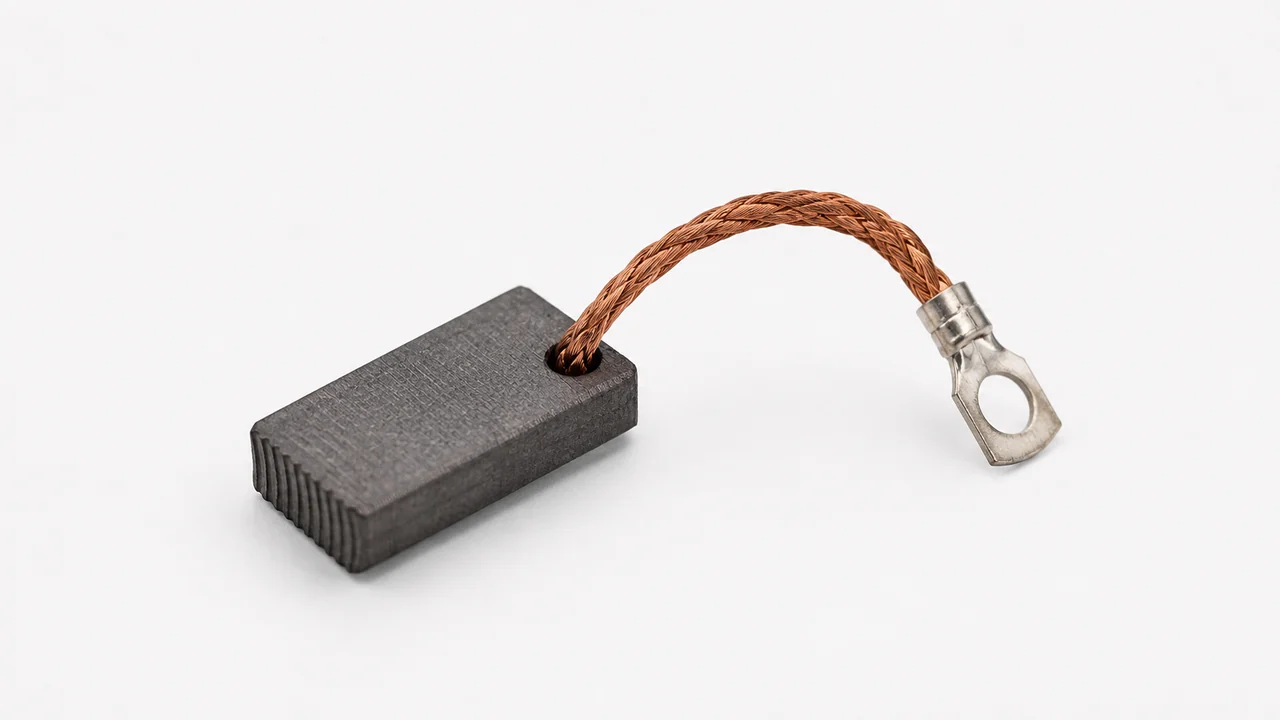
Small and FHP AC Motor Brushes
Evaluated for fractional-horsepower motor systems, including vacuum motors, mixers, blowers, and applicable appliances utilizing compact spring-loaded assemblies.
Ask About Small AC Motor Brushes →
Custom and Replacement AC Motor Brushes
We support obsolete products, non-standard dimensions, drawing-based manufacturing, and sample reproduction, integrating custom shunts, terminals, springs, and caps where verified.
Not Sure Which Motor Type You Have?
Send us the motor nameplate and brush photos for technical evaluation.
What Is an AC Motor Brush?
An AC motor brush is a sliding electrical contact used in an AC-powered motor design that requires electrical connection to a rotating commutator or slip ring. Depending on the motor, the brush may participate in commutation or provide continuous current transfer to the rotor circuit.
Possible brush components evaluated during manufacturing include:
- Carbon or graphite brush body
- Contact face
- Flexible copper shunt
- Terminal
- Top pad
- Spring
- Cap
- Cut-off device where applicable
- Mounting feature
Note: Not every brush contains every component. Construction is verified according to the specific motor and holder design.

Which AC Motors Use Carbon Brushes?
The terms "AC motor" and "AC motor brush" are not sufficient for product selection. Confirm the motor design, contact surface, manufacturer, model, and existing brush before requesting a quotation.
| Motor Type | Conventional Carbon Brushes? | Contact Surface | Important Note |
|---|---|---|---|
| Universal motor | Yes | Segmented commutator | Operates on AC or DC depending on design |
| AC commutator motor | Yes | Segmented commutator | Requires commutator-compatible brush selection |
| Wound-rotor induction motor | Yes | Slip rings | Brushes connect the rotor circuit |
| Slip-ring induction motor | Yes | Slip rings | Industrial motor application |
| Repulsion-type motor | Design dependent | Commutator | Legacy or specialized design; [Confirm CARBOLVE application capability before publication] |
| Fractional-horsepower AC motor | Design dependent | Commutator or another system | Confirm the motor construction |
| Synchronous motor | Design dependent | Excitation slip rings where applicable | Requires technical review |
| Squirrel-cage induction motor | Normally no | No rotor sliding contact | Conventional motor brushes normally do not apply |
| Brushless AC motor | No | Electronic/electromagnetic operation | Conventional carbon brushes do not apply |
| Shaded-pole motor | Normally no | No commutator | Conventional brushes normally do not apply |

How Do Brushes Work in a Universal Motor?
- AC power passes through the field winding, brushes, commutator, and armature circuit according to the motor design.
- The brush holder and spring keep the carbon brush in contact with the segmented commutator.
- Current passes through the terminal, shunt, and carbon brush.
- The commutator switches the armature current as the rotor turns.
- Sliding contact causes gradual brush and commutator wear.
Performance depends on brush material, dimensions, contact-face radius, spring pressure, motor speed, electrical load, commutator surface, starting torque, duty cycle, cooling, dust, temperature, and vibration.
How Do Brushes Work in a Wound-Rotor AC Motor?
- The rotor windings are connected to continuous slip rings on the motor shaft.
- Carbon brushes maintain sliding contact with the slip rings.
- The brush-and-ring system connects the rotating rotor winding to an external circuit.
- The external circuit may support starting, resistance control, speed control, or another motor-specific function.
- Brush and ring condition affect current transfer, heat, wear, and motor operation.
Some motor designs may use brush-lifting or ring-short-circuiting systems; brushes are not always in continuous contact under every operating condition. Important selection factors include ring material, diameter, rotor current, speed, brushes per ring, pressure, holder alignment, duty cycle, starting frequency, environment, and ring condition.

Types of AC Motor Brushes
By Motor Type
- Universal motor brush
- AC commutator motor brush
- Wound-rotor motor brush
- Slip-ring induction motor brush
- Fractional-horsepower motor brush
- [Confirm CARBOLVE application capability for repulsion motor brush]
- [Confirm CARBOLVE application capability for synchronous excitation brush]
By Equipment
- Power tool motor brush
- Vacuum motor brush
- Mixer motor brush
- Blower motor brush
- Appliance motor brush
- Crane & hoist motor brush
- Mill & crusher motor brush
- Conveyor motor brush
- Process-industry motor brush
By Project Type
- OEM AC motor brush
- Replacement AC motor brush
- Custom motor brush
- Prototype brush
- Maintenance spare
- Obsolete brush reproduction
- Repeat-order brush
By Material
- Carbon graphite brush
- Graphite brush
- Electrographite brush
- Metal graphite brush
- Copper graphite brush
- [Insert other verified material family]
By Construction
- Shuntless brush
- Single-shunt brush
- Multiple-shunt brush
- Spring-loaded brush
- Brush with cap
- Single-piece brush
- Multi-section brush
- Paired brush
- Brush with custom terminal
- [Confirm CARBOLVE capability for cut-off device]
AC Motor Brush Construction and Assembly Options
Brush construction must match the motor and brush-holder design. We evaluate production based on the following structural configurations where verified.

Shuntless Brush
No separate flexible lead; used in compatible small-motor or holder designs.

Single-Shunt Brush
One brush body with one flexible lead and a confirmed terminal.

Multiple-Shunt Brush
Two or more leads where current, flexibility, or assembly design requires them.

Spring-Loaded Brush
Compact assembly using a spring, cap, plug, or approved mounting feature.

Single-Piece Brush
One complete carbon brush body used in an approved holder.

Multi-Section Brush
Two or more brush wafers operating together according to holder design.

Paired Brush
Two brush bodies supplied or connected as one application-specific assembly.

Custom Terminal Brush
Uses specific eyelet, ring, flag, fork, quick-connect, or custom metal fitting.
Materials for AC Motor Brushes
There is no single carbon brush material suitable for every AC motor.
Material selection depends on whether the brush operates on a segmented commutator, a continuous slip ring, a compact universal motor, or an industrial wound-rotor motor. We also evaluate voltage, current, frequency, speed, duty cycle, starting behavior, contact surface, brush pressure, environment, and existing performance.
Carbon Graphite
Considered for selected commutator motors requiring an application-specific balance of resistance, strength, friction, and wear.
Graphite
Graphite-rich materials may provide application-specific low-friction characteristics in selected motor or slip-ring systems.
Electrographite
Commonly considered for industrial rotating machines requiring application-specific electrical, thermal, mechanical, and wear behavior.
Metal Graphite
May be considered for selected lower-voltage, higher-current, or slip-ring applications.
Copper Graphite
A metal-graphite direction considered for selected current-transfer systems. Not suitable for every universal motor or commutator.
| Material Family | General Direction | Possible AC Motor Application | Information Required |
|---|---|---|---|
| Carbon graphite | Grade-dependent electrical resistance and commutation balance | Selected universal and commutator motors | Motor, speed, current and commutator |
| Graphite | Potentially lower-friction direction | Selected small motor or slip-ring conditions | Speed, load and contact surface |
| Electrographite | Industrial electrical and mechanical balance | Wound-rotor motors and selected commutator systems | Current, speed, duty and environment |
| Metal graphite | Higher-conductivity direction | Selected slip-ring and lower-voltage systems | Voltage, current, ring material and temperature |
| Copper graphite | Higher-conductivity metal-graphite direction | Selected current-transfer and slip-ring systems | Full motor and contact-system information |
This table provides general material directions only. Final brush selection requires complete motor and operating information.
Custom AC Motor Brush Specifications
Brush-Body Dimensions
| Thickness | Produced according to drawing, sample, or holder dimensions |
| Width | Produced according to drawing, sample, or holder dimensions |
| Length | Confirm the original or unworn length where possible |
| Contact face | Flat, radiused, beveled, grooved, angled, or application-specific |
| Brush-body shape | Rectangular, stepped, angled, curved, or custom where verified |
| Chamfer | Produced according to the approved design |
| Groove, slot, or hole | Available according to verified machining capability |
| Wear mark | Available where requested and verified |
| Part marking | Grade, part, batch, or customer marking subject to confirmation |
Assembly Specifications
| Number of shunts | None, one, multiple, or design-specific |
| Shunt position | Top, side, centered, offset, or drawing-specific |
| Shunt length | Confirmed between connection points |
| Shunt size | Electrical and assembly dependent |
| Terminal type | Confirmed from drawing or sample |
| Terminal orientation | Required for correct installation |
| Spring | Type, dimensions, and force where specified |
| Cap or plug | Included where applicable |
| Cut-off device | Included only when verified |
| Top pad or plate | Confirmed according to design |
| Multi-section | Individual section dimensions and relationship required |

Grade-Dependent Technical Data
Specific values for Density, Hardness, Electrical resistivity, Contact voltage drop, Friction direction, Current-density direction, Peripheral-speed direction, Flexural strength, and Temperature capability are Available according to the verified CARBOLVE material grade.
Information Required for AC Brush Selection
Motor Information
| Motor type | Universal, AC commutator, wound rotor, slip ring, or other |
| Motor manufacturer | Brand or OEM |
| Motor model | Complete model number |
| Nameplate | Clear photograph |
| Equipment type | Tool, vacuum, mixer, blower, crane, mill, or other |
| Power supply | AC only or AC/DC where applicable |
| Electrical specs | Voltage, Frequency, Rated/operating current, Starting current |
| Performance specs | Motor power, Rotational speed, Duty cycle |
| Existing brush | Marking, material, dimensions, photographs, sample |
| Existing problem | Wear, sparking, noise, heat, sticking, or power loss |
Contact-Surface Information
Universal / AC Commutator
- Commutator diameter
- Number of segments (if known)
- Surface condition
- Contact-face radius
- Brush-holder dimensions
- Spring type & pressure
- Rotation direction
- Sparking pattern
- Wear, copper dust, grooving
Wound-Rotor / Slip-Ring
- Slip-ring material
- Ring diameter & track width
- Number of rings
- Surface condition
- Rotational speed
- Current per ring
- Number of brushes per ring
- Holder arrangement & pressure
- Scoring, heating, oxidation
Brush Requirements for Universal and AC Commutator Motors
High Rotational Speed
Affects contact stability, friction, temperature, wear, commutator condition, and brush-holder behavior.
Compact Brush Assembly
Frequently uses compact, equipment-specific brushes with springs, caps, terminals, cut-off devices, and custom body shapes.
Starting Torque and Load Changes
Starting, acceleration, and load changes affect current and commutation.
Intermittent Operation & Cooling
Actual duty varies. Airflow, brush dust, and equipment ventilation affect motor temperature and contamination.
Electrical and Acoustic Noise
Brush contact and commutation may contribute to noise. (Replacing brushes alone does not guarantee noise elimination).
Brush Requirements for Wound-Rotor and Slip-Ring Motors
Rotor Current Transfer
Brush size, number, material, shunts, and terminals must match the rotor circuit requirements.
Starting and Speed-Control Duty
Starting frequency, external resistance, load, and operating sequence affect brush and ring conditions.
Ring Material and Surface
Composition, roughness, runout, scoring, oxidation, and contamination must be reviewed.
Equal Current Distribution
Brushes on the same ring require consistent material, dimensions, contact, alignment, and spring pressure.
Industrial Environment & Lifting Systems
Consider dust, cement, metal particles, oil, vibration, and temperature. Must match brush-lifting or short-circuiting systems if present.
Common AC Motor Brush Problems
Unsure if Motor Uses Brushes
CARBOLVE Response: Review the motor nameplate, motor photographs, brush holder, commutator or slip rings, existing brush, and equipment type.
Rapid Brush Wear
Contributing factors: Incorrect material, excessive current, high speed, incorrect spring pressure, rough contact surface, contamination, vibration, duty-cycle mismatch.
Universal Motor Sparking
Contributing factors: Incorrect material, poor seating, worn commutator, damaged spring, overload, armature fault, contamination. (Replacing brushes alone may not eliminate sparking).
Slip-Ring Arcing or Scoring
Contributing factors: Poor contact, incorrect material, contamination, uneven pressure, ring runout, high current, vibration, oxidation, misalignment.
Brush Sticking or Uneven Wear
Causes: Incorrect dimensions, rough sides, dust, oil, holder deformation, unequal spring pressure, misalignment, mixed brush grades.
Difficult-to-Find Replacement
CARBOLVE Response: Evaluate motor model, nameplate, OEM part number, markings, dimensions, photos, physical sample, and operating conditions.
Why Work With CARBOLVE for AC Motor Brushes?
Motor-Type Identification Support
We evaluate whether the brush operates in a universal, AC commutator, wound-rotor, slip-ring, or another applicable motor.
Focused Product Knowledge
CARBOLVE focuses strictly on industrial carbon brushes and related carbon and graphite products.
Drawing and Sample-Based Production
Products evaluated from drawings, samples, photographs, dimensions, markings, motor nameplates, and equipment information.
Custom Construction Support
Brush body, contact face, shunts, terminals, springs, caps, cut-off features, and multi-section designs reviewed according to verified capability.
Application-Based Material Review
Material discussions consider motor type, contact surface, voltage, current, speed, duty cycle, environment, and existing performance.
OEM and Replacement Support
We evaluate new motor projects, equipment-specific brushes, maintenance replacements, obsolete parts, trial samples, and repeat production.
Custom AC Motor Brushes for OEM and Industrial Projects
CARBOLVE evaluates universal motor brushes, AC commutator motor brushes, wound-rotor motor brushes, slip-ring motor brushes, and FHP motor brushes. We assess existing OEM specifications, obsolete products, drawing-based production, and sample-based reproduction. Final material, dimensions, construction, inspection, feasibility, and quotation must be confirmed after technical review for trial quantities, maintenance batches, or repeat orders.

Identify a Replacement AC Motor Brush
Search by Motor Info
Use manufacturer, model, nameplate, equipment type, or original part number.
Search by Motor Type
Determine if it is a universal, AC commutator, wound-rotor, or slip-ring motor.
Search by Specs
Use thickness, width, original length, contact face, shunt, terminal, and spring details.
Search by Sample
Use a physical sample. Note: worn brushes may not show original length or exact grade.
How CARBOLVE Handles an AC Motor Brush Inquiry
Submit Information
Send drawing, sample, photos, motor model, nameplate, markings, dimensions, and quantity.
Identify Motor & Contact
Confirm motor type (universal, slip-ring, etc.) and contact surface (commutator, continuous ring).
Review Conditions
Review voltage, current, speed, duty cycle, holder, spring, and environmental factors.
Confirm Geometry
Confirm thickness, width, length, contact face, bevel, groove, and wear mark.
Confirm Construction
Confirm shunts, terminal, spring, cap, cut-off device, or multi-section design.
Review & Validate
Confirm material, quote, and proceed to sample validation (holder fit, contact, temperature, wear).
How AC Motor Brushes Are Manufactured
Verified processes include:
- 1. Material Selection according to approved motor requirement.
- 2. Blank Preparation for machining.
- 3. Precision Fabrication (thickness, width, length, radius, bevel, groove).
- 4. Shunt & Terminal Installation (tamping, riveting, soldering where verified).
- 5. Assembly (Spring, cap, multi-section where applicable).
- 6. Contact-Face Finishing and Product Marking.
- 7. Inspection and Protective Packaging.
AC Motor Brush Quality Control Before Shipment
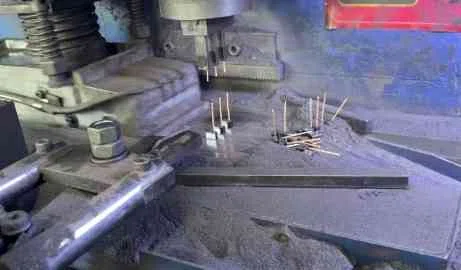
Visual inspection workflow includes:
- • Material: Confirm approved material/grade reference.
- • Dimensions: Check thickness, width, length, contact radius, bevel, groove, shunt position.
- • Surface: Check for cracks, chips, rough sides, contact-face defects.
- • Assembly: Inspect shunt length/connection, terminal orientation, spring/cap dimensions.
- • Sets: Check multi-section matching and set completeness.
- • Optional Tests: [Insert verified CARBOLVE test capability, e.g., shunt pull test].

How to Choose the Right AC Motor Brushes
- Confirm Brushes Exist: Look for holders, commutator, or slip rings.
- Identify Motor Type: Universal, commutator, wound rotor, slip ring.
- Identify Contact Surface: Segmented commutator or continuous rings.
- Identify Motor: Manufacturer, model, nameplate, equipment.
- Identify Existing Brush: Markings, OEM number, sample.
- Measure Brush: Thickness, width, length, face, shunts, terminal.
- Electrical Conditions: Voltage, current, power, rotor current.
- Mechanical Conditions: Speed, holder size, pressure, vibration.
- Environment: Temp, humidity, dust, oil, chemicals.
- Existing Problem: Wear, sparking, sticking, noise, heating.
- Confirm Quantity: Trial, maintenance, annual, inspection reqs.
How to Measure an AC Motor Brush for Replacement
Thickness & Width: Measure dimensions fitting between the sides of the brush holder.
Length: Measure complete body length. (Worn brush may not show original length).
Contact Face: Record if flat, radiused, beveled, grooved, angled, or stepped.
Shunt: Record number, position, exposed length, connection point.
Terminal: Record type, hole size, width, thickness, orientation.
Assemblies: Photograph/measure spring, cap, cut-off device, or multi-section spacing.
Marking: Photograph visible codes before cleaning.
Note: Dimensions alone may not identify correct material. Motor-type and operating info are still required.
Technical Comparisons
AC vs DC Motor Brushes
AC: Universal, AC commutator, wound-rotor, or slip-ring motor. Alternating current. Material direction depends strongly on universal or slip-ring design.
DC: Brushed DC motor. Usually a segmented commutator. Direct current. Often application-specific electrographite.
The same brush grade should not be transferred between AC and DC applications without technical review.
Universal vs Wound-Rotor Brushes
Universal: Segmented commutator, current transfer & commutation, compact/equipment-specific, often spring/cap construction. Tools, vacuums.
Wound-Rotor: Continuous slip rings, rotor-circuit current transfer, industrial size, body/shunts/terminals. Cranes, mills, industrial drives.
Commutator vs Slip-Ring Brushes
Commutator: Segmented. Mechanical commutation. Concerns: Sparking, grooving. Requires appropriate resistance.
Slip-Ring: Continuous ring. Rotor current transfer. Concerns: Arcing, scoring, heating. Considers conductivity and ring compatibility.
A slip-ring brush may not provide acceptable commutation on a segmented commutator.
Electrographite vs Metal Graphite
Electrographite: Graphitized carbon. Generally higher resistance. Industrial motors. Often considered where commutation is important.
Metal Graphite: Graphite + conductive metal. Generally lower resistance. Selected lower-voltage or high-current slip-ring systems. Must be evaluated carefully on commutators.
AC Motor Brush Troubleshooting Guide
AC motor brush symptoms may also originate from the commutator, slip rings, brush holder, spring system, armature, rotor circuit, bearings, wiring, motor load, alignment, cooling, contamination, or maintenance condition. Replacing the brushes alone may not correct the root cause.
| Symptom | Possible Contributing Factors | Information to Check |
|---|---|---|
| Rapid brush wear | Material, current, speed, pressure, contact surface, environment | Motor data, wear pattern, brush grade |
| Universal motor sparking | Contact, material, commutator, overload, armature condition | Brush, holder, commutator, motor |
| Slip-ring arcing | Ring contamination, pressure, current, vibration, material | Ring, holder, brush, rotor circuit |
| Brush sticking | Clearance, dust, rough sides, oil, holder deformation | Brush and holder dimensions |
| Uneven wear | Alignment, pressure, runout, vibration, current imbalance | Compare the complete brush set |
| Commutator grooving | Abrasive contact, contamination, unsuitable material | Groove pattern and brush face |
| Slip-ring scoring | Hard particles, damaged edges, pressure, misalignment | Ring surface, brush, holder |
| Ring overheating | Excessive current, poor contact, oxidation, insufficient area | Current, temp, brush arrangement |
| Spring discoloration | Overheating, current path, damaged shunt | Spring, shunt, terminal |
Frequently Asked Questions
What are AC motor brushes?
Do all AC motors use carbon brushes?
Can the same brush be used in AC and DC motors?
Does replacing the brushes always solve motor sparking?
How long do AC motor brushes last?
When should AC motor brushes be replaced?
What Information Is Needed for a Quote?
Not every item is required for every inquiry. Provide all information currently available.