
Carbolve Logo

Graphite Products Manufacturer for Industrial Components

CARBOLVE is a graphite products manufacturer specializing in precision carbon and graphite industrial components. We manufacture graphite bushings, graphite bearings, graphite rods, and custom machined graphite parts according to your drawings, physical samples, dimensions, material requirements, and operating conditions. Support for OEM, replacement, and repeat production.

Send your product type, drawing or sample, dimensions, graphite grade if known, operating temperature, atmosphere, load, mating component and required quantity.

Industrial graphite products manufactured by CARBOLVE
Carbon & Graphite Focus
Drawing & Sample Mfg
Custom Machining
Material Selection
Dimensional Inspection

What Are Industrial Graphite Products?

Industrial graphite products are components or engineered shapes manufactured from suitable graphite or carbon-based materials for mechanical, thermal, electrical, sealing, friction or high-temperature functions. Their performance depends on the specific graphite grade, material structure, component geometry, mating conditions and operating environment.

"Graphite Products" is a broad B2B commercial term. A buyer may be looking for stock shapes, precision machined parts, bearings, or high-temperature components. Therefore, CARBOLVE acts as a product finder and application hub to match your requirement with the correct verified manufacturing specification.

See how to choose the right product →

CARBOLVE Product Taxonomy

  • Graphite Bearings
  • Graphite Bushings
  • Graphite Rods
  • Custom Machined Graphite Parts
  • Carbon / Graphite Sealing Components
  • Note: Specific product availability is subject to verified material and geometry review.

Graphite Products vs. Raw Graphite Material

CARBOLVE should be described primarily as a graphite component manufacturer unless its raw graphite material production or supply capabilities are specifically verified.

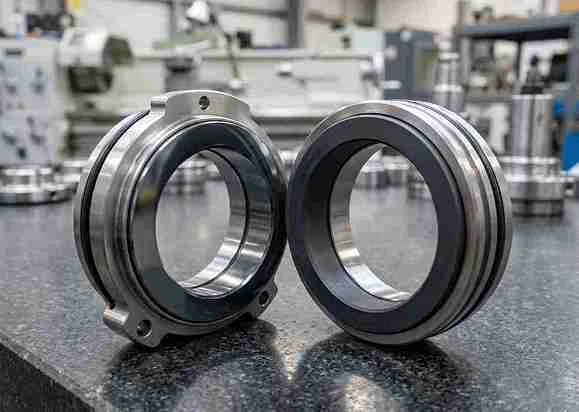
Finished Graphite Products

Manufactured to specific component geometry and tolerances based on drawings or samples.

  • Graphite bearings & bushings
  • Precision-machined graphite components
  • Graphite rings & sealing parts
  • Graphite rods (machined to size)
Finished machined graphite component Request a Finished Component Quote →

Raw / Semi-Finished Materials

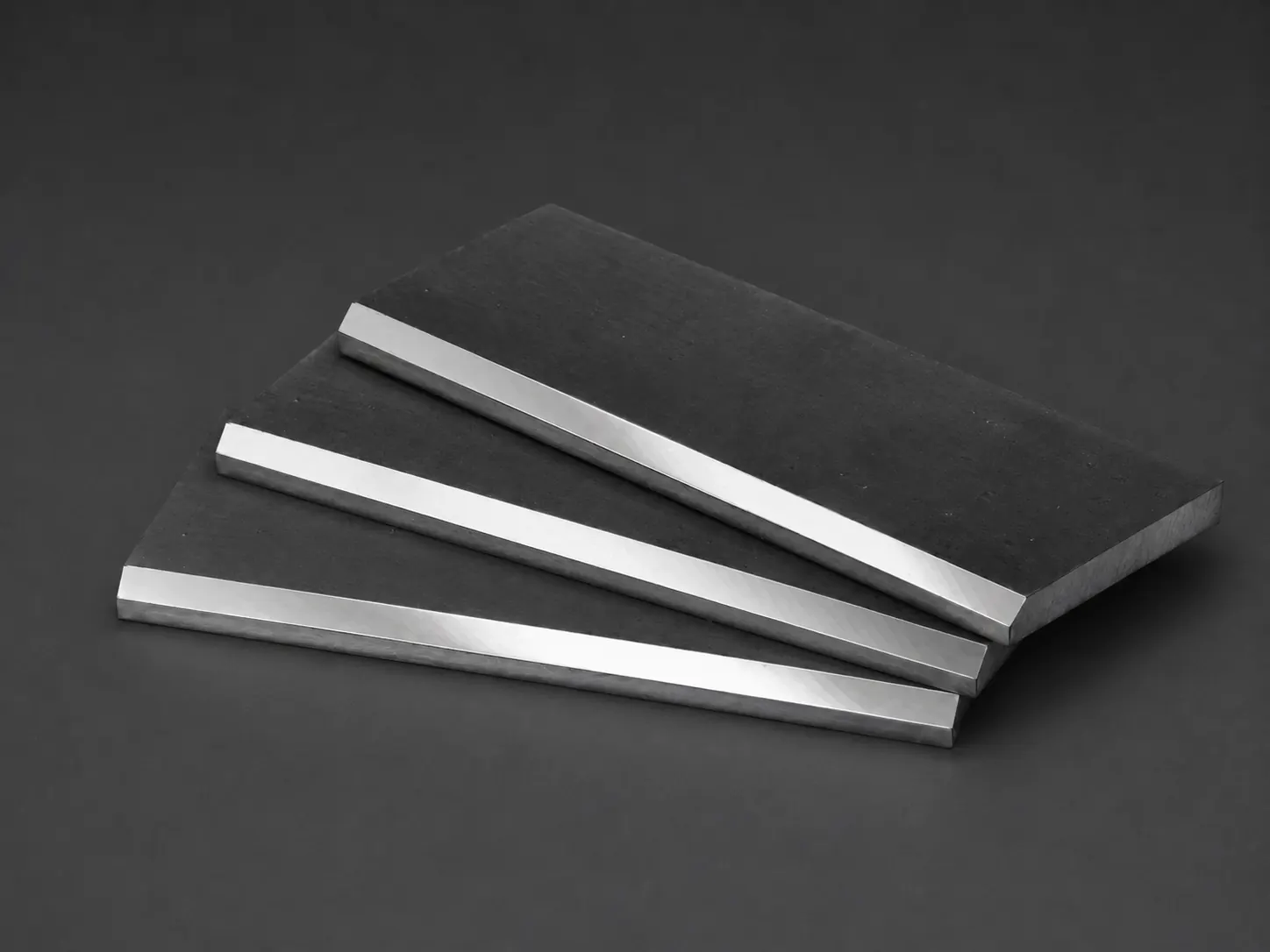
Basic material forms produced by graphite manufacturers, often used as blanks for further machining.

  • Graphite blocks & plates
  • Large raw rounds
  • Graphite powders or flakes
  • Unmachined material blanks
Raw graphite block material

CARBOLVE supplies raw material forms only where verified.

Graphite Products Manufactured for Industrial Applications

Explore CARBOLVE's verified primary product categories.

Industrial graphite bushings

Graphite Bushings

Graphite bushings are sleeve-type sliding components used to support, guide or separate moving machine parts in suitable applications. They are selected based on load, speed, temperature, atmosphere, and shaft material.

Customizable Parameters:
ID / OD / Length Wall Thickness Carbon/Graphite Grade
Industrial graphite bearings

Graphite Bearings

A broader category of sliding bearing components, which may include sleeve bearings, flanged bearings, or thrust bearings depending on verified design. Selection depends heavily on environmental conditions and lubrication state.

Selection Factors:
Load & Speed Shaft Hardness Operating Environment
Custom CNC machined graphite components

Custom Machined Graphite Products

CARBOLVE evaluates and manufactures custom graphite components from 2D drawings, CAD models, or physical samples. We process complex CNC profiles, steps, grooves, slots, and threads where machining capability is verified.

Evaluation Inputs:
Engineering Drawing Physical Sample Equipment Information
Graphite Rods

Graphite Rods

Supplied according to verified diameter, length, and material grade. Available as machined components with specific surface conditions or as blanks. Custom ends and bores available where required.

Request Graphite Rod Dimensions →
Carbon Graphite Seals

Carbon/Graphite Seal Components

Engineered sealing components including mechanical seal faces and segmented carbon seal rings. Material compatibility with process media is critical.

View Carbon Seals Category →

Why Is Graphite Used for Industrial Components?

Depending on the specific grade, suitable graphite materials may offer unique combinations of properties for demanding applications. (Note: Not every grade possesses every property.)

Thermal Stability Can perform at high temperatures in suitable atmospheres.
Self-Lubricating May offer low-friction behavior in specific tribological setups.
Chemical Compatibility Resistant to many process media (grade dependent).
Machinability Allows for precision CNC manufacturing of complex shapes.

Graphite Properties That Matter in Component Selection

Property Why It Matters CARBOLVE Data
Material Grade Identifies the specific material formulation and baseline performance. [Verified upon inquiry]
Density / Porosity Affects material structure, strength, and permeability in sealing applications. [Insert verified data]
Hardness Influences wear resistance and machining behavior. [Insert verified data]
Compressive Strength Critical for bearing and load-bearing applications. [Insert verified data]
Thermal Expansion (CTE) Determines fit and clearance changes at high temperatures. [Insert verified data]
Impregnation Resin or metal treatments alter chemical behavior, strength, and wear. [Verified options]

Note: We do not publish competitor specifications as CARBOLVE data. Values depend on actual grade selection.

Graphite & Carbon Material Options

Natural vs. Synthetic Graphite

Confirm whether your component requires natural, synthetic, carbon-graphite, or another engineered carbon material according to the actual grade.

  • Natural Graphite: Naturally occurring material. Commercial forms include flake, vein, or amorphous depending on the market.
  • Synthetic Graphite: Manufactured carbon material converted toward a graphitic structure through high-temperature processing. Widely used for precision-machined industrial components.

Graphite vs. Carbon Graphite

These terms are often used loosely in commercial searches but should not automatically be treated as identical engineering materials.

  • Graphite: May refer to natural or synthetic graphite-rich materials with distinct thermal and electrical properties.
  • Carbon Graphite: Commonly refers to engineered carbon/graphite composite material families specifically used for mechanical and tribological components.

Always select components according to verified material grade data rather than terminology alone.

Extruded vs. Molded vs. Isostatic Graphite

Graphite materials are produced using different forming processes, which influence grain orientation, anisotropy, available size, and mechanical properties. (Note: CARBOLVE forms finished components; raw block forming methods depend on the selected material manufacturer and grade.)

Extruded Graphite

Material is forced through a die. Often exhibits directional properties (anisotropy) along the extrusion axis. Common for long rods or specific electrical applications.

Molded Graphite

Pressed in a mold. Offers different density and strength profiles compared to extrusion. Suitable for various block and plate geometries.

Isostatic Graphite

Pressed uniformly from all directions. Generally provides more uniform, isotropic properties and finer grain structures, ideal for highly detailed precision machining.

How Graphite Material Is Selected

A finished product should be specified by its verified material grade and operating conditions, not just dimensions.

Temperature & Atmosphere

Graphite behavior at elevated temperatures changes substantially with the atmosphere (Air vs. Inert Gas vs. Vacuum). Graphite can oxidize in oxygen-containing environments. High-temperature capability must be specified together with the operating atmosphere.

Submit Temperature Data →

Load, Speed & PV

Critical for bearings and sliding parts. We need load direction, magnitude, RPM, and duty cycle. There is no universal PV limit; it depends on the specific grade and system cooling.

Submit Mechanical Data →

Shaft & Mating Material

Graphite component performance depends on the mating system. Supply shaft material, hardness, surface finish, and alignment data to evaluate bearing or seal viability.

Discuss Mating Surfaces →

Chemical Compatibility

Graphite is not resistant to all chemicals. Compatibility depends on the base material grade, any impregnation (resin/metal), process media concentration, and temperature.

Submit Process Media →

Custom Machining & Fragile Features

Graphite is highly machinable but brittle. We review drawings for:

  • Thin walls and unsupported sections
  • Threads (engagement length & load review)
  • Sharp corners vs. required radii
  • Grooves, slots, and complex CNC profiles

Tolerances: Machining tolerance depends on graphite grade, grain size, component dimensions, and geometry. Critical tolerances should be clearly identified on your approved drawing.

Manufacturing Workflows

Graphite Products From Your Drawing

  1. Receive drawing (CAD or 2D).
  2. Confirm material grade and critical dimensions.
  3. Review tolerances and complex features.
  4. Review operating conditions to ensure material suitability.
  5. Confirm manufacturing feasibility and inspection criteria.
  6. Produce according to approved specification.

Manufacturing From a Physical Sample

We can evaluate existing components for replacement or OEM replication. However, note the limitations of worn samples:

Usually Visible:
  • Basic shape & mounting
  • Overall OD/ID
  • Wear pattern
May Be Unknown:
  • Original clearance/tolerance
  • Exact original graphite grade
  • Original surface finish

A worn part helps identification, but equipment data is needed to establish a controlled replacement specification.

How CARBOLVE Manufactures Finished Graphite Products

We distinguish clearly between raw graphite material manufacturing and precision component machining. Below is our finished component process.

Material Spec
Blank Prep
CNC Turning
CNC Milling
Drilling/Boring
Inspection & Pack

Graphite Product Quality Control

Finished graphite components are inspected against approved requirements. Depending on the specification, inspection may include:

  • Dimensions: ID, OD, Length, Wall thickness using calipers, micrometers, or bore gauges.
  • Geometry: Roundness, concentricity, and flatness where required.
  • Surface/Visual: Checking for cracks, chips, edge damage, and feature integrity.
Packaging Note: Graphite is brittle. Components require careful packaging to prevent edge impact, chipping, and component-to-component contact during transit.
Dimensional inspection of machined graphite component

Common Graphite Component Failure Modes

Visual appearance alone does not establish the root cause. Premature wear should be investigated as a system issue.

Rapid or Uneven Wear

Possible contributors: Incorrect material grade, rough mating surface, excessive load/speed, high temperature, abrasives, or misalignment.

Request Wear Review →

Cracking / Chipping

Possible contributors: Impact, installation stress, excessive tightening, sharp stress concentration, thin walls, or thermal shock.

Send Broken Part Photos →

Oxidation Damage

Possible contributors: Oxygen-containing atmosphere at elevated temperatures, exposure time, or incorrect graphite grade for the environment.

Submit Atmosphere Data →

Why Work With CARBOLVE?

Carbon & Graphite Focus

We specialize exclusively in industrial carbon and graphite components, understanding the nuances of the material families.

Application-Based Review

Graphite selection is connected to operating conditions. We review load, speed, temperature, and media before quoting.

Precision Machining

Verified capabilities in CNC turning, milling, drilling, and custom feature machining for finished components.

Drawing & Sample Support

Projects can start from engineering data or physical parts for OEM development or replacement.

Inspection & Repeatability

We establish controlled specifications to ensure consistent repeat production of your components.

Transparency

We distinguish between material supply and finished machining, providing real data rather than universal marketing claims.

Frequently Asked Questions

What is a graphite products manufacturer?
A graphite products manufacturer produces or machines industrial graphite components according to material, geometry and application requirements. The exact scope may range from raw graphite production to precision component machining, so buyers should verify which manufacturing stages a supplier actually performs. CARBOLVE focuses on finished component machining.
Does CARBOLVE manufacture raw graphite materials?
CARBOLVE is primarily a manufacturer of finished graphite components. We purchase qualified raw graphite materials (blocks, rounds) and precision machine them into finished parts like bearings, bushings, and custom shapes. We do not claim to operate graphitization furnaces or mine graphite unless specifically verified for a project.
What is the maximum temperature of graphite?
There is no single universal maximum operating temperature for all graphite products. The acceptable temperature depends on graphite grade, operating atmosphere, mechanical load, exposure time and process environment. Graphite behavior in air differs significantly from its behavior in vacuum or inert atmospheres.
Is graphite self-lubricating? Can bearings run without oil?
Graphite can provide useful self-lubricating and low-friction behavior in suitable applications, but friction and wear depend on graphite grade, mating material, load, speed, temperature, atmosphere and contamination. While some materials are selected for dry applications, this does not mean every graphite bearing can operate without lubrication under all conditions.
Can graphite parts have thin walls or threads?
Yes, some graphite components can be machined with relatively fine features, including threads. However, graphite is brittle. Thin walls, small details, or threads must be reviewed for material strength, machining feasibility, handling, and application loading. We do not promise metal-equivalent thread strength.
Can competitor graphite grades be cross-referenced?
An existing grade code can be used as a technical reference, but grade names are manufacturer specific. A replacement or alternative material should be evaluated using available material-property data, component function and operating conditions. Color cannot reliably identify a material grade.

Quotation Checklist

Not every item is required for every product, but complete information helps CARBOLVE evaluate feasibility and specifications.

Product & Project Type Bearing, Bushing, Rod, Custom Part? New OEM, Replacement, Prototype?
Geometry & Features OD, ID, Length, Tolerances, Threads, Grooves. (Drawing preferred).
Operating Conditions Temperature, Atmosphere, Load, Speed, Process Media.
Mating System Shaft material, hardness, surface finish.
Commercial Quantity, Destination.

Request a Graphite Product Quote

Please include dimensions, temperature, atmosphere, load, speed, and required quantity.

Request custom graphite products from CARBOLVE

Need a Graphite Products Manufacturer for a Custom Component?

Complete material, geometry and application information helps CARBOLVE evaluate graphite grade, machining feasibility, inspection requirements and production specifications. Send us your drawing, physical sample, dimensions, and operating environment data.

Email: sales@carbolve.com | Phone: +86(513)-81100106

Address: No.1, Taoyuan Road, Nantong City, Jiangsu Province, China