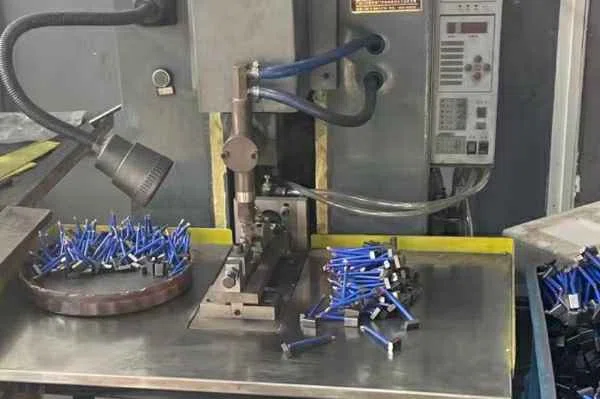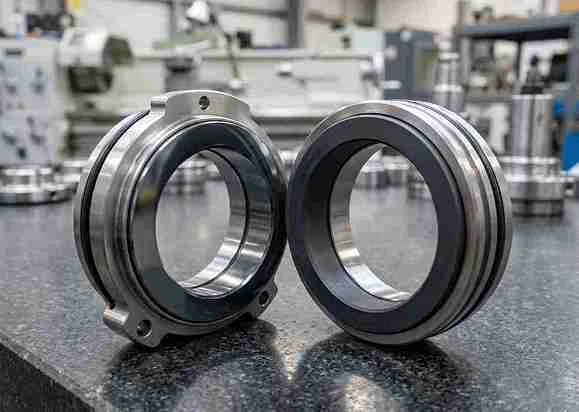
Carbon Brush Manufacturer
CARBOLVE manufactures carbon brushes and motor brushes for OEM, replacement, maintenance, and industrial applications. Our production scope includes DC motor brushes, generator brushes, industrial carbon brushes, and equipment-specific custom brushes. Submit your drawing, physical sample, dimensions, motor model, or operating information for technical evaluation.
- Custom Carbon Brush Manufacturing
- Drawing and Sample-Based Production
- Multiple Carbon Brush Materials
- OEM and Replacement Support
- Motor Application Review
Send the brush dimensions, motor model, photographs, existing markings, application details, and required quantity for evaluation.
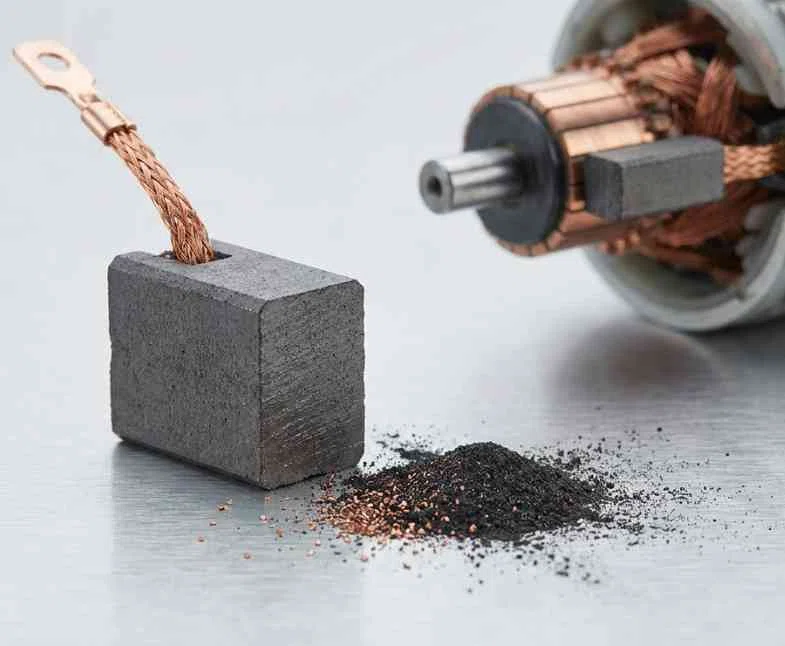
Carbon Brushes Manufactured for Different Motors and Equipment
Carbon brush geometry, material, lead, terminal, spring, and contact surface must be selected according to the motor and operating conditions. CARBOLVE manufactures brushes across four primary categories.
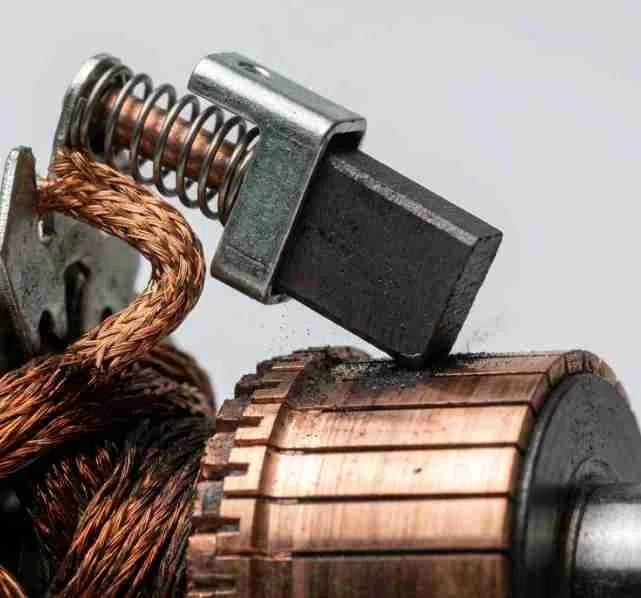
Motor Carbon Brushes
Includes DC motor brushes, applicable AC motor brushes, industrial motor brushes, and slip ring carbon brushes.
View Motor Carbon Brushes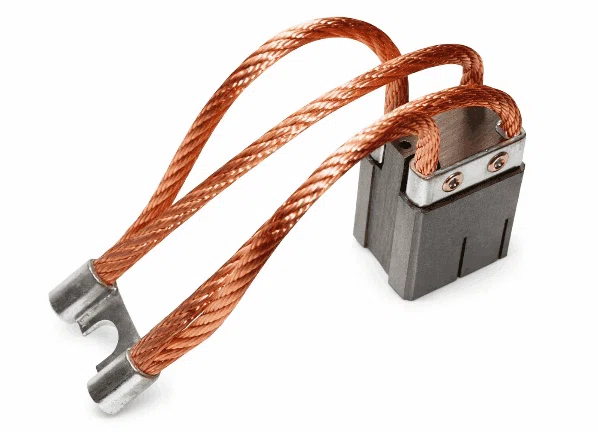
Generator & Alternator Brushes
Includes generator carbon brushes, alternator carbon brushes, and power-generation slip-ring brushes.
View Generator Brushes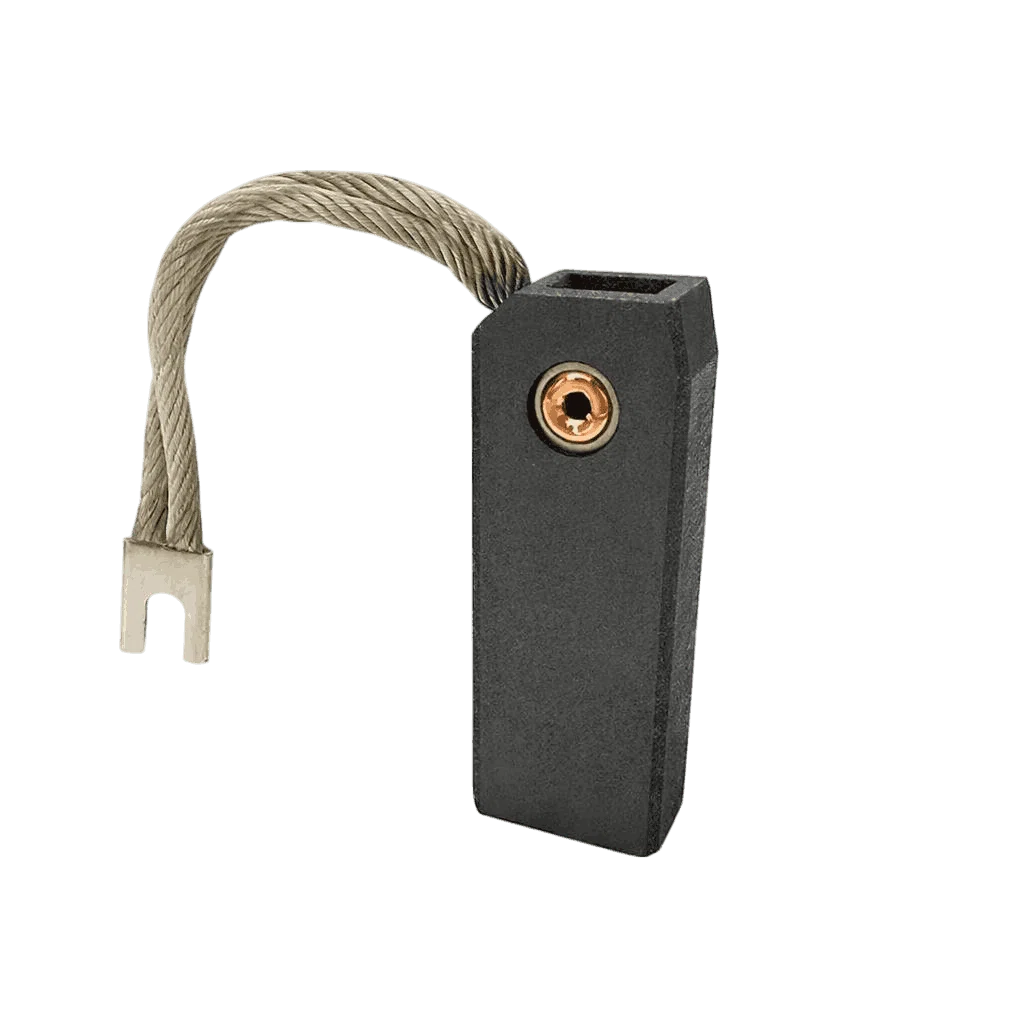
Equipment Industry Carbon Brushes
Includes carbon brushes for power tools, mixers, vacuum motors, and air blowers.
View Equipment Carbon Brushes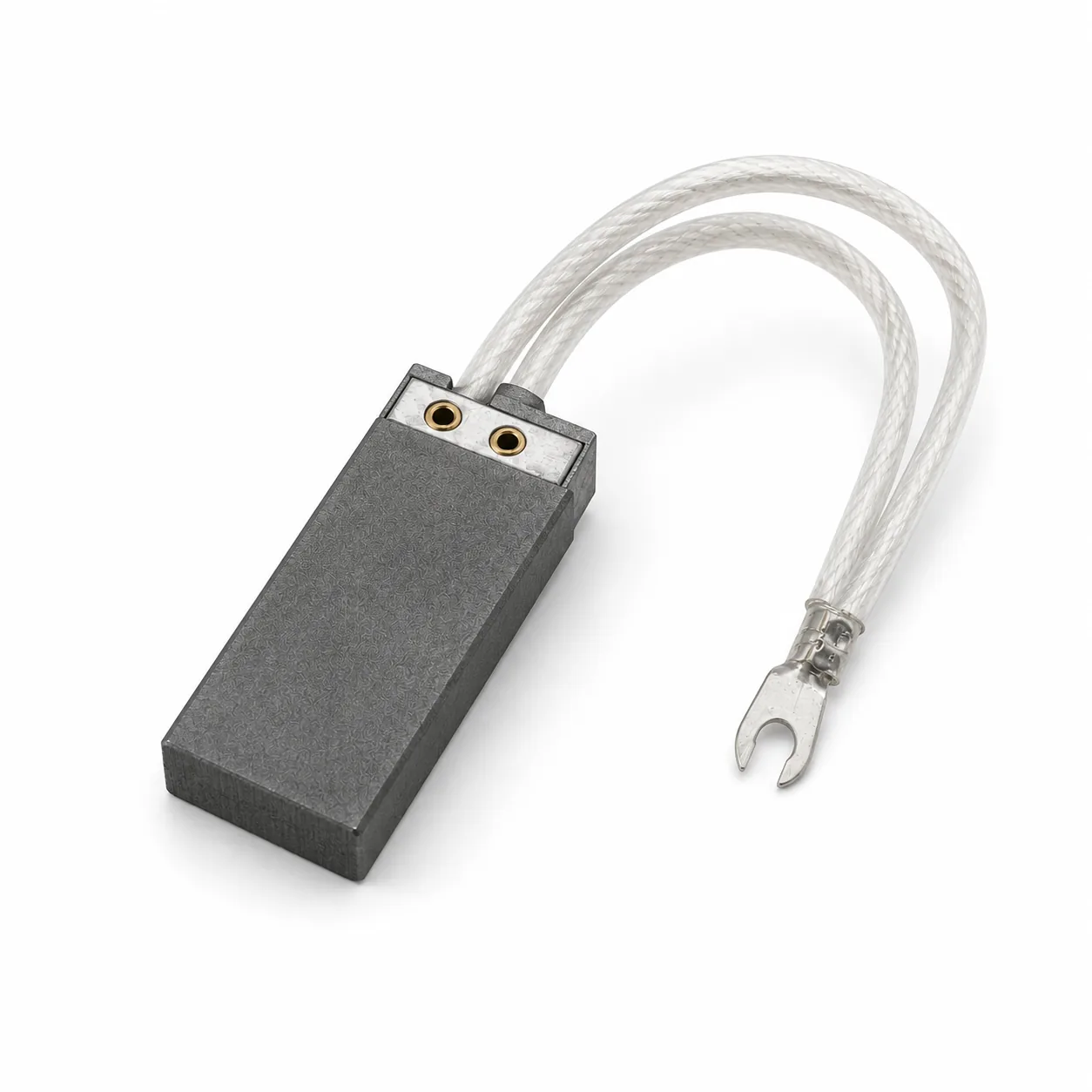
Custom Carbon Brushes
Non-standard dimensions, custom leads, custom terminals, sample-based replacement, and drawing-based OEM production.
Request a Custom BrushNot Sure Which Brush You Need?
What Is a Carbon Brush?
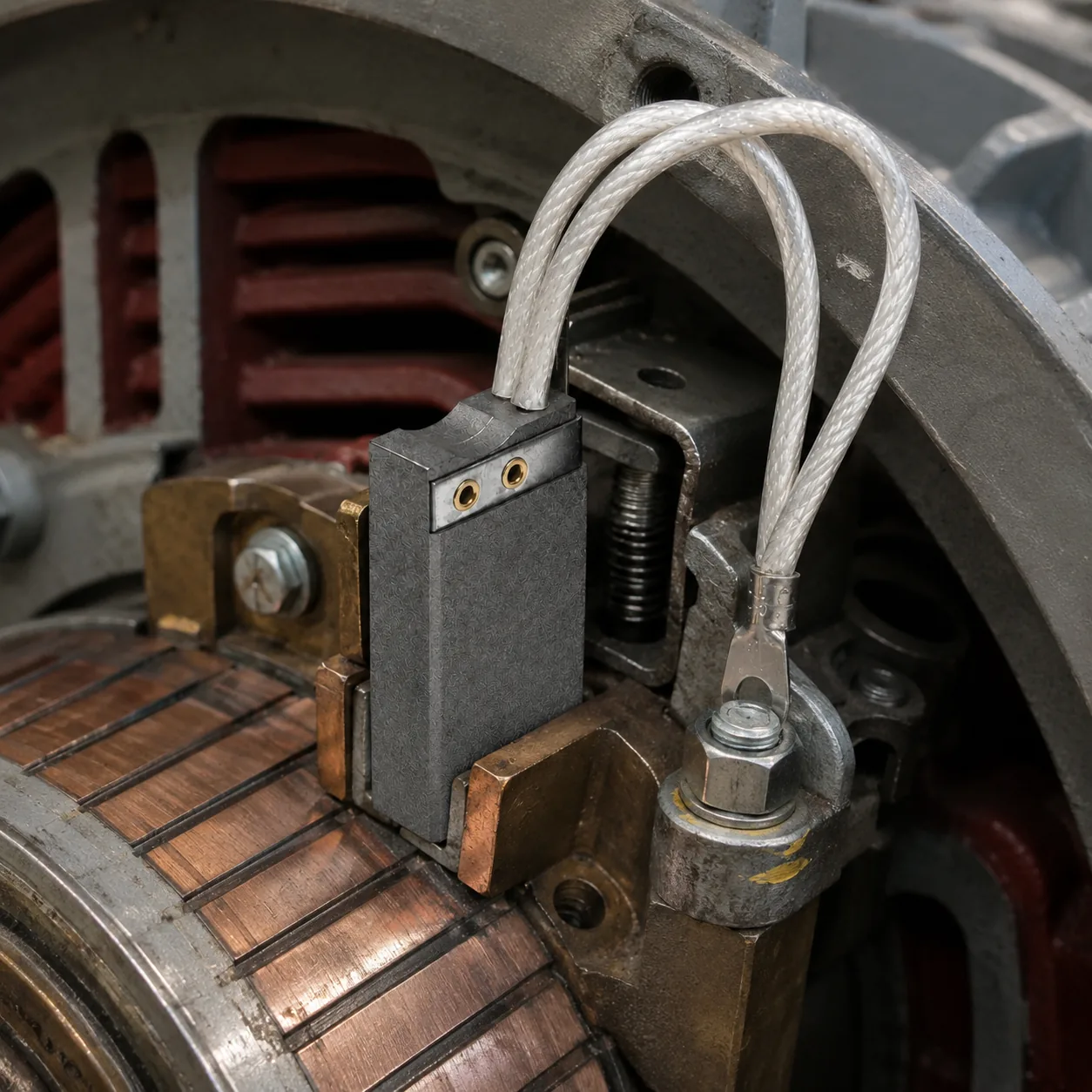
A carbon brush is a sliding electrical contact used to transfer current between stationary and rotating parts in motors, generators, alternators, or slip-ring systems. The term "brush" describes its electrical-contact function rather than its physical appearance.
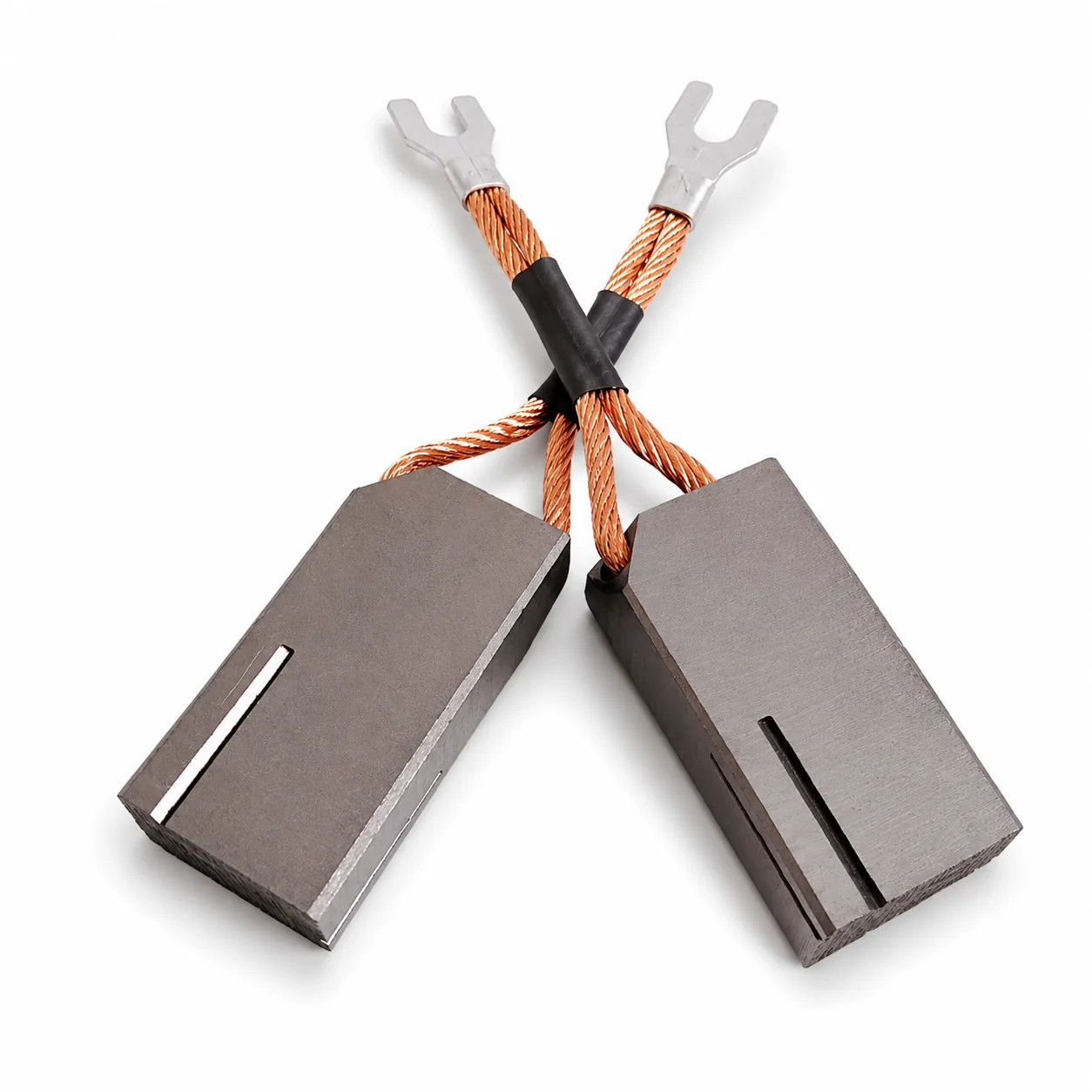
Typical Brush Components
- Carbon or graphite body
- Contact face
- Flexible copper lead or shunt
- Terminal
- Spring, cap, or other assembly where applicable
*Note: Not every carbon brush includes every component. Design depends on the application.
How Does a Carbon Brush Work in a Motor?
A spring or brush holder maintains contact between the brush and the commutator or slip ring.
Electrical current passes through the lead and carbon brush.
The brush contact face slides against the rotating surface.
The brush gradually wears and must be inspected or replaced according to the application.
Performance is affected by: Brush material, current, speed, spring pressure, surface condition, temperature, humidity, contamination, vibration, and duty cycle.
Carbon Brush Types Available From CARBOLVE
Products manufactured and classified by application, equipment, and structural design.
By Motor and Application
DC Motor Brush
For industrial drives and traction motors requiring specific commutation characteristics.
View Details →By Equipment
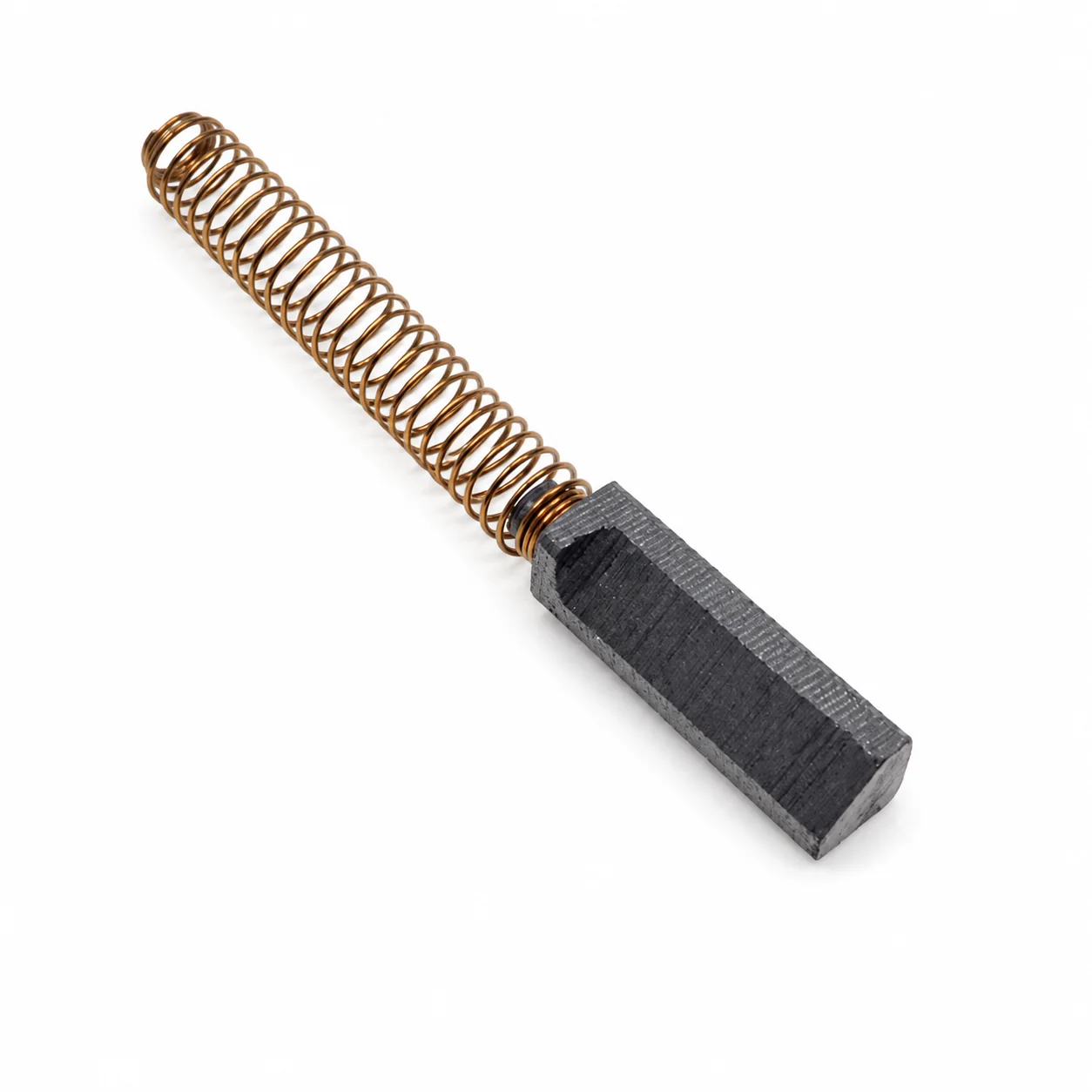
Mixer Brushes
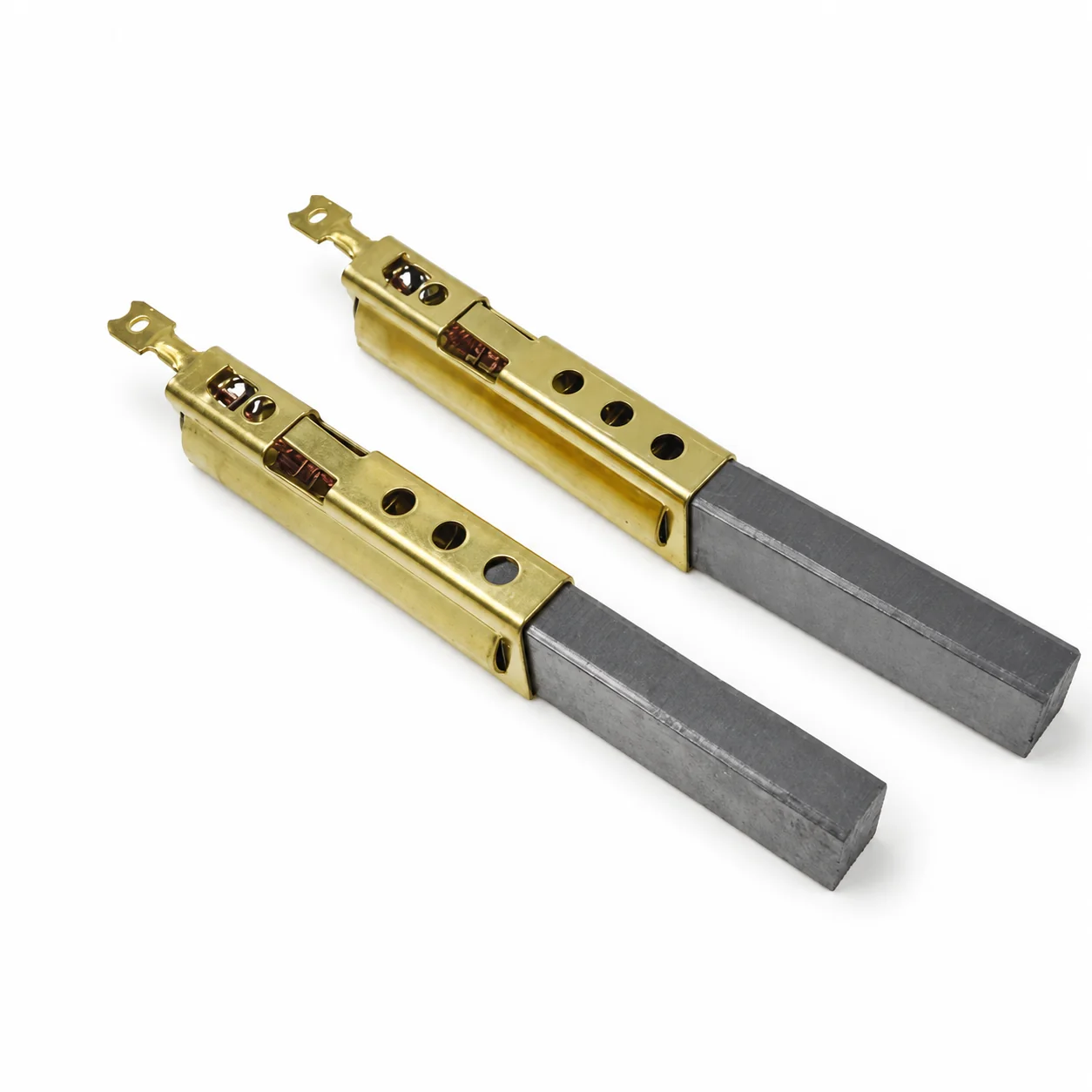
Vacuum Motor Brushes
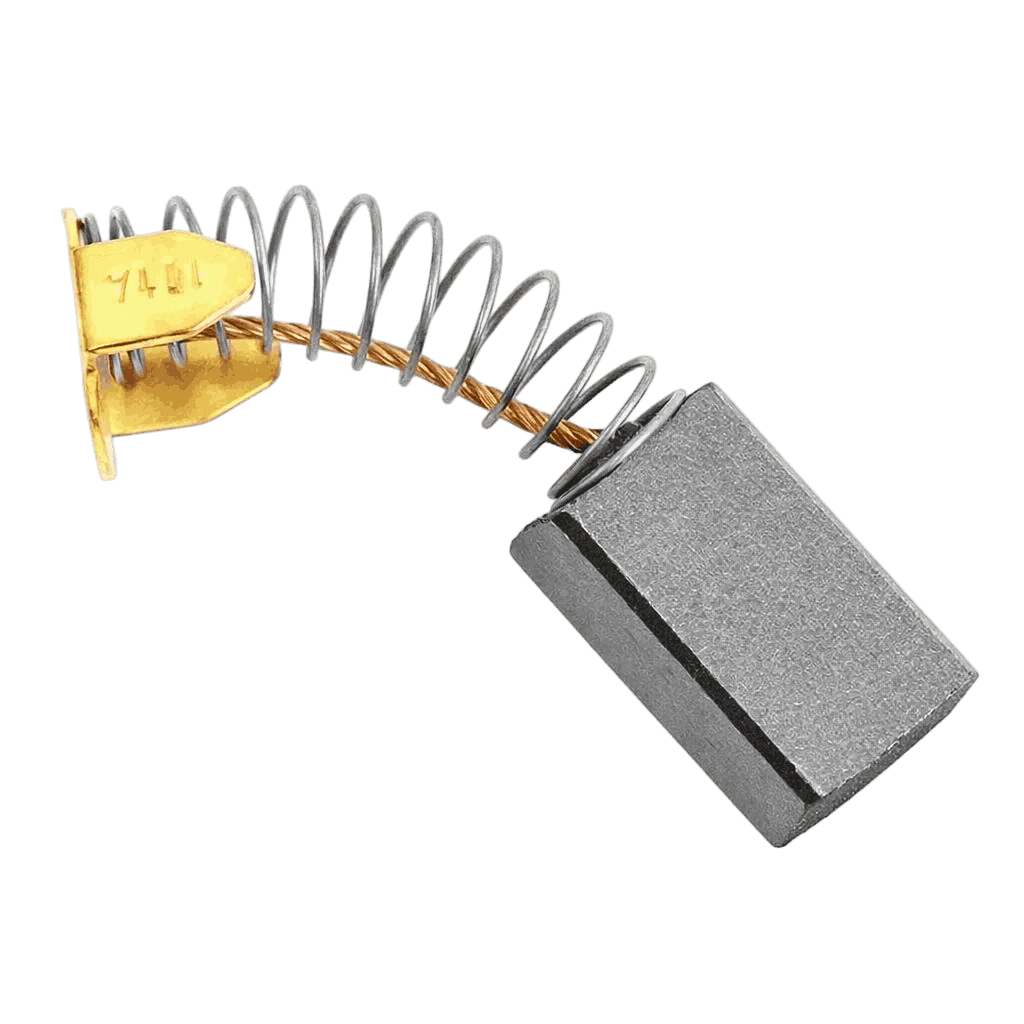
Power Tool Brushes
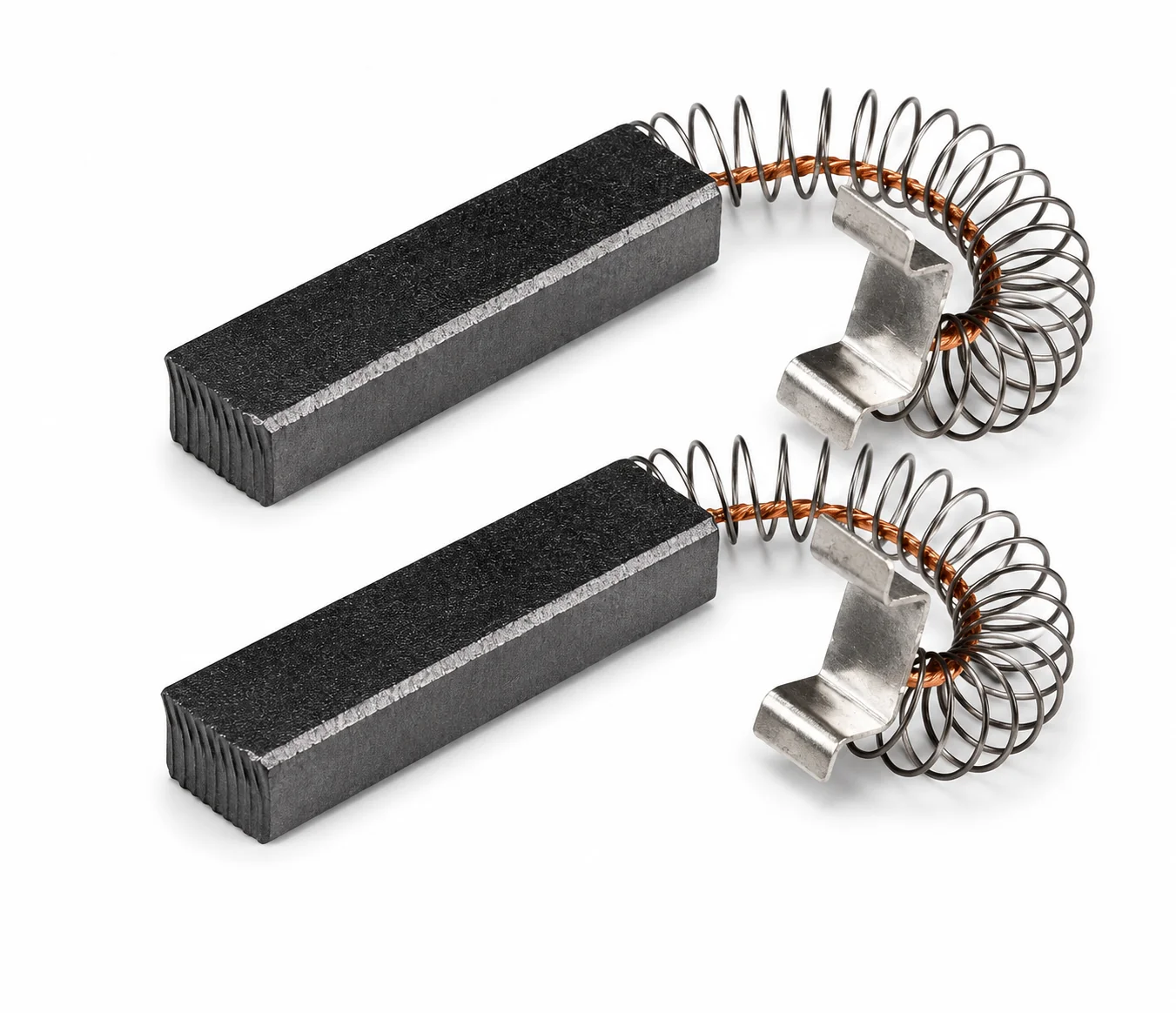
Air Blower Brushes
By Construction
CARBOLVE manufactures various structural designs subject to drawing confirmation:
- Single-lead brush
- Multiple-lead brush
- Spring-loaded brush
- Carbon brush with cap
- Carbon brush with terminal
- Split or multi-section brush
Carbon Brush Materials for Different Operating Conditions
There is no single material suitable for every motor. Material selection depends on voltage, current density, speed, commutation, duty cycle, motor design, temperature, humidity, surface condition, required electrical conductivity, and required wear behavior.
Carbon Graphite
Carbon graphite grades may be considered for selected applications requiring particular resistance, strength, commutation, or surface-film characteristics.
Graphite
Graphite-rich materials may provide lower-friction characteristics in selected applications.
Electrographite
Electrographite grades are widely considered for industrial motors and generators, but the correct grade remains application dependent.
Copper Graphite
Metal-graphite materials containing copper may be considered when higher conductivity and lower electrical resistance are important.
Silver Graphite
Silver graphite materials may be considered for selected low-voltage, signal-transfer, grounding, or specialty electrical-contact applications.
| Material Family | General Characteristic | Possible Application Direction | Information Required |
|---|---|---|---|
| Carbon graphite | Application-dependent electrical and mechanical balance | Selected motors and legacy equipment | Voltage, current, speed and surface |
| Graphite | Potentially lower-friction behavior | Selected high-speed or low-load applications | Speed, load and surface condition |
| Electrographite | Industrial motor and generator application range | DC motors, generators and industrial equipment | Current, speed, duty and environment |
| Copper graphite | Higher electrical conductivity direction | Selected low-voltage or high-current systems | Current density, voltage and temperature |
| Silver graphite | Specialty conductive contact material | Signal, grounding or specialized equipment | Contact requirements and environment |
This table provides general material directions only. Final material selection must be based on complete motor and operating information.
CARBOLVE CVB Carbon Brush Material Grade System
CARBOLVE organizes carbon brush materials by family and application direction. The CVB prefix identifies the carbon brush material system. The family letters identify the material family, while the number identifies a position within that family. A grade number does not state metal content, density, current density or equivalence to another manufacturer’s grade.

Electrographite
CVB-EG20, CVB-EG30, CVB-EG35, CVB-EG40, CVB-EG45, CVB-EG50
DC motors, generators and industrial drives

Copper Graphite
CVB-CU20, CVB-CU30, CVB-CU40, CVB-CU50
Low-voltage, high-current collection

Silver Graphite
CVB-AG20, CVB-AG30, CVB-AG40
Slip rings, precision current and signal transfer

Carbon Graphite
CVB-CG20, CVB-CG30
Older motors and cleaning-duty brushes

Natural Graphite
CVB-NG20, CVB-NG30
High-speed, low-friction current collection

Resin-Bonded Carbon / Graphite
CVB-RB20, CVB-RB30, CVB-RB35, CVB-RB40
Power tools, vacuum motors and appliances
Representative CVB Development Target Values
The values below are provisional development targets for preliminary material comparison. They are not released specification limits and must not be used as universal maximum ratings.
| Grade | Material | Density g/cm³ | Resistivity µΩ·m | Shore Hardness | Flexural Strength MPa | Current Density A/cm² | Peripheral Speed m/s | Preliminary Application |
|---|---|---|---|---|---|---|---|---|
| CVB-EG20 | Electrographite | 1.65 | 35 | 52 | 26 | 10 | 40 | General DC motors |
| CVB-EG30 | Electrographite | 1.70 | 26 | 55 | 32 | 12 | 45 | Industrial motors and generators |
| CVB-EG35 | Electrographite | 1.65 | 38 | 40 | 24 | 10 | 55 | High-speed motors |
| CVB-EG40 | Electrographite | 1.75 | 18 | 50 | 35 | 14 | 45 | High-current DC machines |
| CVB-CU30 | Copper Graphite | 2.70 | 6 | 38 | 28 | 18 | 25 | Low-voltage DC motors |
| CVB-CU40 | Copper Graphite | 3.80 | 2.5 | 32 | 30 | 22 | 22 | Starter and high-current systems |
| CVB-AG30 | Silver Graphite | 5.00 | 2.0 | 22 | 25 | 19 | 22 | Precision slip rings |
| CVB-RB30 | Resin-Bonded | 1.70 | 110 | 65 | 45 | 7 | 25 | Power tools and vacuum motors |
Actual suitability depends on brush geometry, cooling, contact material, spring pressure, duty cycle, temperature, humidity and the condition of the commutator or slip ring.
Quick Carbon Brush Grade Selection by Operating Need
Use this matrix to identify grades for preliminary review. Final selection should be confirmed against the complete brush and contact system.
| Operating Need | First Grade to Evaluate | Alternative to Compare | Check Before Selection |
|---|---|---|---|
| General industrial DC motor | CVB-EG20 | CVB-EG30 | Voltage, current density, speed and commutator condition |
| Higher-load motor or generator | CVB-EG30 | CVB-EG40 | Commutation, overload duty and temperature |
| High-speed motor | CVB-EG35 | CVB-NG30 | Peripheral speed, vibration and brush pressure |
| Large DC machine or high-current application | CVB-EG40 | CVB-EG45 | Current density, sparking and commutator film |
| Low-voltage, high-current system | CVB-CU30 | CVB-CU40 | Voltage, current and contact temperature |
| Extreme low voltage or very high current | CVB-CU40 | CVB-CU50 | Commutation suitability and contact surface |
| Precision signal or slip-ring application | CVB-AG30 | CVB-AG40 | Signal noise, silver content and ring material |
| Older machine or cleaning-duty application | CVB-CG20 | CVB-CG30 | Commutator condition, speed and current density |
| Very high speed with low current | CVB-NG30 | CVB-EG35 | Humidity, ring material and surface speed |
| Power tool or universal motor | CVB-RB30 | CVB-RB40 | RPM, duty cycle and commutator temperature |
| Vacuum motor, blower or low-noise appliance | CVB-RB35 | CVB-RB30 | Noise, speed, duty cycle, dust and environment |
Important: Do not substitute a carbon brush grade based on code alone. Grade numbers are manufacturer-specific, and cross-brand equivalence requires material data, machine conditions and contact-system validation.
How to Interpret Carbon Brush Material Data

Electrical Resistivity
Electrical resistivity should be compared using a fixed specimen geometry and test direction. It is an important indicator of brush electrical behavior, but it cannot determine suitability by itself.
Current Density and Peripheral Speed
Recommended current density and peripheral speed are application guidance, not universal maximum ratings. Actual limits depend on brush geometry, cooling, contact material and duty cycle.
Voltage Drop, Friction and Film Formation
Voltage drop, friction, film formation, brush pressure, wear rate and commutation performance should be validated on a defined brush and contact system.
Metal-Graphite Grade Codes
Copper and silver content must be controlled independently from the grade number. CVB-CU30, for example, does not mean 30% copper.

Download the Carbon Brush Material Selection Guide
Review six material families, 22 development-reference grades, preliminary property values and an application-based selection matrix for motors, generators, slip rings, power tools, vacuum motors and other electrical applications.
Use the guide to prepare a preliminary material discussion. Confirm released property limits and application qualification before placing any grade into a drawing or purchase specification.
Carbon Brush Specifications and Custom Options
Physical and Assembly Parameters
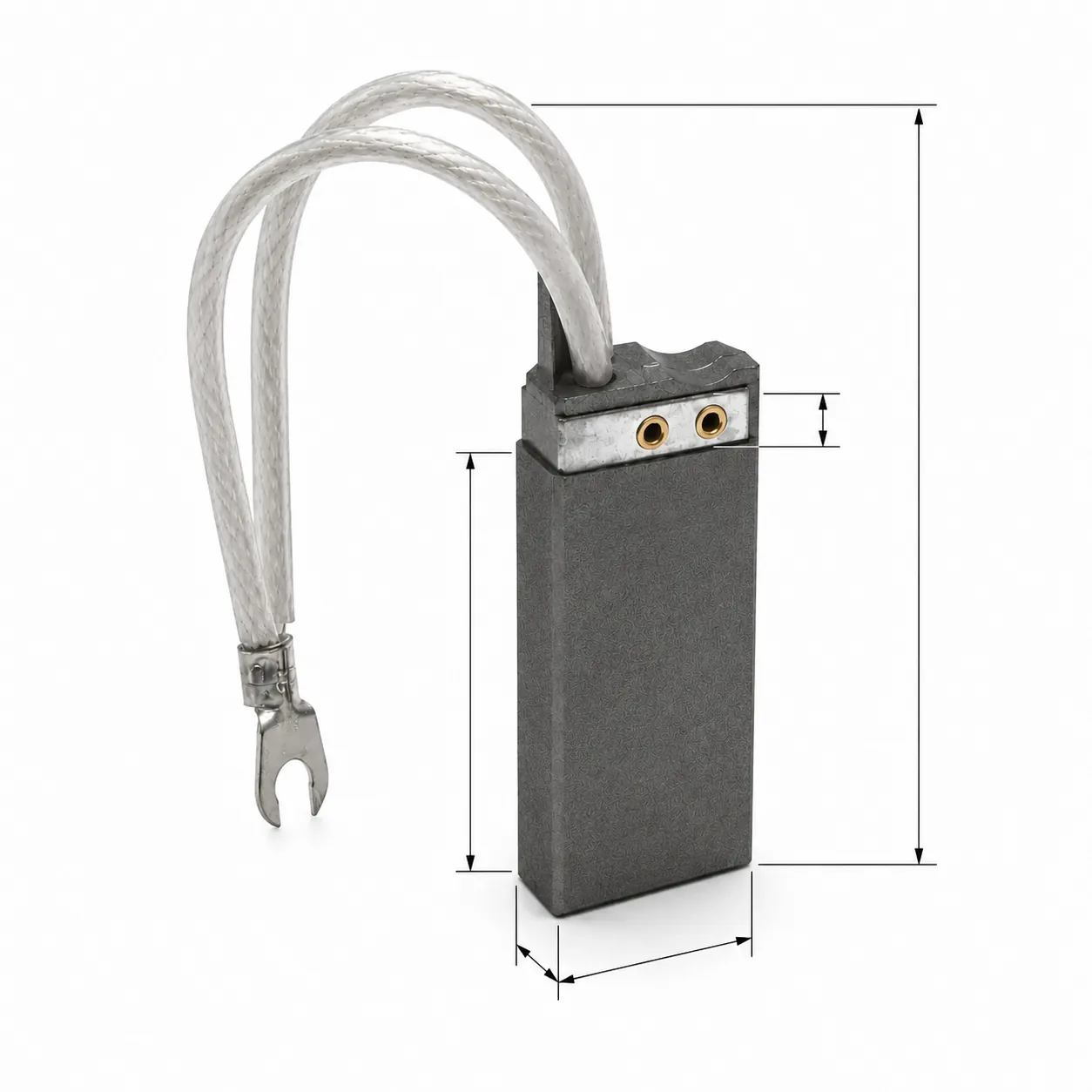
| Brush thickness | Manufactured according to drawing, sample or confirmed dimensions |
| Brush width | Manufactured according to drawing, sample or confirmed dimensions |
| Brush length | New or unworn length should be confirmed where possible |
| Contact face | Flat, radius, bevel or application-specific geometry |
| Lead or shunt | Number, location, length and construction according to design |
| Terminal | Customer drawing, sample or confirmed terminal type |
| Spring or cap | Available where applicable and verified |
Grade-Dependent Technical Data
| Density | Available according to verified material grade |
| Hardness | Available according to verified material grade |
| Electrical resistivity | Available according to verified material grade |
| Contact voltage drop | Available according to verified material grade |
| Current-density direction | Available according to verified material grade |
| Peripheral-speed direction | Available according to verified material grade |
Common Carbon Brush Problems for Motors and Equipment
Understanding operating conditions helps identify the root cause of brush failure.
Rapid Brush Wear
Possible factors: Unsuitable material, incorrect spring pressure, surface condition, electrical load, speed, humidity, contamination, vibration.
CARBOLVE Response: Review the current brush, motor information, operating conditions, and failure pattern before suggesting a product direction.
Excessive Sparking
Possible factors: Poor brush contact, incorrect grade, worn commutator, incorrect brush fit, brush-holder condition, motor issues.
CARBOLVE Response: Evaluate brush dimensions, contact face, material, holder fit, commutator condition, and available motor data.
Brush Sticking in the Holder
Possible factors: Incorrect dimensions, dust accumulation, rough brush sides, holder deformation, temperature effects.
CARBOLVE Response: Confirm brush dimensions, side clearance, surface condition, and holder information.
Lead or Terminal Mismatch
Possible factors: Standard off-the-shelf brushes not matching specific equipment requirements.
CARBOLVE Response: Confirm lead quantity, lead position, lead length, terminal shape, spring, cap, and assembly details before production.
Why Source Carbon Brushes From CARBOLVE?
Focused Carbon Experience
CARBOLVE focuses on carbon brushes and related carbon and graphite components rather than unrelated general industrial products.
Broad Carbon Brush Range
Support for motor, generator, alternator, power tool, vacuum motor, mixer, blower, and industrial brush requirements.
Drawing & Sample Manufacturing
Products can be evaluated using drawings, samples, photographs, dimensions, markings, and equipment information.
Inspection & Confirmation
Dimensions, assembly details, identification, packaging, and agreed inspection items can be confirmed before shipment.
OEM & Replacement Support
Support for new equipment, maintenance, obsolete parts, sample reproduction, and repeat-order requirements subject to technical review.
Custom Material Review
Material, geometry, lead, terminal, spring, and contact-face requirements can be reviewed according to the application.
Custom Carbon Brush Manufacturer for OEM and Replacement Projects
CARBOLVE can evaluate new OEM brush designs, replacement brushes, obsolete brushes, sample-based reproduction, drawing-based production, custom leads and terminals, equipment-specific brush sets, different material directions, trial samples, and repeat-order production. Final feasibility must be confirmed after reviewing the technical information.
Carbon Brush Manufacturing & Quality Control
How Brushes Are Manufactured
-
1
Material Selection
Use of confirmed carbon or graphite material according to the product requirement.
-
2
Precision Fabrication
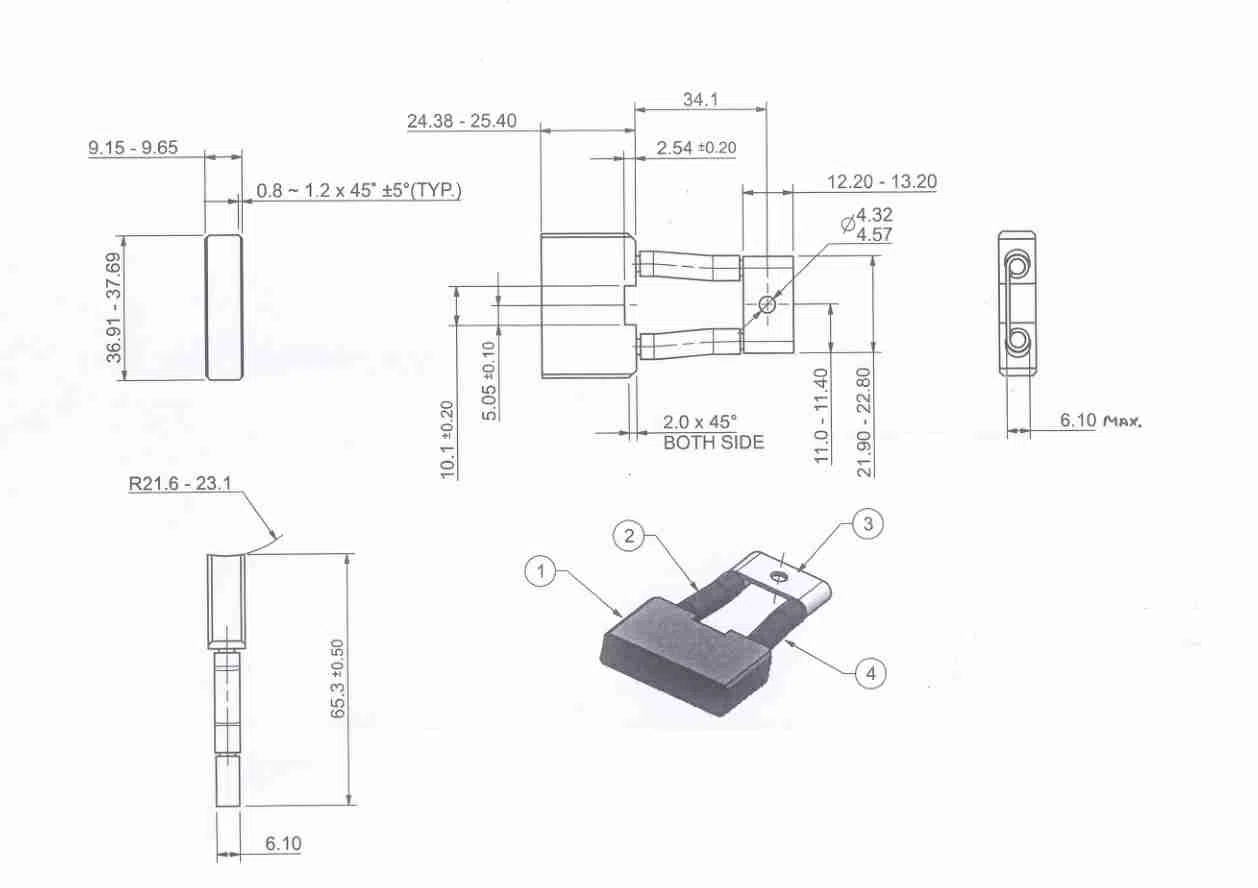
Machine the brush body, sides, slots, bevels, radius, or other required geometry.
-
3
Lead and Terminal Assembly
Attach leads, terminals, springs, or caps according to the confirmed design.
-
4
Surface Finishing
Prepare the contact face and external surfaces according to requirements.
Inspection Before Shipment
Recommended Inspection Items:
- Material Identification check
- Dimensional Inspection (Thickness, width, length, radius)
- Surface and Edge Inspection for visible defects
- Lead and Terminal Inspection (Length, position, type)
- Product Marking Check
How to Choose the Right Carbon Brush
Identify Motor
Provide manufacturer, model, motor type, and nameplate photograph.
Confirm Dimensions
Measure thickness, width, unworn length, lead length, and terminal.
Check Markings
Provide photos of grade code, OEM number, or manufacturer code.
Operating Conditions
Confirm voltage, current, speed, duty cycle, and environment.
Carbon Brush vs Graphite Brush: What Is the Difference?
"Carbon brush" is the broad product category. A "graphite brush" generally refers to a carbon brush made with a graphite-rich material. Electrographite, carbon graphite, copper graphite, and silver graphite are different material families used within the broader category.
| Term | Meaning |
|---|---|
| Carbon brush | General sliding electrical-contact component |
| Graphite brush | Brush using a graphite-rich material |
| Electrographite brush | Heat-treated engineered brush material family |
| Copper graphite brush | Graphite combined with copper for higher conductivity |
Carbon Brush Troubleshooting Guide
| Symptom | Possible Contributing Factors | Information to Check |
|---|---|---|
| Rapid wear | Material, current, speed, environment or surface | Motor data, brush grade, wear pattern and surface |
| Sparking | Contact, commutation, holder, surface or motor condition | Photographs, load, brush fit and commutator |
| Uneven wear | Holder alignment, pressure, vibration or surface | Brush set, spring force and mechanical alignment |
Note: These symptoms may also result from motor, holder, commutator, electrical, or mechanical conditions. A brush replacement alone may not correct the underlying problem.
Frequently Asked Questions
What does a carbon brush manufacturer produce?
Can CARBOLVE manufacture a brush from a sample?
Does every AC motor use carbon brushes?
How long does a carbon brush last?
Request a Custom Carbon Brush Quote
Provide all available information to help us evaluate dimensions, material direction, and manufacturing feasibility.
Need a Carbon Brush Manufacturer for Your Motor Project?
Complete product and motor information helps CARBOLVE evaluate dimensions, material direction, assembly details, manufacturing feasibility, inspection requirements, and quotation information. Send your brush drawing, physical sample, product photographs, motor nameplate, or complete dimensions.