
Motor brushes are stationary, spring-loaded electrical contacts that transfer current between a motor’s fixed wiring and a rotating surface. In a brushed motor, each brush rides against the commutator so electricity can reach the rotor windings while the shaft turns.
Despite the name, modern motor brushes do not resemble cleaning brushes. Most are solid blocks made from carbon- and graphite-based materials. The term dates back to early electrical machines that used bundles of conductive wire as sliding contacts.
Motor brushes perform two closely related jobs:
- They maintain an electrical connection between stationary and rotating parts.
- Together with the commutator, they help switch current between rotor windings so the motor continues producing torque.
Where Are the Brushes Located?
The brushes are mounted in brush holders on the stationary side of the motor. Springs push the brushes toward the commutator, which rotates with the rotor and shaft.
A typical brush assembly includes:
| Component | Function |
|---|---|
| Carbon brush | Provides the sliding electrical contact |
| Brush holder | Guides the brush and keeps it correctly aligned |
| Spring | Maintains contact pressure as the brush wears |
| Shunt or flexible lead | Carries current between the brush and terminal |
| Terminal | Connects the brush assembly to the motor circuit |
| Commutator | Receives current from the brushes and distributes it to rotor windings |
The brush must move freely inside its holder while remaining stable enough to maintain consistent contact. Incorrect holder alignment, poor spring pressure, contamination, or the wrong brush dimensions can interrupt current flow even when the carbon material itself is still usable.
How Do Motor Brushes Work?
In a brushed DC motor, electrical and mechanical events occur continuously:
- The power supply delivers current to the stationary brush assembly.
- The brush transfers that current to a commutator segment.
- The commutator routes the current into selected rotor windings.
- The energized windings create a magnetic field that interacts with the stator field and produces torque.
- As the rotor turns, the commutator connects the brushes to another winding or reverses the current direction.
- This repeated mechanical switching keeps the rotor turning in the required direction.
The brushes remain stationary; the commutator rotates underneath them. The Anaheim Automation brushed DC motor guide describes this arrangement as a sliding contact between the carbon brushes and the commutator, allowing current to pass from stationary wiring into the rotating windings.
It is useful to distinguish the two components:
- The brush carries current across the stationary-to-rotating interface.
- The segmented commutator determines which rotor winding receives the current at each angular position.
The brush alone does not perform the complete switching operation. Mechanical commutation results from the brush and commutator working together.

Why Are Motor Brushes Made of Carbon?
A sliding electrical contact must conduct current without causing unacceptable damage to the rotating surface. Carbon and graphite-based materials offer a practical balance of electrical conductivity, friction behavior, commutation performance, and controlled wear.
Graphite-based brushes can wear sacrificially, helping protect the more expensive copper commutator. Their composition can also support a stable contact film and smoother current transfer between commutator segments. This is why a worn brush is normally replaced instead of allowing the commutator to absorb all the wear.
However, a “carbon brush” is not necessarily a block of pure carbon. Common material families include:
- Carbon graphite
- Graphite
- Electrographite
- Copper graphite
- Silver graphite
Each family suits different combinations of voltage, current density, surface speed, duty cycle, and operating environment. Helwig Carbon’s grade information explains that electrographite is widely used on modern equipment, while metal-graphite materials offer higher conductivity and lower voltage drop for suitable low-voltage, high-current applications.
This material variation is one reason brushes that have the same dimensions are not automatically interchangeable.
Do All Electric Motors Have Brushes?
No. Brushes are used only when the motor design requires a sliding electrical connection.
| Motor type | Brushes? | Purpose |
|---|---|---|
| Brushed DC motor | Yes | Transfer current and support mechanical commutation |
| Universal motor | Yes | Transfer and switch current; operates from AC or DC |
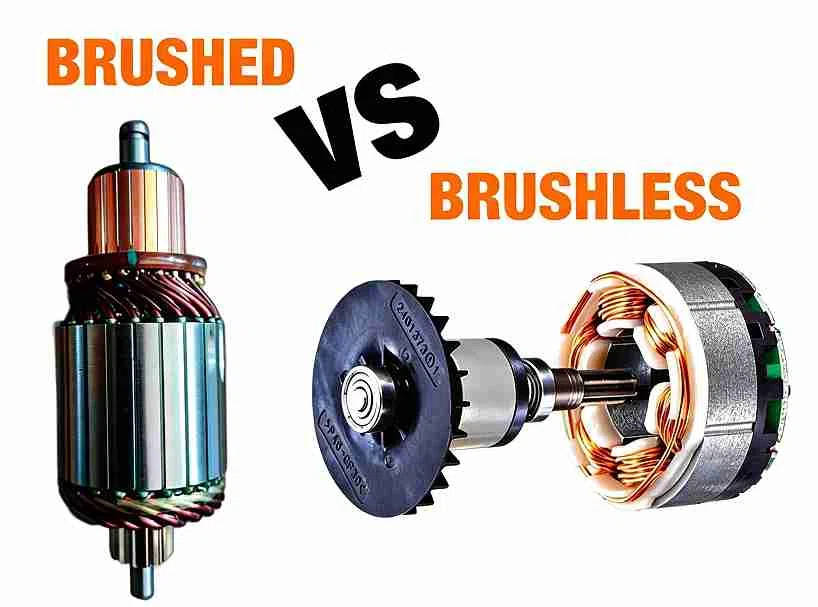
| Brushless DC motor | No | Uses electronic commutation instead |
| Squirrel-cage induction motor | No | Rotor current is induced without a brush connection |
| Wound-rotor or slip-ring motor | Sometimes | Connects rotor windings to an external circuit through slip rings |
| Synchronous motor with brush excitation | Sometimes | Supplies DC excitation to the rotor |
| Shaft-grounding system | Sometimes | Diverts shaft current to ground rather than driving the motor |
Brushless DC motors replace the mechanical brush-and-commutator system with electronic switching. This removes brush wear but requires control electronics. The Monolithic Power Systems comparison explains that brushed motors use a segmented commutator and fixed brushes, while brushless motors switch their windings electronically.
Some AC motors also contain brushes. For example, wound-rotor induction motors may use brushes and slip rings to connect external rotor resistance during starting. WEG’s wound-rotor motor documentation shows designs in which the brushes contact the slip rings during startup and are lifted afterward to reduce wear.
Therefore, “AC motor” does not automatically mean “brushless,” although most common squirrel-cage induction motors do not use brushes.
Brushes, Commutators, and Slip Rings: What Is the Difference?
These terms describe different parts of a rotating electrical interface.
A commutator is divided into insulated copper segments. As it turns, the brushes contact different segments, changing the electrical connection to the rotor windings. This mechanical switching is essential to the operation of a conventional brushed DC or universal motor.
A slip ring is normally a continuous conductive ring. A brush riding on a slip ring transfers current without the same segmented switching action. Slip rings are used in wound-rotor motors, synchronous machines, generators, and other systems that require an electrical connection to a rotating part.
The same general type of carbon contact may be called a motor brush, commutator brush, slip-ring brush, grounding brush, or generator brush. The correct term depends on the surface it contacts and the electrical task it performs.
Why Do Motor Brushes Wear Out?
Brushes operate under continuous mechanical contact. Friction gradually reduces their length, while electrical switching, arcing, vibration, temperature, contamination, and operating load can affect the wear rate.
Carbon brushes are intentionally treated as consumable components in many motors. The MPS technical overview notes that both the brushes and commutator experience wear, although the carbon brush is generally the sacrificial and replaceable component.
Common signs that the brush system may need inspection include:
- Reduced or intermittent motor power
- Difficulty starting
- Unusual or excessive sparking
- Increased electrical or acoustic noise
- Visible brush damage
- Uneven brush wear
- Brush length approaching the manufacturer’s limit
- Carbon dust accumulating around the holder or commutator
These symptoms do not prove that the brush material is the only problem. A damaged commutator, weak spring, tight brush holder, overload, vibration, contamination, or incorrect brush grade can produce similar effects.
Before inspection, isolate the motor from its power source, follow the equipment’s lockout procedure, and discharge stored electrical energy. Do not work on an energized brush assembly.
Are Motor Brushes Universal?
Motor brushes are not universal. Two brushes can look alike and have the same approximate dimensions while differing in material, electrical properties, terminal configuration, contact face, or application limits.
A replacement brush should normally match:
- Motor manufacturer and model
- OEM brush or component number
- Brush width, thickness, and length
- Carbon or graphite grade
- Shunt length and position
- Terminal type
- Contact-face radius or bevel
- Brush holder dimensions
- Spring and required contact pressure
- Motor voltage and current
- Commutator diameter and surface speed
- Duty cycle and load pattern
- Temperature, humidity, dust, oil, and vibration conditions
Brush grade is particularly important. Repco’s carbon brush overview explains that graphite compositions and additives are tailored to operating requirements. Substituting a brush solely because it fits the holder can cause excessive sparking, rapid wear, overheating, poor commutation, or commutator damage.
Never mix different brush grades on the same commutator or slip ring unless the motor manufacturer has approved the arrangement.
Frequently Asked Questions
Can a brushed motor run without its brushes?
No. A conventional brushed motor needs the brushes to complete the circuit to the rotor windings. If contact is lost, current cannot reach the required winding and the motor will stop or operate intermittently.
A brushless motor can operate without brushes because it was designed around electronic commutation.
How many brushes does a motor have?
Many small brushed motors have two brushes. Larger machines may use multiple brushes or several brushes operating in parallel. The required number depends on the motor design, current, pole arrangement, commutator, and operating conditions.
Are motor brushes and carbon brushes the same thing?
In everyday use, the terms often refer to the same component. “Motor brush” describes the component’s function, while “carbon brush” describes its general material family. Some motor brushes contain graphite, copper, silver, resins, or other constituents rather than pure carbon.
Do motor brushes rotate?
No. The brushes normally remain stationary inside their holders. The commutator or slip ring rotates against their contact faces.
Is a small amount of sparking normal?
Some switching-related sparking may occur in a brushed motor, especially under changing load. Heavy, uneven, or persistent arcing can indicate poor contact, worn brushes, an unsuitable grade, spring-pressure problems, contamination, overload, or commutator defects.
Can a replacement brush be selected by size alone?
No. Size is only the starting point. Material grade, electrical loading, terminal design, spring system, contact-face geometry, motor model, and operating environment must also be considered.
Information to Prepare for a Replacement-Brush Inquiry
To identify a suitable replacement efficiently, provide:
- A clear photo of the complete brush and terminal
- Motor nameplate information
- Motor and equipment model numbers
- Existing brush markings or OEM part number
- Exact width, thickness, and original or remaining length
- Shunt and terminal dimensions
- Quantity of brushes per motor
- Commutator or slip-ring diameter
- Voltage, current, speed, load, and duty cycle
- Description of any abnormal wear, heat, dust, or sparking
A complete application record is far more useful than a photograph of the carbon block alone. For a replacement-brush inquiry, [submit these details with your contact request](/contact/) so the motor, brush geometry, connection, and operating conditions can be evaluated together.