Knowing when to change your carbon brush is critical for maintaining the efficiency and longevity of your electric motors. Carbon brushes transfer electrical current between stationary and rotating parts, naturally wearing down over time due to friction. Neglecting this crucial maintenance step can lead to severe motor damage, reduced performance, and costly repairs. Understanding the optimal replacement schedule ensures your machinery operates safely and reliably.
What is change your carbon brush?

Changing your carbon brush refers to the routine maintenance process of replacing the consumable graphite blocks inside an electric motor. These brushes conduct electricity to the motor’s spinning armature. Since they are designed to wear out through friction, periodic replacement is necessary to prevent metal-on-metal contact and catastrophic motor failure.
The Role of Carbon Brushes in Motor Health
The process of replacing these components is fundamental to electrical maintenance. Carbon brushes act as the electrical bridge in commutated motors, absorbing the mechanical wear that would otherwise destroy the more expensive commutator.
- Inspection: Checking the brush length against the manufacturer’s wear line.
- Removal: Carefully extracting the worn brush from its holder without damaging the spring.
- Cleaning: Removing carbon dust buildup from the commutator and housing.
- Installation: Seating the new Carbolve brush and ensuring proper spring tension.
Carbolve Pro Tip: Never mix old and new brushes, or brushes of different grades. Always replace them in complete sets to ensure even current distribution and prevent rapid, uneven wear on the commutator.
How Does change your carbon brush Work?

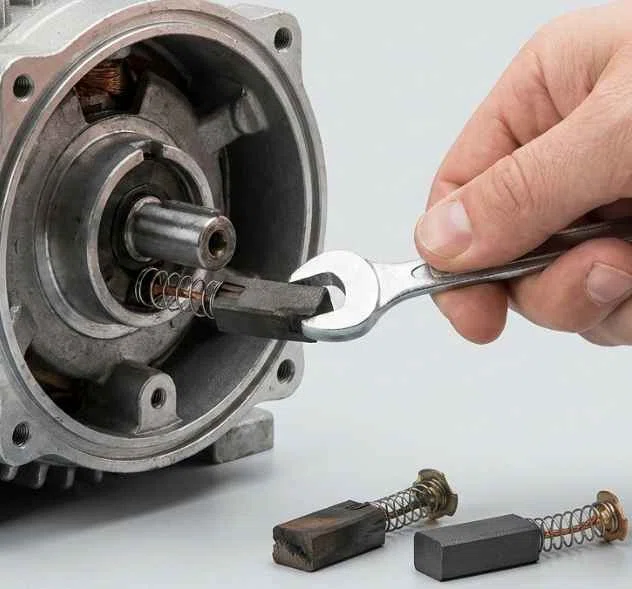
The process of changing your carbon brush works by isolating the power supply, accessing the motor housing, and releasing the tension springs holding the old brushes. The worn graphite pieces are extracted, and fresh brushes are inserted, ensuring they contour perfectly to the commutator for optimal electrical conductivity.
The Replacement Mechanism
Executing a brush change requires precision. The mechanics involve releasing the constant-force springs that press the brush against the rotating slip ring or commutator. Once the new brush is installed, it must be properly “seated” to match the curvature of the commutator.
- Disconnect all electrical power to the machinery.
- Unscrew the brush access covers on the motor casing.
- Pull back the retaining spring and unclip the shunt wire.
- Slide out the old brush and vacuum any residual carbon dust.
- Insert the new brush, attach the shunt, and engage the spring.
Carbolve Pro Tip: Use a brush seating stone after installing new brushes. This helps shape the face of the new carbon brush to the exact arc of the commutator, reducing sparking during initial startup.
What are the benefits of change your carbon brush?

Regularly changing your carbon brush prevents catastrophic motor failure, maintains peak electrical efficiency, and extends the overall lifespan of your equipment. Timely replacement eliminates excessive sparking, reduces heat generation, and protects the expensive commutator from severe scoring and irreversible friction damage.
Long-Term Equipment Protection
Proactive maintenance yields substantial operational and financial benefits. By adhering to a strict replacement schedule, industries prevent unexpected downtime and maintain consistent torque and power output from their machinery.
Based on our internal data and market analysis, here is the breakdown:
| Benefit | Operational Impact | Financial Impact |
|---|---|---|
| Prevents Commutator Damage | Stops metal-to-metal gouging | Saves thousands in motor rewinding/replacement |
| Optimizes Efficiency | Maintains consistent RPM and torque | Reduces wasted electrical energy |
| Reduces Downtime | Prevents sudden motor stalling | Maximizes production uptime and revenue |
Carbolve Pro Tip: Track the wear rate of your brushes over time. If you notice they are wearing out significantly faster than the baseline, it usually indicates an underlying issue like poor commutator condition or incorrect spring pressure.
How to maintain a change your carbon brush?
Maintaining your carbon brush involves regular visual inspections for uneven wear, keeping the brush holders free of carbon dust buildup, and ensuring the tension springs apply consistent pressure. A well-maintained environment prevents the brushes from sticking in their holders and causing destructive electrical arcing.
Preventative Maintenance Strategies
Ensuring your newly changed brushes perform optimally requires ongoing vigilance. Carbon dust is conductive and abrasive; if left to accumulate, it can cause flashovers or cause the brush to jam in its housing, leading to rapid failure.
- Blow out dust: Use dry compressed air to clear carbon residue from the motor housing monthly.
- Check spring pressure: Ensure the spring applies the manufacturer-specified tension.
- Inspect for sparking: Monitor the motor during operation; excessive sparking indicates poor contact.
- Monitor temperature: Ensure the motor is not overheating, which degrades the carbon binder.
Carbolve Pro Tip: Never use liquid solvents to clean carbon dust out of brush holders. Solvents can create a sticky paste with the dust, causing the new brushes to bind and fail prematurely. Stick to a specialized industrial vacuum or dry air.
What is the price of change your carbon brush?
The price to change your carbon brush typically ranges from $10 to $50 for small power tools, while industrial motor brushes can cost between $100 and $500 per set. The total cost depends on the brush grade, motor size, and whether you hire a professional technician for the installation.
Breakdown of Replacement Costs
Budgeting for a brush replacement requires factoring in both the cost of the consumable parts and the potential labor involved. High-performance grades, such as silver-graphite, command a premium but offer superior conductivity and longevity.
Based on our internal data and market analysis, here is the breakdown:
| Motor Type | Average Part Cost (Set) | Estimated Labor Cost | Total Estimated Cost |
|---|---|---|---|
| Power Tools / Appliances | $5 – $25 | $0 (DIY) | $5 – $25 |
| Automotive Alternators | $20 – $60 | $50 – $100 | $70 – $160 |
| Industrial AC/DC Motors | $150 – $600+ | $200 – $500+ | $350 – $1,100+ |
Carbolve Pro Tip: Don’t let a cheap brush ruin an expensive motor. Investing in high-quality OEM or premium Carbolve aftermarket brushes pays for itself by doubling the lifespan of the commutator and reducing maintenance intervals.
Key Features & Comparison
When deciding to change your carbon brush, selecting the right material and design features is critical for your specific application. Different environments require specific brush grades to function correctly without causing excessive wear.
Based on our internal data and market analysis, here is the breakdown:
| Brush Grade | Best Application | Key Feature | Wear Resistance |
|---|---|---|---|
| Electrographite | Heavy industrial DC motors | High thermal capacity | Excellent |
| Copper-Graphite | Slip rings, high current density | Superior conductivity | Moderate |
| Resin-Bonded | High-friction environments | High electrical resistance | Good |
| Silver-Graphite | Precision signal transmission | Low contact voltage drop | Fair |
Cost & Buying Factors
When purchasing replacements to change your carbon brush, several factors beyond the sticker price should influence your decision. First, consider the operating environment. Motors operating in high humidity or extreme temperatures require specially treated brushes to prevent rapid degradation.
Second, evaluate the shunt (wire) quality. A poorly attached shunt can vibrate loose, causing total brush failure. Always look for securely tamped or riveted shunts. Finally, ensure you are buying the exact dimensions required; even a millimeter of difference can cause the brush to jam in the holder or rattle, leading to destructive arcing. Partnering with a reputable manufacturer like Carbolve ensures you receive precision-engineered components tailored to your motor’s exact specifications.
Conclusion
Knowing how and when to change your carbon brush is a fundamental aspect of motor maintenance that cannot be ignored. By conducting regular inspections, maintaining clean brush holders, and investing in high-quality replacements, you can safeguard your equipment against catastrophic failures and costly downtime. Don’t wait for your motor to start sparking or losing power. Check your brushes today, and equip your machinery with premium Carbolve carbon brushes to ensure smooth, efficient, and long-lasting performance.