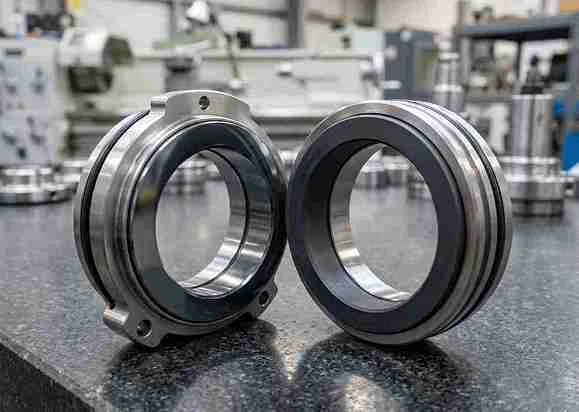
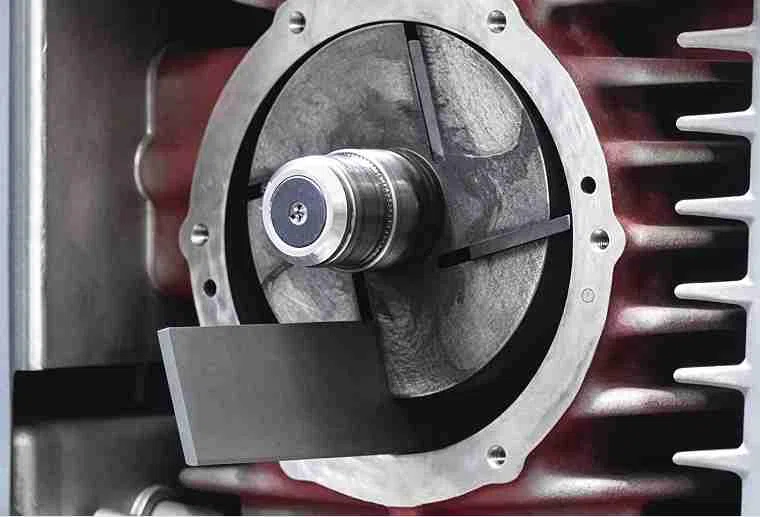
A carbon vane is used as a self-lubricating sliding seal in rotary vane machines—most commonly dry rotary vane vacuum pumps and rotary vane air compressors—to form compression chambers, maintain vacuum/pressure, and transfer torque from rotor to the gas. Carbon-graphite vanes reduce friction, tolerate intermittent lubrication, and protect the housing from scoring.
How carbon vanes actually “do the work” in a rotary vane machine
In a rotary vane pump/compressor, vanes slide radially in rotor slots and stay in contact with the stator bore (via centrifugal force, springs, and/or differential pressure). This creates sealed pockets that expand (intake) and contract (compression/exhaust). Carbon-graphite is selected because it runs with low friction, conforms slightly to the bore, and survives dry-running better than metals.
Where carbon vanes are used (typical):
- Dry rotary vane vacuum pumps (packaging, CNC hold-down, medical suction, pick-and-place)
- Rotary vane air compressors (light industrial, pneumatic supply, OEM skids)
- Side-channel/auxiliary sliding-seal designs where low wear is critical
| Function in the pump | What the carbon vane provides | Why carbon-graphite helps |
|---|---|---|
| Sealing between chambers | Maintains vacuum/pressure | Low friction + conformability |
| Compression pocket formation | Stable volumetric displacement | Dimensional stability |
| Wear interface protection | “Sacrificial” wear part | Protects rotor/housing from scoring |
| Heat management | Reduced frictional heat | Lower coefficient of friction |
Carbolve Pro Tip: In our lab tests at Carbolve, we found that the fastest way to extend carbon vane life is controlling inlet contamination and temperature—fine dust and high discharge heat drive edge-chipping and accelerated length loss long before the material “wears out” uniformly.
What are carbon vanes used for?
Carbon vanes are used to create a moving seal and compression chambers in rotary vane vacuum pumps and air compressors. As the rotor turns, the vanes slide to maintain contact with the pump bore, trapping and moving gas from inlet to exhaust. Their carbon-graphite material lowers friction, supports dry-running, and reduces housing wear.
Typical applications and selection criteria
Use carbon vane sets when you need reliable vacuum/air delivery with low oil carryover (dry pumps) and predictable maintenance intervals.
| Application | Why carbon vanes fit | Key spec to confirm |
|---|---|---|
| Dry vacuum packaging | Clean operation, stable vacuum | Grade density + edge finish |
| CNC hold-down tables | Continuous duty vacuum | Wear rate + vane length |
| Pneumatic conveying assist | Robust under cycling | Temperature limit |
| Rotary vane air supply | Efficient compression | Slot fit + spring force |
Carbolve Pro Tip: Our technicians often see “mystery low vacuum” traced to incorrect vane thickness or poor slot fit—if the vane can’t freely slide, it won’t seal, and it overheats even when the pump looks mechanically intact.
What are the disadvantages of a vane pump?
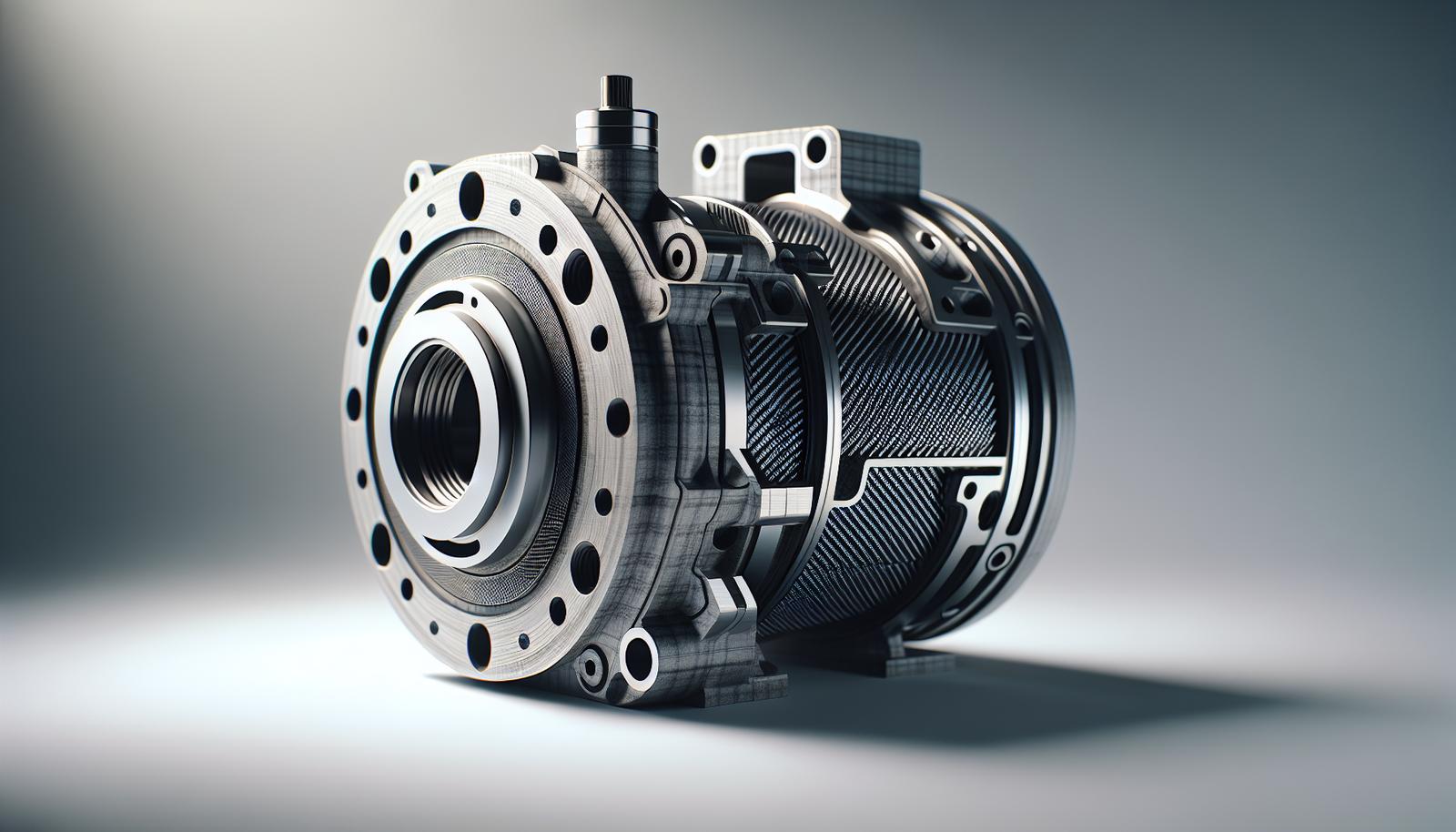
Vane pumps depend on tight clearances and vane sealing, so they’re sensitive to dust, condensate, and overheating. Vanes are wear parts that require periodic replacement, and performance drops as vane length decreases. Dry-running models can be noisier at high load, and corrosive gases can attack components without proper materials and filtration.
Practical limitations (what to plan for)
- Wear component: vanes shorten over time → reduced ultimate vacuum/flow.
- Contamination sensitivity: dust/abrasives cause rapid bore and vane wear.
- Thermal sensitivity: high discharge temperature leads to chipping and glazing.
- Condensation risk: water vapor can swell deposits and raise drag.
Carbolve Pro Tip: Our technicians often see end users blame the motor when the real issue is thermal overload—once a dry vane pump runs hot, the vanes polish/glaze and sealing collapses even though amperage may look “normal.”
What are common problems with vane pumps?
Common vane pump problems include low vacuum/pressure from worn or sticking carbon vanes, vane chipping from heat or debris, scored cylinders, clogged inlet filters, leaking gaskets, and incorrect rotation after service. Noise increases when vanes flutter or springs weaken, and oil-less units often fail early if fine dust bypasses filtration.
Symptom → likely cause (quick diagnostic table)
| Symptom | Most common cause | Fast check |
|---|---|---|
| Low ultimate vacuum | Vanes worn short / leakage | Measure vane length vs spec |
| Rattling/knocking | Vane chatter, broken corners | Inspect edges, rotor slots |
| Overheating | Restricted exhaust, high load | Check exhaust path + duty cycle |
| High power draw | Vanes sticking in slots | Confirm free sliding, clean slots |
| Dusty black residue | Abrasive ingestion | Inspect inlet filter + piping |
Carbolve Pro Tip: Our technicians often see vane “sticking” caused by slot contamination rather than the vane grade—cleaning the rotor slots and confirming vane side-clearance restores performance more reliably than swapping to a harder material.
When to use a vane pump?
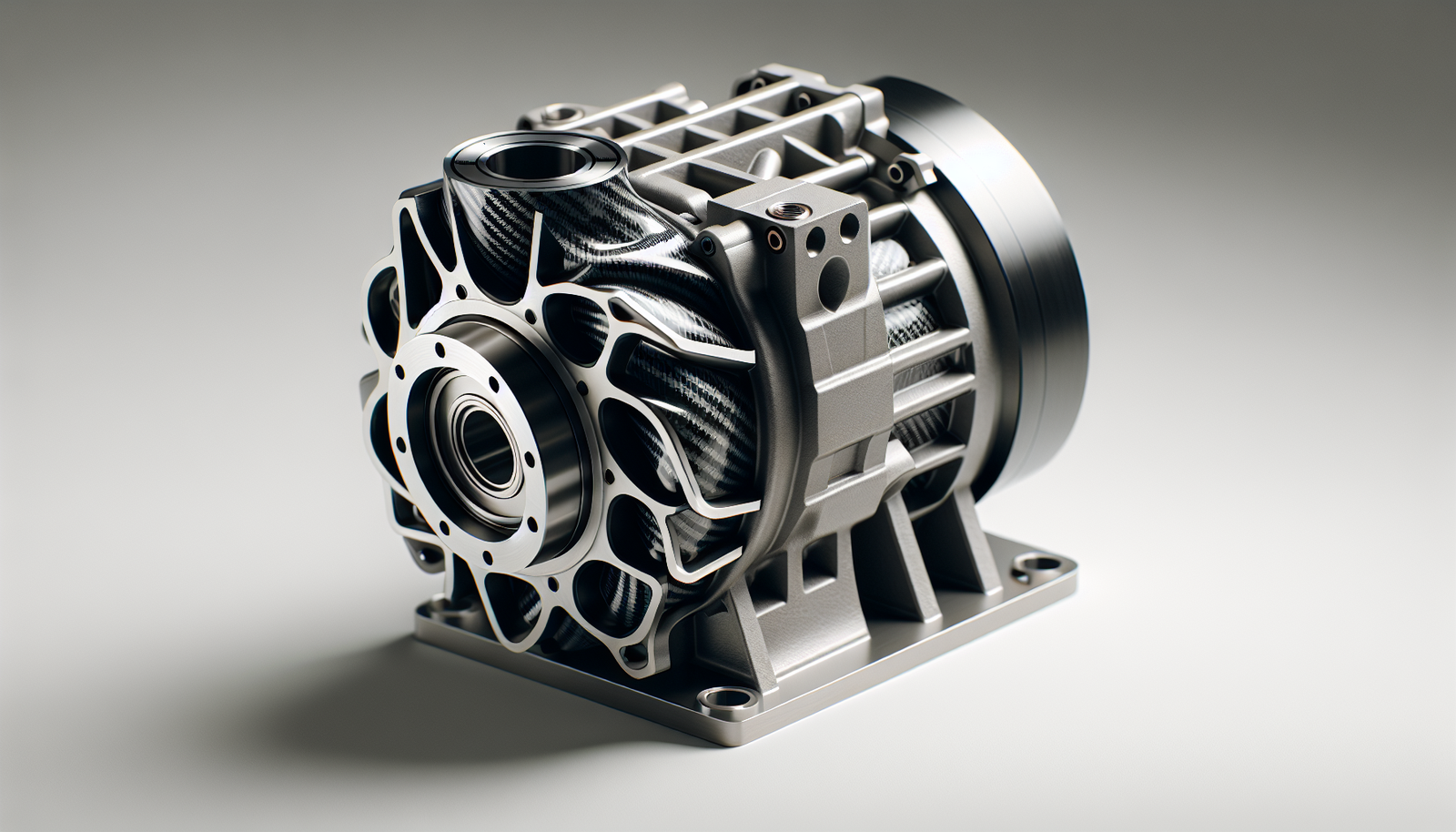
Use a vane pump when you need steady vacuum or moderate pressure with smooth flow, good efficiency, and simple maintenance. Rotary vane vacuum pumps are ideal for continuous duty industrial vacuum (packaging, CNC hold-down, pick-and-place), while vane compressors suit stable pneumatic supply. Avoid vane pumps for highly abrasive, corrosive, or heavy-condensate streams without proper protection.
Decision checklist (fit vs not-fit)
- Good fit: clean/dry gas, continuous duty, stable vacuum level, predictable service intervals
- Needs engineering controls: fine dust (add filtration), water vapor (gas ballast/purge), heat (cooling/ventilation)
- Poor fit: slurries/particulates, aggressive corrosives, frequent liquid carryover
Carbolve Pro Tip: Our technicians often see the best reliability when users size the pump for the real leak rate and duty cycle—overspeeding a small pump to “hit vacuum faster” typically shortens carbon vane life dramatically.
What are carbon vanes used for in rotary vane vacuum pumps and air compressors in industrial applications?
In industrial rotary vane vacuum pumps and air compressors, carbon vanes act as the sliding sealing elements that divide the chamber into cells for intake and compression/exhaust. They enable dry or low-oil operation, stable volumetric efficiency, and serviceable wear-part maintenance. In OEM systems, vane grade selection balances friction, wear rate, and thermal stability.
Industrial use cases and what matters most
| Industrial use | Vacuum pump priority | Compressor priority |
|---|---|---|
| Packaging lines | Ultimate vacuum + cleanliness | — |
| Pick-and-place | Fast response, repeatability | — |
| CNC clamping | Continuous duty, low downtime | — |
| Pneumatic tools | — | Stable pressure + efficiency |
| OEM skid builds | Predictable service intervals | Predictable service intervals |
Carbolve Pro Tip: Our technicians often see OEM replacement programs succeed when the vane set is treated as a matched system (material grade + bevel/edge finish + slot fit)—mixing “close enough” vanes across revisions creates uneven wear and premature rotor/bore damage.
What is the wholesale price range for carbon vanes used in vacuum pump maintenance and OEM replacement programs?
Wholesale carbon vane pricing typically ranges from about USD $2–$15 per vane for common sizes in maintenance channels, and can extend to ~$20–$40+ per vane for large formats, tight tolerances, or specialty grades. Program pricing depends on annual volume, vane geometry, certification needs, and packaging (kits vs bulk).
What drives wholesale cost (practical breakdown)
- Material grade (carbon-graphite formulation, density, resin impregnation)
- Geometry & tolerance (thickness control, edge chamfer, slot fit)
- Quantity (MOQ, annual call-offs, consignment)
- Kitting (springs, filters, gaskets, labeling, traceability)
Carbolve Pro Tip: Our technicians often see the lowest “piece price” become the highest total cost when tolerance drift causes sticking or rapid wear—our rule is to qualify vanes by pump temperature, power draw, and achieved vacuum over a full duty cycle, not by dimensions alone.
Carbon vane selection and maintenance determine how well your vacuum pump vanes seal, wear, and protect the machine over time.