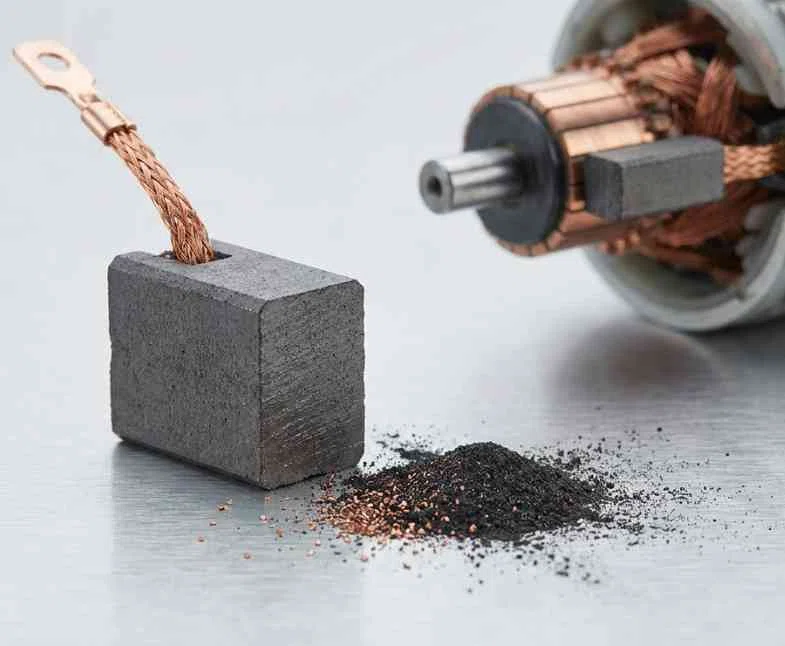
The carbon brush chemical composition primarily consists of carbon-based materials like natural graphite, petroleum coke, and carbon black, often blended with metallic powders such as copper or silver to enhance electrical conductivity. Understanding this precise chemical makeup is crucial for selecting the right brush to ensure optimal motor performance, minimize commutator wear, and prevent electrical arcing in various industrial and automotive applications.
What is carbon brush chemical composition?

The carbon brush chemical composition is a specialized mixture of carbon allotropes—primarily natural or artificial graphite—combined with synthetic binders like coal tar pitch or synthetic resins. Depending on the application, metal powders such as copper, silver, or lead are integrated to tailor electrical resistance and mechanical durability.
Core Material Components
A carbon brush is not just pure carbon; it is a highly engineered composite. The exact chemical formulation dictates its thermal, mechanical, and electrical properties, allowing it to function effectively in dynamic electrical systems.
- Graphite (Natural or Electrographite): Forms the base structure, providing excellent lubricity and thermal stability.
- Metallic Powders: Copper or silver is added (creating metal-graphite brushes) to handle high-current densities and low-voltage applications.
- Binders: Synthetic resins or pitch bind the carbon and metal particles together during the high-temperature sintering process.
- Abrasive Additives: Trace amounts of specific polishing agents are sometimes included to keep the commutator surface clean and free of oxidation.
Carbolve Pro Tip: Always match the brush composition to your motor’s operating voltage. Using a high-copper brush in a high-voltage system can lead to severe commutator damage and rapid wear.
How Does carbon brush chemical composition Work?

The specific chemical composition of a carbon brush works by balancing electrical conductivity with mechanical lubrication. The graphite acts as a solid lubricant to reduce friction against the rotating commutator, while the metallic and carbon elements facilitate the efficient transfer of electrical current without excessive heat generation.
The Mechanics of Conductivity and Lubrication
The interplay between the different chemical elements ensures a stable electrical connection under high rotational speeds. Copper facilitates rapid electron transfer, while graphite forms a microscopic, low-friction film on the commutator, preventing destructive metal-to-metal contact.
Based on our internal data and market analysis, here is the breakdown:
| Material Component | Primary Function | Ideal Application |
|---|---|---|
| Electrographite | High-speed commutation, thermal resistance | Industrial DC motors |
| Metal-Graphite | Superior conductivity, low voltage drop | Slip rings, automotive starters |
| Resin-Bonded Graphite | High contact resistance, spark reduction | Universal motors, power tools |
Carbolve Pro Tip: Monitor the patina (the film on the commutator). A healthy film is chocolate brown; if it turns black or raw copper is visible, your brush’s chemical composition may be incorrect for the operating environment.
What are the benefits of carbon brush chemical composition?

A meticulously formulated carbon brush chemical composition provides enhanced motor efficiency, extended brush lifespan, and superior protection for the commutator. By utilizing the correct blend of graphite and metals, these brushes minimize electrical arcing, reduce maintenance downtime, and ensure reliable power transmission under varying load conditions.
Performance Advantages of Engineered Compositions
Customizing the chemical makeup of carbon brushes yields several distinct operational benefits across different motor types, ensuring maximum uptime and efficiency.
- Self-Lubrication: Graphite’s layered molecular structure naturally reduces friction, extending the life of both the brush and the commutator.
- Thermal Resilience: High-grade electrographite withstands extreme operating temperatures without degrading or losing its conductive properties.
- Customizable Conductivity: By adjusting the ratio of copper or silver, manufacturers can precisely tune the electrical resistance for specific voltage and current requirements.
- Arc Suppression: Proper binder and carbon ratios help extinguish electrical arcs, preventing pitting and grooving on the commutator surface.
Carbolve Pro Tip: Don’t just buy generic brushes. Investing in a tailored chemical composition specific to your machinery’s load profile will easily double your maintenance intervals and save on replacement costs.
How to maintain a carbon brush chemical composition?
Maintaining the integrity of a carbon brush’s chemical composition involves controlling environmental factors like humidity and temperature, ensuring proper spring pressure, and preventing contamination. Keeping the operating environment clean prevents abrasive dust or chemical vapors from altering the brush’s conductive and lubricating properties.
Best Practices for Environmental and Mechanical Maintenance
While you cannot change the chemical composition after manufacturing, you can protect it from premature degradation by following strict environmental and mechanical maintenance protocols.
- Monitor Humidity: Graphite relies on a minimum level of ambient moisture (usually around 2-3 grains of water per cubic foot) to maintain its lubricating film.
- Avoid Chemical Contaminants: Keep silicone sprays, oils, and corrosive gases away from the motor, as they can break down the brush binders and cause rapid dusting.
- Optimize Spring Pressure: Incorrect pressure can cause the brush to bounce, creating destructive electrical arcs that thermally degrade the chemical binders.
- Regular Inspections: Check for uneven wear patterns, which indicate that the brush material is failing to cope with the mechanical or electrical load.
Carbolve Pro Tip: If you operate motors in extremely dry environments, such as high altitudes or aerospace applications, ensure you select a carbon brush treated with special chemical adjuvants (like molybdenum disulfide) to compensate for the lack of moisture.
What is the price of carbon brush chemical composition?
The price of carbon brushes varies significantly based on their chemical composition, ranging from $1 to $5 for basic resin-bonded graphite, up to $20 to $100+ for highly engineered metal-graphite or silver-infused brushes used in specialized industrial and aerospace applications.
Pricing Tiers Based on Material Formulation
The cost is directly proportional to the purity of the carbon, the complexity of the sintering process, and the inclusion of precious or semi-precious metals required for specific electrical tolerances.
Based on our internal data and market analysis, here is the breakdown:
| Composition Type | Estimated Price Range (per unit) | Typical Use Case |
|---|---|---|
| Carbon-Graphite | $1 – $10 | Fractional horsepower motors |
| Electrographite | $5 – $25 | Heavy-duty industrial DC motors |
| Copper-Graphite | $10 – $40 | Automotive starters, slip rings |
| Silver-Graphite | $30 – $150+ | Aerospace, high-frequency signal transmission |
Carbolve Pro Tip: When evaluating price, calculate the total cost of ownership. A $30 electrographite brush that saves a $5,000 commutator from wear is a far better investment than a $5 brush that causes severe friction and downtime.
Key Features & Comparison
Understanding the specific features of different carbon brush chemical compositions is essential for making an informed purchasing decision. Different blends offer unique trade-offs between friction coefficients, current density capacities, and maximum operating speeds.
Based on our internal data and market analysis, here is the breakdown:
| Feature | Electrographite | Copper-Graphite | Resin-Bonded Graphite |
|---|---|---|---|
| Primary Material | Heat-treated carbon | Graphite & Copper powder | Graphite & Synthetic Resin |
| Current Density | Medium (40-65 A/in²) | High (75-150 A/in²) | Low (30-45 A/in²) |
| Friction Level | Very Low | Medium | High |
| Voltage Drop | Medium | Very Low | High |
| Best For | High-speed, heavy loads | Low voltage, high current | High voltage, low current |
Cost & Buying Factors
When purchasing carbon brushes, the chemical composition should be your primary consideration, but several other buying factors influence the overall cost and performance. First, consider the current density of your application; high-current systems require copper or silver-graphite blends, which command a premium price. Second, evaluate the operating environment. Environments with corrosive gases or extreme temperatures require specialized electrographite grades with proprietary binders, increasing the upfront cost.
Finally, consider the manufacturing tolerances. Precision-engineered brushes from reputable brands like Carbolve ensure consistent chemical dispersion throughout the brush, preventing localized hot spots. While premium compositions may cost 20-30% more upfront, they dramatically reduce commutator maintenance and operational downtime, offering a superior return on investment.
Conclusion
The carbon brush chemical composition is the defining factor in how efficiently and reliably an electric motor operates. From natural graphite and synthetic resins to advanced copper and silver blends, the specific formulation dictates the brush’s ability to conduct electricity while providing crucial mechanical lubrication. By understanding these chemical properties, you can select the perfect brush to extend your machinery’s lifespan and optimize performance. If you are looking for precision-engineered carbon brushes tailored to your specific industrial needs, trust Carbolve to provide high-quality, durable solutions that keep your operations running smoothly.