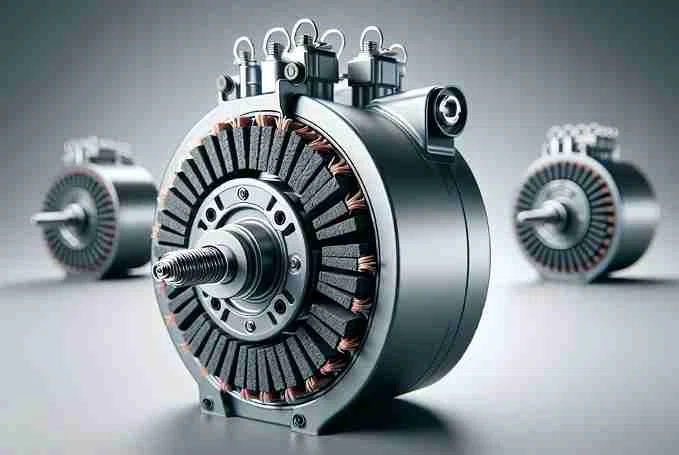
A carbon brush in a motor is a replaceable sliding electrical contact—typically a carbon/graphite block with a lead wire and spring—that transfers current between a stationary circuit and a rotating commutator or slip ring. It enables torque production in brushed DC and some AC universal motors while gradually wearing as a normal consumable part.
Working principle and why carbon is used
A carbon brush (motor brush) presses against a rotating commutator (brushed DC/universal) or slip ring (some AC machines) to complete the electrical path while allowing rotation. Carbon is used because it provides stable contact, acceptable conductivity, and a “sacrificial” wear interface that protects the commutator from severe damage when correctly specified.
What the brush system does (by motor type):
| Motor interface | Typical motor type | Brush contacts | Main purpose | Primary wear surfaces |
|---|---|---|---|---|
| Commutator | Brushed DC, universal (AC/DC) | Copper commutator bars | Mechanical switching (commutation) + current transfer | Brush face + commutator film |
| Slip rings | Some wound-rotor AC / exciters | Ring tracks | Current transfer (no commutation) | Brush face + ring track |
Key design elements you’ll see on an industrial carbon brush:
- Grade/material (carbon, electrographite, metal-graphite): balances conductivity vs. lubrication and commutation.
- Spring pressure: maintains contact; too low increases arcing, too high accelerates wear.
- Brush holder geometry: controls brush alignment and free movement to prevent sticking.
- Commutator/track film: a correct patina reduces friction and sparking; poor film drives heat and dust.
Carbolve Pro Tip: In our lab tests at Carbolve, we found that “bad brushes” are often a system problem—incorrect spring pressure, holder contamination, or a disrupted commutator film can double wear rate and increase sparking even when the brush grade itself is correct.
What does a carbon motor brush do?
A carbon motor brush conducts electrical current between the stationary wiring and a spinning commutator or slip ring while allowing rotation. In brushed DC and universal motors it also enables commutation—switching current between armature windings at the right time—so the motor produces continuous torque. It’s designed to wear predictably and be replaced.
Functional roles in operation (current + commutation)
- Transfers current into (and out of) the rotating armature circuit.
- Maintains contact under vibration via spring force and brush grade lubrication.
- Assists commutation by providing controlled voltage drop and contact behavior at the commutator interface.
- Protects the commutator by wearing first (when correctly specified), preserving copper surface integrity.
Carbolve Pro Tip: Our technicians often see motors blamed for “weak torque” when the real issue is brush bounce from worn holders or incorrect spring force—fixing the mechanical contact stability frequently restores performance without electrical rewinds.
How to tell if carbon brushes need replacing?
Carbon brushes need replacing when they’re near their minimum safe length, the wear indicator line is reached, springs can’t maintain pressure, or the brush lead/shunt is close to contacting the holder. Operational signs include increased sparking, unstable speed, hotter commutator, and more carbon dust than normal.
Inspection checklist (fast, repeatable)
- Lockout/tagout and verify zero energy.
- Measure brush length vs. manufacturer minimum (or replace at a planned threshold).
- Check spring pressure and spring condition (no overheating/relaxation).
- Confirm free movement in holders (no sticking, chips, or glazing).
- Inspect brush face (even contact pattern; no severe chipping).
- Look at the commutator film (uniform patina; avoid heavy grooving, burning).
Carbolve Pro Tip: Our technicians often see premature replacements caused by a single sticky brush in the holder—cleaning the holder and correcting brush fit can stabilize current sharing and extend the maintenance cycle.
Are carbon brush motors good?
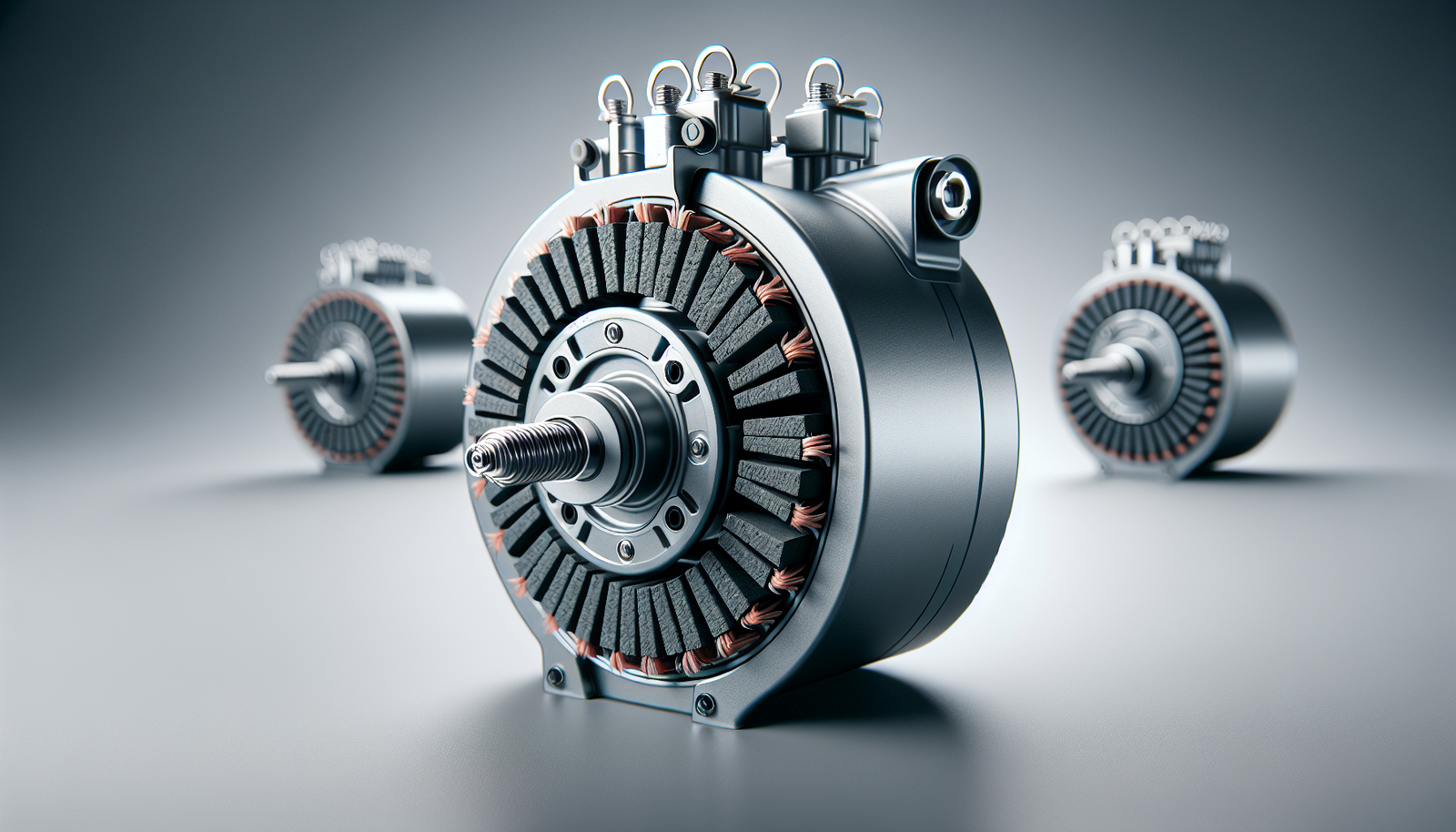
Carbon brush (brushed) motors are good when you need high starting torque, simple speed control, compact size, and lower upfront cost. The tradeoff is maintenance: brushes and commutators are wear items, producing dust and requiring inspection. For continuous-duty, low-maintenance applications, brushless designs often win despite higher initial cost.
Brushed vs. brushless (decision table)
| Criterion | Brushed (carbon brush) | Brushless |
|---|---|---|
| Maintenance | Periodic brush/commutator service | Lower routine maintenance |
| Cost (initial) | Typically lower | Typically higher |
| Control | Simple (voltage/PWM) | Requires electronic drive |
| Starting torque | Strong | Strong (with proper drive) |
| Contamination | Carbon dust present | Minimal |
| Best fit | Intermittent duty, tools, cost-sensitive industrial drives | 24/7 duty, clean environments, hard-to-access assets |
Carbolve Pro Tip: Our technicians often see brushed motors outperform expectations when maintenance is standardized—setting an inspection interval based on load profile and dust environment is more predictive than relying on “hours run” alone.
What are the symptoms of bad motor brushes?
Bad motor brushes commonly cause excessive sparking, intermittent operation, loss of power, unstable RPM, unusual noise, increased heat at the commutator, and a burning odor. You may also see rapid dust buildup, visible arcing under load, or commutator discoloration. If ignored, they can damage commutator bars and increase downtime.
Symptom-to-cause mapping (quick triage)
| Symptom | Likely brush-related cause | What we check first |
|---|---|---|
| Heavy sparking | Wrong grade, low spring pressure, poor film, brush bounce | Spring force + commutator condition |
| Power drop / surging | Uneven current sharing, sticking brush, worn to limit | Holder cleanliness + brush length |
| Hot commutator | High contact resistance, glazing, wrong grade | Brush face + film uniformity |
| Noise / chatter | Mechanical vibration, misalignment, worn holders | Holder alignment + brush seating |
Carbolve Pro Tip: Our technicians often see “electrical faults” diagnosed incorrectly—if sparking is localized to one brush track, we start with holder alignment and brush seating before escalating to armature testing.
What is a carbon brush in a motor, and how does it affect maintenance cycles for industrial equipment?
A carbon brush in a motor is a consumable current-transfer contact that wears with load, speed, and contamination. In industrial equipment, it drives a preventive maintenance cycle: scheduled inspections, brush-length tracking, holder cleaning, and commutator/film assessment. Proper brush grade and spring pressure can significantly extend intervals and reduce unplanned stoppages.
Building a practical maintenance cycle (process)
- Baseline: record brush grade, spring pressure target, and initial commutator condition.
- Trend wear: measure length loss per 100/500 operating hours under normal load.
- Set replace threshold: before minimum length to avoid lead-to-holder contact and arcing.
- Standardize holder cleaning: remove carbon dust and ensure free brush travel.
- Verify commutator film: uniform patina; address grooving or burning early.
- Align with duty: heavier load/high humidity/dust = shorter intervals and tighter checks.
Carbolve Pro Tip: Our technicians often see maintenance cycles stabilize once wear is trended and current sharing is verified—pairing brush-length data with commutator temperature (or IR checks) is one of the fastest ways we reduce surprise failures.
What is a carbon brush in a motor, and what are the wholesale price drivers when sourcing in bulk?
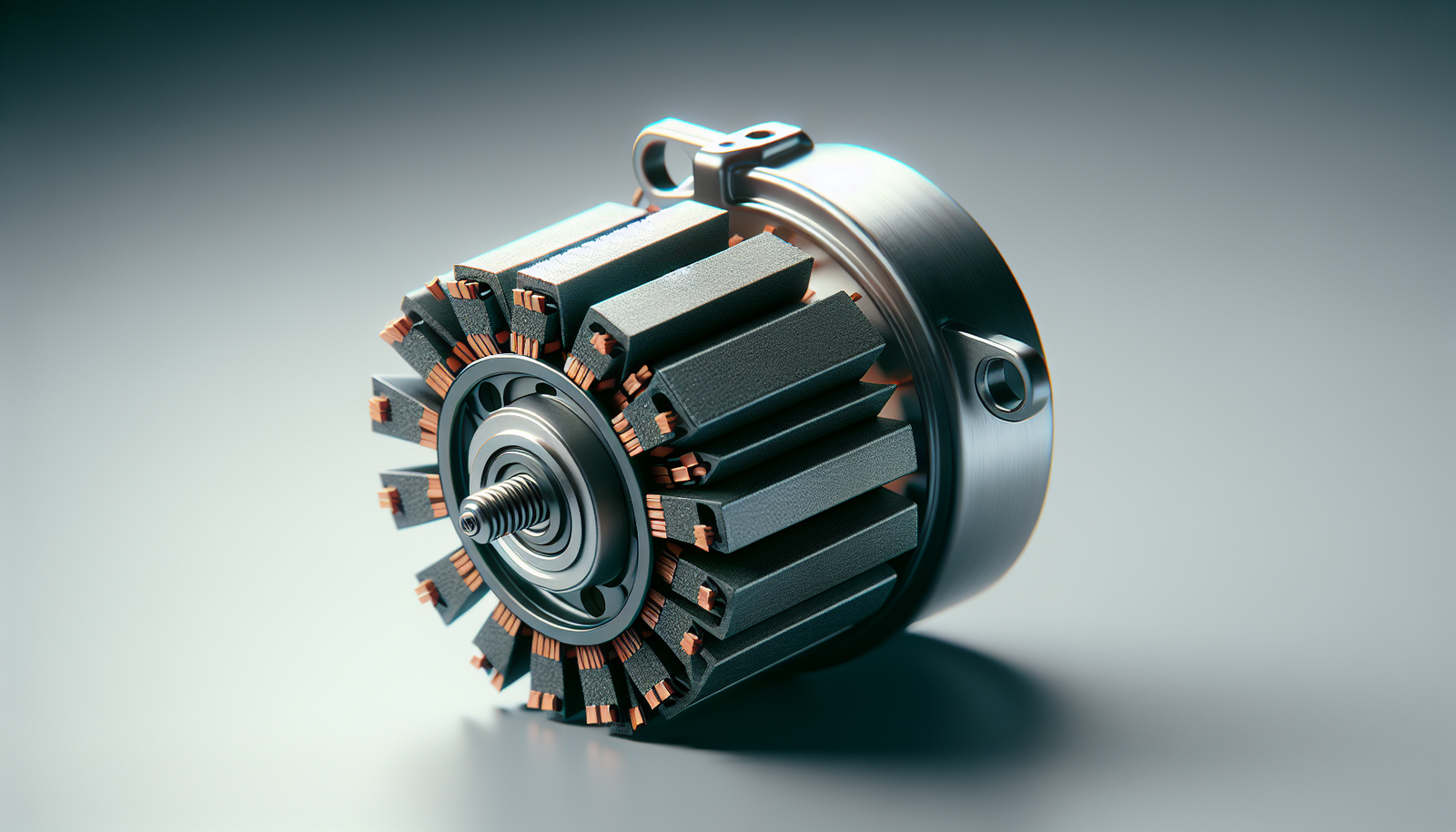
A carbon brush in a motor is a precision wear component, and wholesale pricing depends on material grade (electrographite vs metal-graphite), copper content, machining complexity, tolerances, lead/shunt design, and QA requirements. In bulk sourcing, the biggest cost swings usually come from grade selection, custom dimensions, packaging/labeling, and inspection documentation.
Wholesale price drivers (what moves the needle)
| Driver | Why it affects price | Typical impact in bulk |
|---|---|---|
| Brush grade/material | Raw material + processing (graphitization, metal impregnation) | High |
| Copper content / shunt design | Conductivity + assembly labor | Medium–High |
| Dimensions & tolerances | Machining time, scrap rate | Medium–High |
| Custom features | Bevels, slots, drilled holes, split brushes | Medium |
| QA & traceability | Incoming tests, batch certs, electrical/mechanical checks | Medium |
| Volume & batching | Setup amortization, yield improvements | Can reduce cost notably |
| Logistics & packaging | Labeling, kitting, protective packs | Low–Medium |
Carbolve Pro Tip: Our technicians often see buyers save money short-term by downgrading grade, then pay more in commutator wear and downtime—when we quote bulk programs, we tie brush grade to the actual duty cycle so total cost of ownership stays predictable.
Conclusion: Carbon brush and motor brush systems are simple and powerful, but performance and uptime depend on correct grade selection, stable mechanical contact, and disciplined inspection/replacement intervals.